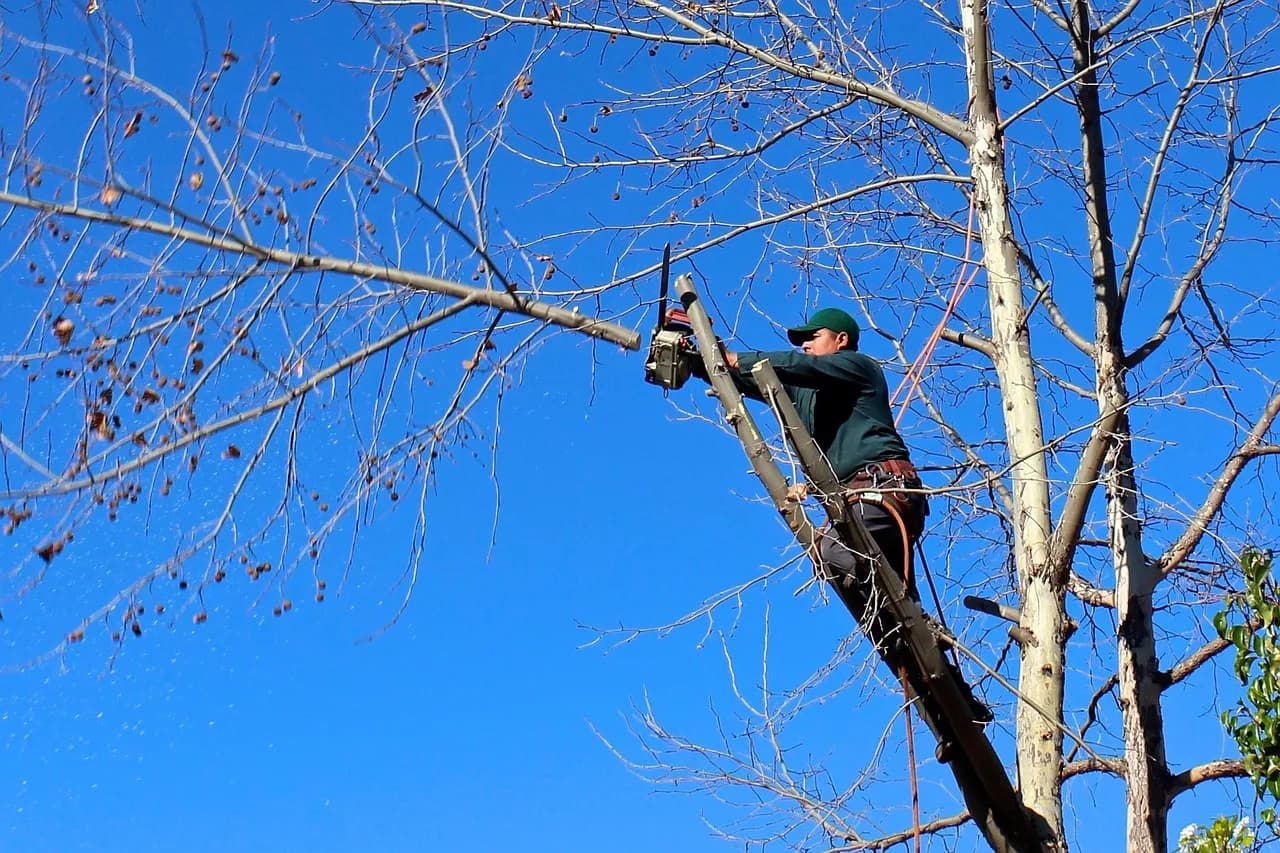

















Almost every homeowner checks reviews before calling a local business, and a tree company is a harder call than most: strangers arrive with chainsaws and a quote you can't easily judge. Tree service brand building is the work of making that call feel safe before it happens.
BrightLocal's Local Consumer Review Survey, published on 11 February 2026 and based on 1,002 US adults, found that 97% of consumers read reviews before choosing a local business. That makes your reputation a sales channel you either manage or leave to chance.
Tree service brand building starts with proof customers can check
A logo and a slogan tell a homeowner nothing they can verify. Proof does: credentials with a name behind them, paperwork that arrives before the work does, and a review history that looks like real customers wrote it.
Everything below follows from that. If a claim on your website or truck can't be checked by a stranger in a couple of minutes, it isn't doing brand work yet.
Credentials that mean something to a buyer
The Tree Care Industry Association runs a voluntary accreditation program for tree care companies. It covers safety and training documentation, employee performance policies, customer satisfaction practices, ethical conduct and legal compliance, and it lasts three years with a check-up every year.
Those annual check-ups are worth knowing about, because they require you to keep the required number of ISA Certified Arborists on staff, maintain insurance, and hold up your safety and customer satisfaction ratings. A badge that has to be earned again is a stronger signal than one you bought once.
Not every certificate carries the same weight, and your customers may not know that. SavATree's guide to arborist certifications tells property owners to ask what an arborist is certified in and who granted it. Name the credential, the issuing body and the person who holds it, rather than printing a vague "certified" on the side of a truck.
Make your paperwork part of the brand
The TCIA's advice for people hiring a tree company reads like a checklist of what a careful buyer will ask you for: current liability and workers' compensation certificates, references, a written estimate, a written work order and a signed contract covering cost, dates and exactly what's being done. It also tells homeowners not to pay in advance and not to be rushed by a bargain.
Treat that list as a standard to meet before anyone asks. A company that sends the insurance certificate with the quote, and writes the scope of work out in plain words, looks different from one that quotes on the driveway and shrugs.
Your website can say so too. A short page explaining what every job includes, and what you'll never ask a customer to do, such as paying up front, does more for trust than a paragraph about being "family owned".
Build a review profile that looks believable
Volume comes first. In the same BrightLocal survey, 47% of consumers said they won't use a business with fewer than 20 reviews, so a young company with six glowing ones is already at a disadvantage.
Freshness matters as much as the count. Most of those surveyed, 74%, trust only reviews from the last three months, which means a burst of reviews two years ago does little. Ask at the end of every job, while the yard is still tidy, and make it a habit rather than a campaign.
Replies are the part owners skip. Eighty percent of respondents favoured businesses that answer every review, and half distrusted generic or templated replies. A two-line answer that mentions the actual job (the oak on the fence line, the storm clean-up) reads as a person. Copy-pasted thanks reads as the opposite.
Handle the bad reviews the same way, calmly and with specifics. A prospect reading a complaint is mostly checking how you behaved.
Your Google listing is where most of this shows up first, so it's worth getting right. We cover the details in our guide to optimizing a tree service Google Business Profile.
Answer leads quickly and follow up

Reputation brings the enquiry. Whether it becomes a job is decided by what happens in the next few hours, and a missed call or a quote that never gets chased is a brand experience too.
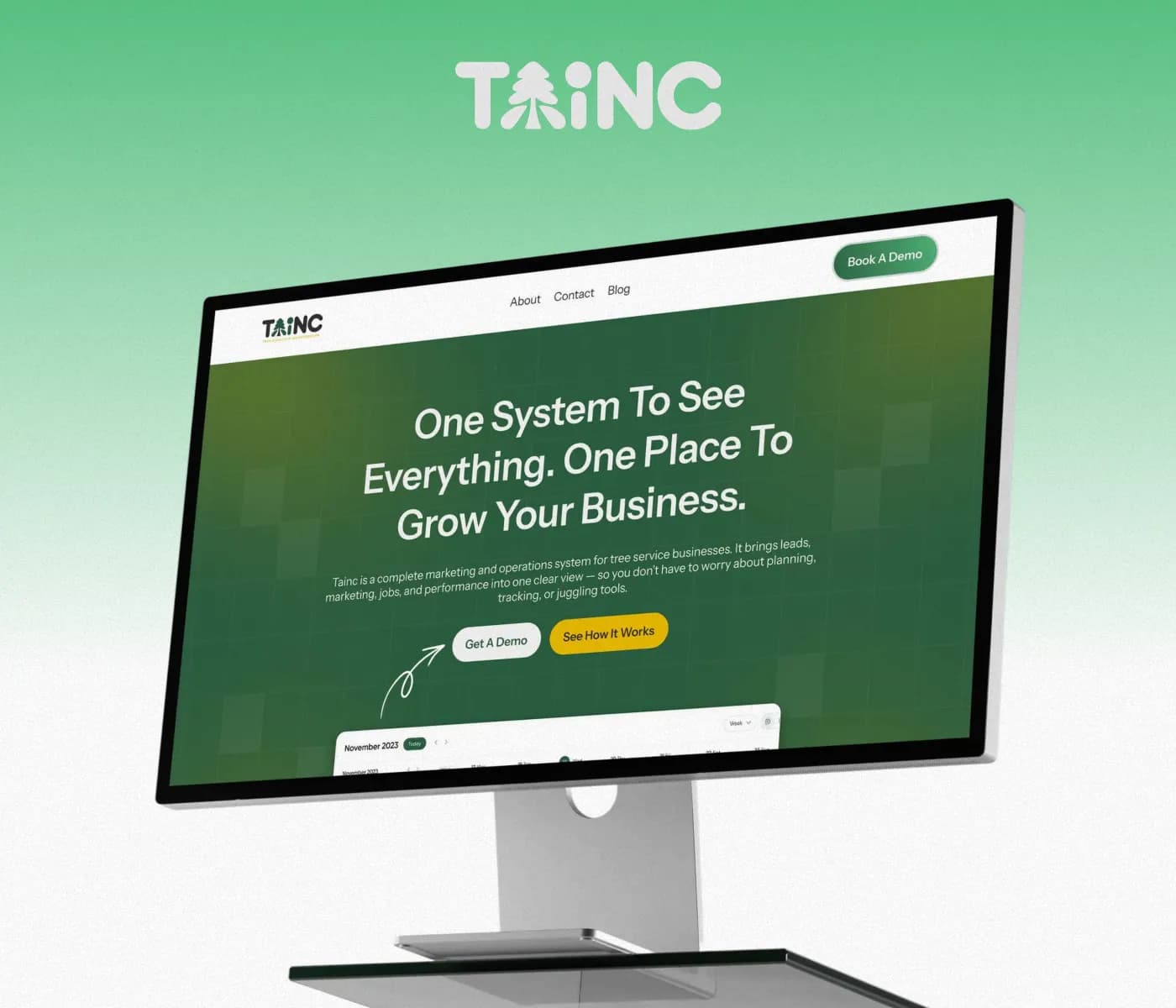
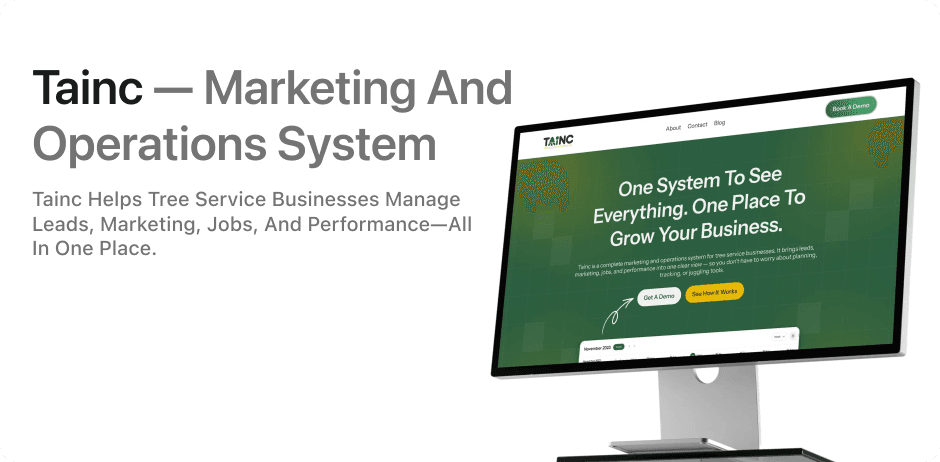
When we built TAINC's platform for tree service companies, we put lead capture, crew scheduling, AI-assisted proposals and billing in one dashboard, so a new lead doesn't sit in an inbox while the crew is on a roof. You can read how it came together in the TAINC case study.
You don't need custom software to apply the idea. Decide who owns each new enquiry, how fast it gets a reply, and when a quote that hasn't been answered gets a follow-up.
Let your website and local search carry the same story
A homeowner who finds you through search lands on a website that either repeats what the reviews said or contradicts it. Put the credentials, insurance information and real job photos where a visitor sees them without scrolling through service lists.
Our tree service website design guide covers what makes visitors act, and local SEO for tree services covers being found in your own service area. For the wider picture of where jobs come from, see tree service marketing ideas that bring in jobs.
A 30-day plan to start with
Order matters here, because the later steps depend on the earlier ones being real.
- Collect your insurance certificates, credentials and a sample written estimate into one folder, and decide what goes on the website.
- Write down the exact name of every credential your crew holds and who issued it.
- Start asking for a review at the close of every job, and log the count against the 20-review mark.
- Answer every existing review in a sentence or two that mentions the job.
- Set a reply time for new enquiries and a follow-up date for unanswered quotes.
Start with step one this week. Nothing else on the list works without it.
Frequently asked questions
How many reviews does a tree service need?
In BrightLocal's 2026 survey, 47% of consumers said they wouldn't use a business with fewer than 20 reviews. Treat 20 as the minimum to reach, then keep adding recent ones.
How long does TCIA accreditation last?
It lasts three years, with an annual renewal check-up in between. The check-up looks at whether you still have the required number of ISA Certified Arborists on staff, current insurance, and good safety and customer satisfaction ratings.
What should a written estimate cover?
The TCIA says a signed contract should state the cost, the dates the work will be done and exactly what is to be done. It also advises customers to get estimates in writing and insist on a written work order.
Cover photo by Amirreza Zare on Pexels
Sources
- Local Consumer Review Survey 2026 — BrightLocal
- TCIA Accreditation — Tree Care Industry Association