





Most homeowners hire a tree company once, then forget the name within a year. Tree service email marketing fixes that cheaply, because the people most likely to book your next job are the ones whose trees you've already worked on.
You don't need a big list or a designer. You need the right people on it, a handful of well-timed messages, and a sending setup that keeps you out of the spam folder.
Why tree service email marketing works for repeat and referral jobs
Email works for tree companies because tree work comes in cycles. A pruned oak needs another look in a few years, a storm leaves damage a week later, and a neighbour asks who did the job next door.
Paid ads and search results catch people who are already shopping. Email reaches people who aren't thinking about trees at all and puts your name in front of them at the moment they start to.
It also costs little compared with a new lead. A past customer already knows your crew, so the message doesn't have to introduce you, only remind them.
That makes it a supporting channel rather than a replacement for being found. Search and your Google listing still bring in strangers, which we cover in our guide to optimizing a tree service Google Business Profile. Email turns the people you've already served into repeat work.
Who belongs on your list
Start with people who've paid you. Invoices, job records and old estimate requests are a better list than anything you could buy, and buying a list is the quickest way to land in spam folders.
Collect addresses at the two moments customers are most willing to give one: when you write the estimate and when you send the invoice. Add a short sign-up box to your website too, and keep it honest about what people will receive.
Clean the list once or twice a year. Addresses that bounce or never open anything drag down how inbox providers treat everything else you send.
Separate the list into a few groups as it grows. Past customers, open estimates that never converted and neighbours of recent jobs each deserve a different message.
The four emails worth sending
Four messages cover most of what a tree company needs. Each one is tied to a real event, which is why they get read.
| When to send | What it asks for | |
|---|---|---|
| Seasonal reminder | Early spring and again in September | A property walk or an inspection |
| Storm follow-up | Within 48 hours of a storm | A call if there's damage |
| Referral ask | 7 to 10 days after a finished job | An introduction to a neighbour |
| Win-back | 18 to 24 months after the last job | A fresh look at the property |
The timings are our recommendation, drawn from how tree work is actually scheduled, and you should adjust them to your climate and your busy season.
The seasonal reminder
Send it when homeowners start looking at their yards again. Mention what winter does to trees, offer to walk the property, and keep the ask small. A walk that turns into a multi-tree quote is a much better outcome than a discount nobody needed.
The storm follow-up
Speed matters here more than polish. A short note saying you're working in their area and available if there's damage beats a long newsletter.
We go deeper on the demand side of this in our piece on storm damage marketing, including how emergency calls reach you in the first place.
The referral ask and the win-back
A week after finishing a job, the customer is still looking at the result. That's when to ask whether any neighbours have been asking who did the work.
The win-back is the opposite situation. After a year and a half of silence, a specific reminder works best: name the job you did, such as the dead elm you removed, and offer to look at what's next.
How often to send
Less often than you'd think. For most tree companies, once a month is the ceiling, and many lists do fine with a message every season plus the event-driven ones above.
Tree work is an occasional purchase, so a weekly email gives people a reason to unsubscribe and no reason to book. Every extra send also adds to the chance of a spam complaint.
Event-driven emails are the exception. A storm message or a post-job referral note goes to a small, relevant group, and nobody treats it as clutter.
Writing subject lines and messages people open
Write the subject line the way you'd say it to a neighbour. "The storm last week hit your area hard" tells the reader why you're writing before they open it, and it beats anything that sounds like a promotion.
Keep it short enough to read on a phone, which in practice means under about 50 characters. Use the customer's first name where you have it, and send from a real person's name at your company rather than a no-reply address.
Inside, keep the body to a few sentences and one button. Before-and-after photos of your own jobs do more than stock images of trees, and a single clear action such as requesting an estimate does more than three competing links.
Replies are part of the point. If a customer can answer the email and reach someone who knows their property, you've saved them the step of looking up your number.
The rules that keep you out of trouble
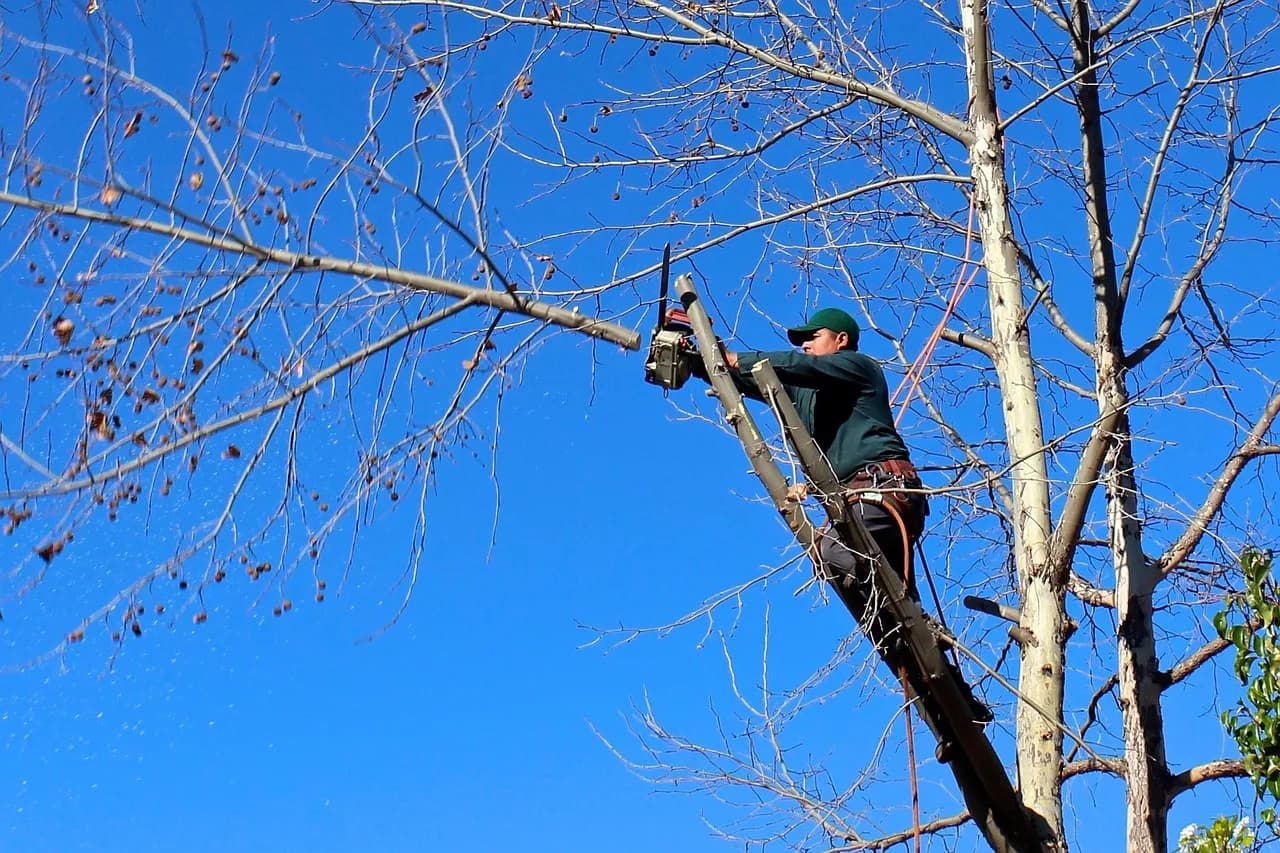
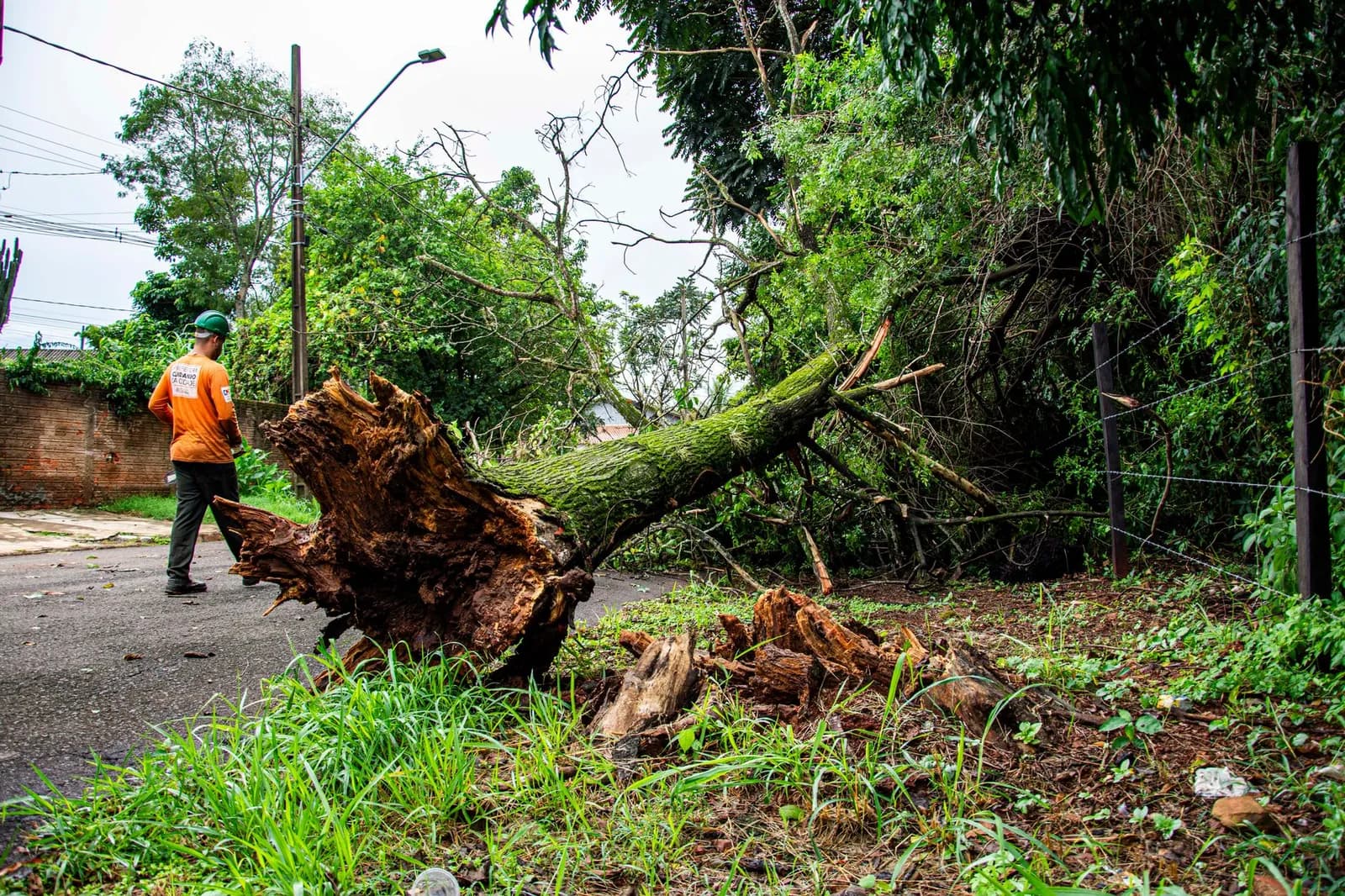
Photo by David McElwee on Pexels
Two sets of rules apply, and neither is hard to meet. One is legal, the other is about whether inbox providers will deliver your mail at all.
On the legal side, the FTC's CAN-SPAM compliance guide for businesses requires a clear way to opt out, a valid physical postal address in every message, and accurate From and Reply-To details. Opt-out requests must be honored within 10 business days, and each separate email that breaks the rules can carry penalties of up to $53,088.
On the deliverability side, Google's sender requirements for Gmail ask every sender to authenticate their domain with SPF or DKIM and keep reported spam rates below 0.3%. Senders who send 5,000 or more messages a day also need DMARC and one-click unsubscribe, and a clearly visible unsubscribe link is sensible whatever your size.
Most tree companies will never reach the bulk threshold. The authentication step is still worth doing, because your email platform or web person can set it up once and it protects every message afterwards.
The practical rule is to make unsubscribing easy. A person who can leave quietly won't mark you as spam.
What to measure
Track replies, estimate requests and booked jobs first, because those are what email is for. Open rate is a weaker signal than it looks.
Mailchimp's benchmark report puts the average open rate across its users at 35.63%, with a 2.62% click rate and 0.22% unsubscribes, as of its December 2023 figures. Mailchimp doesn't publish a home services or tree care figure, and it warns that Apple's Mail Privacy Protection can distort open rates, so treat those numbers as a loose reference and compare yourself against your own past sends.
A better habit is to note, for every job you book, whether an email played a part. A simple "how did you hear from us" field on the estimate form is enough.
Watch unsubscribes and complaints too. A rising complaint count is an early sign you're sending too often or to the wrong people.
Tying email to the rest of your marketing
Email works best when the page it links to is ready. If a reminder sends someone to a slow site with a buried phone number, the email did its job and the website lost the lead. Our notes on tree service website design that converts cover what that landing page needs.
For the wider picture of where email fits among search, listings and referrals, see our tree service marketing ideas.
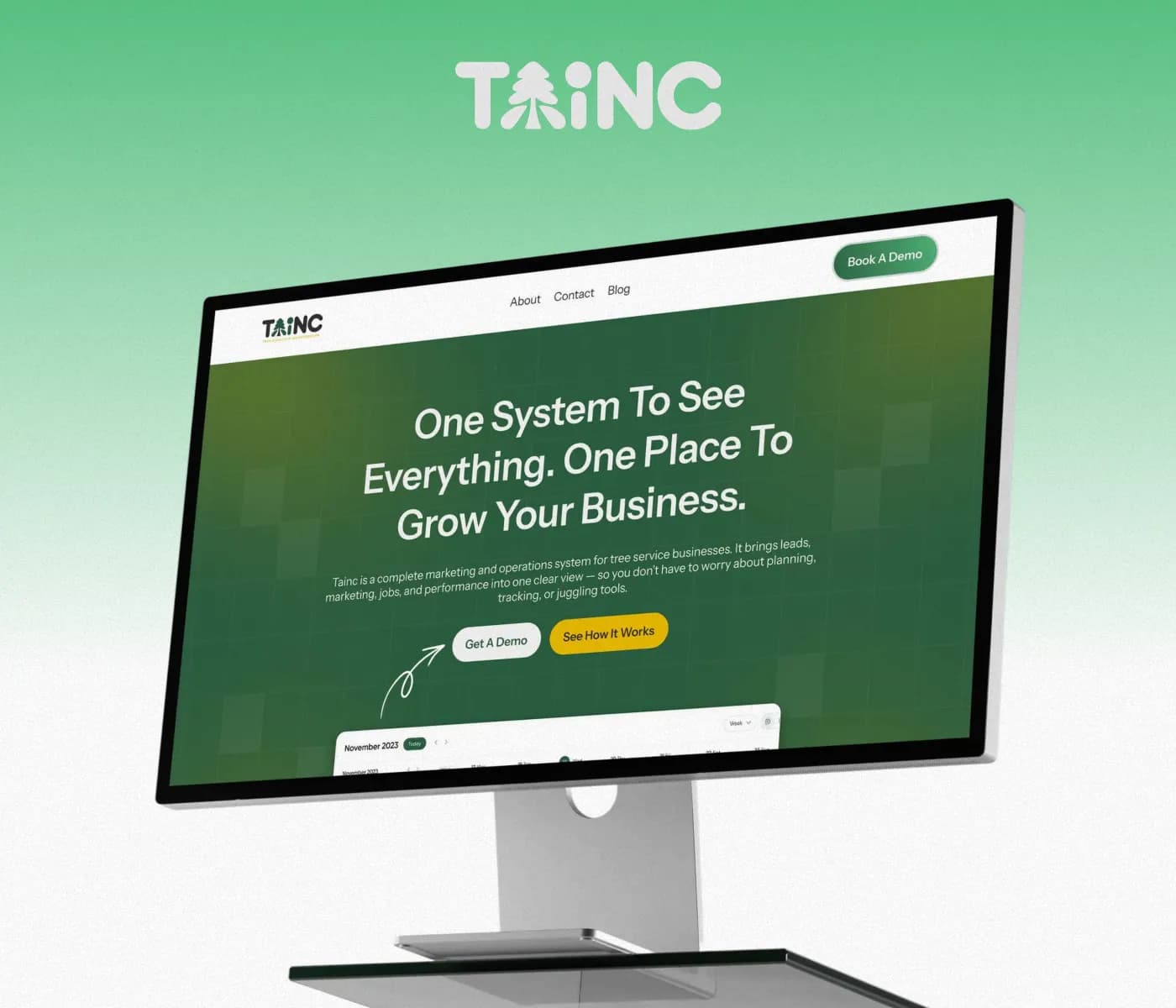
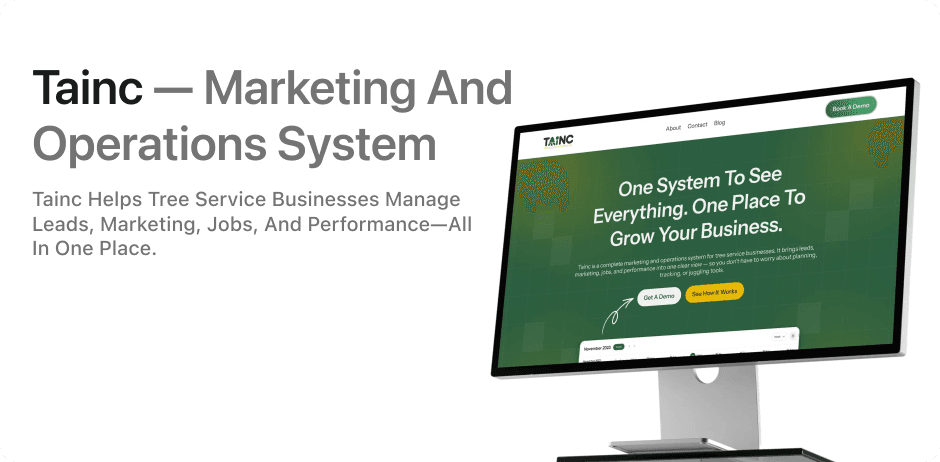
The harder problem is follow-up that depends on someone remembering. When we built TAINC's platform for tree service businesses, the aim was one dashboard that combines lead capture, crew scheduling, AI-assisted proposals and billing, so that leads don't sit waiting on manual replies. You can read how that came together in the TAINC case study.
If your email list lives in one tool, your estimates in another and your jobs on a whiteboard, setting up automated follow-up is the next step. Triggers like "job completed, send the referral ask in a week" are exactly what automation handles well.
Frequently asked questions
Do I need special software to start?
No. Any email platform that supports unsubscribe links, a postal address in the footer and domain authentication will do. Start with a simple list exported from your invoices and add automation later.
Is it legal to email past customers without asking again?
The FTC's CAN-SPAM guide sets the rules for commercial email: a clear opt-out, a physical address and honest sender details. It's worth confirming your exact obligations with a lawyer, especially if you also send texts.
How big does my list need to be?
Size matters less than relevance. A few hundred real past customers who remember your crew will outperform a large list of strangers, and event-driven emails work even on a small one.
What's the best day to send?
We haven't found a source that proves one, so we won't name a day. Test a couple of send times against your own bookings and keep whichever brings more replies.
Should I send a newsletter or only event-based emails?
Event-based emails are the better starting point, since each has a clear reason to exist. Add a short seasonal note once the basics are running, and keep it to the upper limit of about once a month.
Cover photo by Rodolfo Gaion on Pexels
Sources
- CAN-SPAM Act: A Compliance Guide for Business — Federal Trade Commission
- Email sender guidelines — Google