

















A tree removal customer rarely needs you again next month, so the real value of that job after the invoice is who they tell. A tree service referral program turns that conversation into something you can plan for: a reward, a moment to ask and a way to count what comes back.
Below is how to set one up, who to include besides past customers, and where the common mistakes sit.
How a tree service referral program works
A referral program gives people a reason and a simple way to send you business, then pays them when it turns into a job. You only spend money on a referral that books, which separates it from ads, where the spend happens before you know whether anyone called.
Four pieces make it work: someone to refer you, a reward they actually want, a moment where asking feels natural, and a record of where each lead came from. Skip the last one and you'll never know whether the program is paying for itself.
One limit up front. Referral Rock's guide for landscaping companies points out that a program captures word of mouth that already exists and doesn't create it where none occurs. If customers aren't talking about your crews, fix that first.
Decide who can send you work
Past customers are the obvious referrers, but in tree work they aren't the strongest source. Storms, insurance claims and property sales create jobs for several trades at the same moment, and the people who see those jobs first aren't homeowners.
The networking directory PTBN ranks tree service referral partners by what starts the job rather than by how close they are to your trade. Its list, built around the trigger of a named storm coming through, runs like this:
- Community association managers for HOAs and condos
- Property and casualty insurance agents
- Commercial property managers
- Roofing contractors
- Facility managers
PTBN suggests meeting them where they gather, such as the Community Associations Institute, independent insurance agent associations and property management groups. It gives no publication date, so treat the ranking as a starting list rather than a measurement.
Your own ranking will differ by market. Look at your last twenty commercial jobs and note who called you; that's your real partner list.
Choose rewards that fit the person referring
The right reward depends on whether the referrer will ever hire you again. Referral Rock's guidance separates recurring clients, who suit credits toward future service, from one-off clients, who suit cash, gift cards or a small gift.
Its walkthrough example is a friend who gets 15% off a first visit while the referrer gets $30 off their next bill. Treat those numbers as an illustration, not a benchmark, since your average job is far larger than a lawn visit.
- Repeat customers (annual pruning, property managers): credit against their next job.
- One-time customers (a removal after a storm): cash or a gift card after the referred job is paid.
- Commercial referrals: a larger reward, which Referral Rock also recommends for higher-value work.
- The new customer: a discount or service credit on their first job, so the referral feels like a favour to both sides.
Pay when the referred job is completed and paid, not when the phone rings. Otherwise you're rewarding quote requests that go nowhere.
Keep referral rewards away from your reviews
Linking a referral reward to a Google review is the quickest way to damage the profile that brings you local searches. Google's own policy on fake engagement treats incentivised reviews as a violation, and it can respond with restrictions on the Business Profile.
Those restrictions include blocking new reviews or ratings for a set period, unpublishing existing ones and showing a warning to consumers that fake reviews were removed. For a company that gets much of its work from map results, that's a bigger loss than any referral reward.
So reward the booked job, never the review. Our guide to tree service Google Business Profile covers what the profile should carry, and it's worth reading before you write any referral wording that mentions reviews.
Ask at the moment customers are happiest

Timing does more work than the reward does. Referral Rock recommends asking when the customer is happiest: right after the job is finished, or when they've just said something positive about the crew.
It lists several channels, and a tree service can use most of them without spending anything:
- A QR-coded referral card handed over when the cleanup is done
- A line on the invoice and the confirmation email
- One announcement to your email list, instead of repeated nudges
- A button on your website
- Crew leads trained to mention it during the work
Crew training is the one that gets skipped. The person standing in the yard when the customer says "that looks great" is your crew lead, not your office manager, so give them a card and one sentence to say.
Give every customer a referral link by default, too, rather than making them sign up for the program first. Each extra step loses people who were willing a moment ago.
Trace each referral to a paid job
A referral you can't trace is a referral you can't pay for, and it hides whether the program works. At minimum, every lead needs a "how did you hear about us" field, and the referrer's name must follow the lead through the estimate to the invoice.
Referral software automates this with QR codes and links that attribute each lead and show which customers refer most. For a small volume of jobs, a spreadsheet with the referrer, the referred customer, the job and the date paid does the same work. Move to software when manual matching starts to slip.
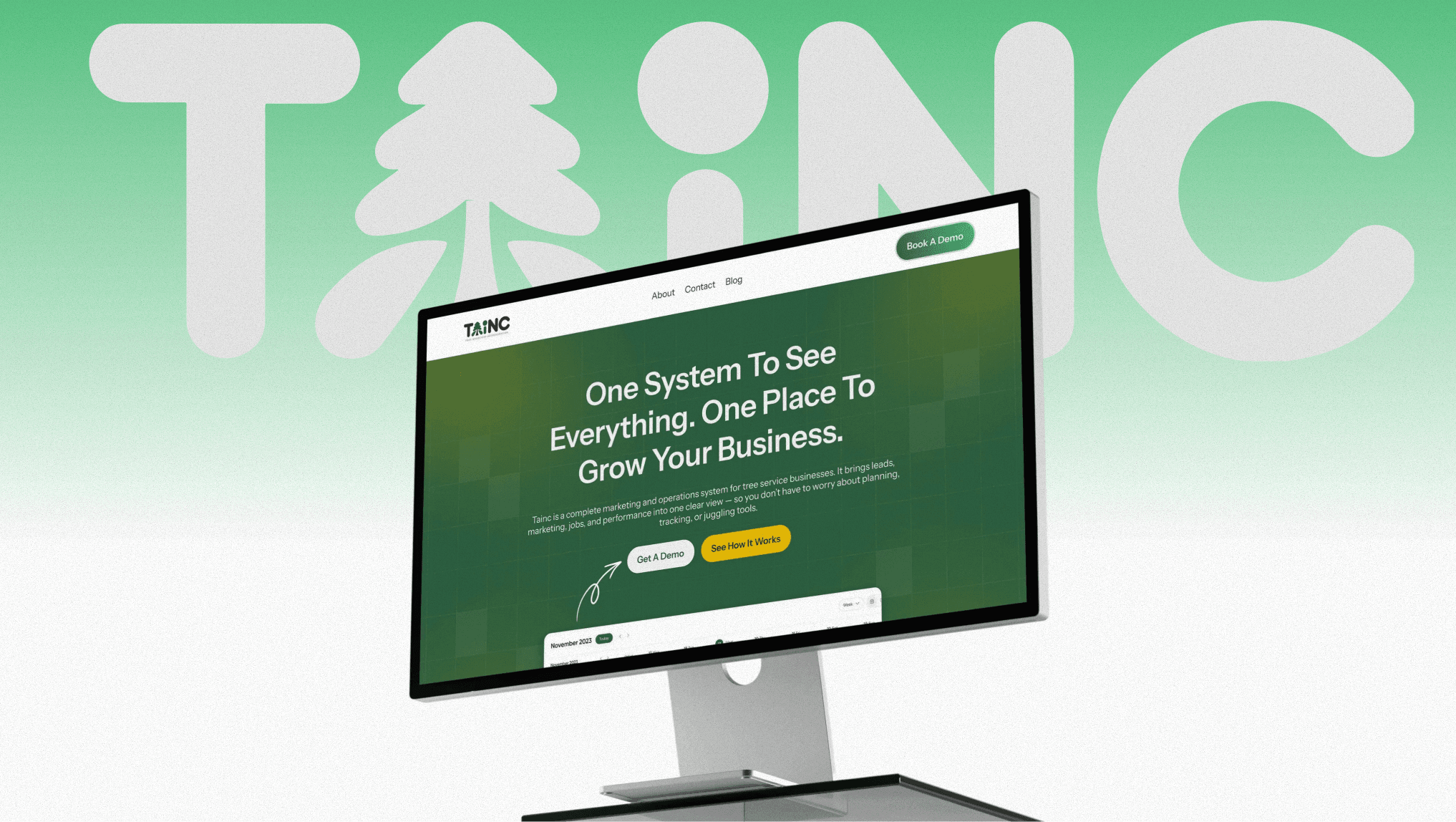
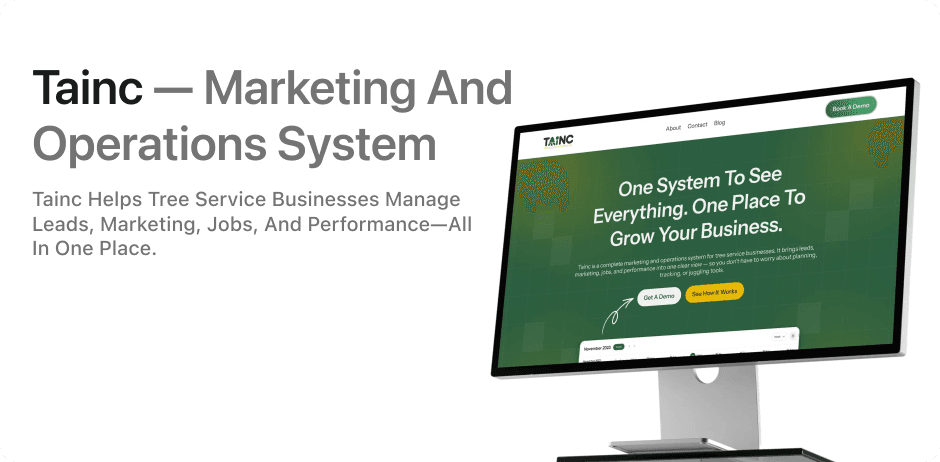
The harder problem is the one tree companies have already: lead sources scattered across tools. When we built the TAINC platform for tree service companies, we put lead capture, crew scheduling, AI-assisted proposals and billing in one dashboard. A setup like that suits referral tracking because the lead and the invoice sit in the same place.
If you track nothing else, track two numbers each quarter: referred jobs paid, and rewards paid out against them.
Where a referral program stops helping
A referral program sits on top of the rest of your marketing and can't replace it. If few people find you in the first place, there are few customers to refer you, and the stronger move is to build the base first.
Our posts on tree service marketing ideas and building a trusted brand for your tree service cover that base. If you'd rather have it done for you, our digital marketing and growth work is where we help companies like yours.
Start small. Pick one reward, give the cards to your crew leads this week, and add one name to the tracking sheet for every referral that comes in.
Frequently asked questions
How much should I pay for a tree service referral?
None of the sources we read give a standard figure. Referral Rock's example pairs 15% off for the new customer with $30 off the next bill for the referrer, but that's a lawn-care scale. Size your reward against what a typical job earns you, and pay more for commercial work.
When should I pay the reward?
Once the referred job is finished and paid. That keeps the program a cost you only incur on real revenue.
Can I offer a reward for a Google review?
No. Google's Fake Engagement policy treats incentivised reviews as a violation and can restrict your Business Profile. Tie rewards to booked jobs only.
Do I need referral software?
Not at the start. A spreadsheet that logs the referrer, the new customer and the paid job is enough while volume is low; software helps once matching leads by hand becomes error-prone.
What if nobody refers anyone?
A program won't create word of mouth that isn't already happening. Look at the quality of the work, the follow-up and your reviews before changing the reward.
Cover photo by Masood Aslami on Pexels
Sources
- Landscaping referral program — Referral Rock
- Tree Service: Best Referral Sources — PTBN