



















Good tree service seasonal marketing starts from a fact about trees, not about advertising: the best time to prune most of them is late winter, and a homeowner who has never thought about pruning in January won't think about it until you remind them. The campaigns that work are the ones that land a few weeks before the job makes sense.
What follows is a calendar built on when tree work is actually done well, and when weather forces it to be done fast.
How tree service seasonal marketing follows the tree's calendar
Plan around three clocks at once: the dormant season, the storm season and the disease window for oaks. Each one creates a different kind of customer, and each needs a different message.
The dormant clock is the friendliest. According to the Colorado State Forest Service, late winter, from February through early March, is the best time to prune most trees, because wounds close quickly when cutting happens just before new growth. That gives you a natural pitch for homeowners: book now, the tree will thank you in spring.
The storm clock is the opposite. Nobody plans for it, so you can't schedule demand, only your readiness. And the oak clock is a restriction that shapes what you're allowed to sell, which we'll get to below.
The calendar at a glance
Here's the year in one view. The months are guides: shift them by a few weeks to match your own climate and what your local arborists and extension office advise.
| Window | What the customer needs | Campaign to run |
|---|---|---|
| Late winter (February to early March) | Structural pruning while trees are dormant | Dormant pruning booking push |
| April to July | Removals, hazard checks, storm-proofing; no oak pruning | Hazard inspections, cabling, removal quotes |
| Late summer and early fall | Preparation before the storms and leaf drop | Pre-storm assessments, cleanup bookings |
| November to winter | Dormant pruning reopens, including for oaks | Early-bird pruning and winter hazard checks |
| Any time after a storm | Fast response, same-day estimates | Emergency ads and profile updates |
The rest of this post walks through each row and what to say in it.
The late-winter pruning booking push
Start the pruning campaign in the weeks before February, since people book when they're prompted, not when the calendar says so. A January email and a few local posts are cheap, and the offer is easy to explain.
The Arbor Day Foundation lists several reasons to prune during the dormant season. Without leaves, an arborist sees the structure and the problem branches clearly. Fresh cuts are less exposed to insects that carry tree-killing fungi. And bare branches are lighter and easier to reach, which cuts time on the job.
Use those points in your copy, but pick one per channel. A postcard needs a single reason, and the arborist-explains-it video can carry the rest.
Maples, elms, birch and walnut can ooze sap after late-winter cuts. The Colorado State Forest Service says this looks alarming but shouldn't harm the tree. A short line on your booking page saves you a worried phone call in March.
Spring and early summer call for inspections, not oak pruning
From April through July, oaks are the exception to every pruning promotion you run. The Wisconsin Department of Natural Resources advises against pruning or cutting oaks from April through July, because sap-feeding beetles carry oak wilt spores to fresh wounds, and they can find one in as little as 15 minutes.
For a marketer that has a practical consequence. A blanket spring pruning discount, sent to a neighbourhood full of oaks, invites exactly the work you shouldn't do. Segment the offer, or point oak owners to a winter booking instead.
What you can sell in this window is the stuff that doesn't open wounds on oaks: hazard inspections, removals of trees that are already dead or leaning, and storm-readiness checks ahead of the summer. Your Google Business Profile is the right home for that message, because it's where a homeowner searching for "tree inspection near me" lands first.
If you're not sure the profile and local pages are doing their job before the season starts, our guide to tree service local SEO covers what to fix first.
Getting ready for storm season before the phone rings

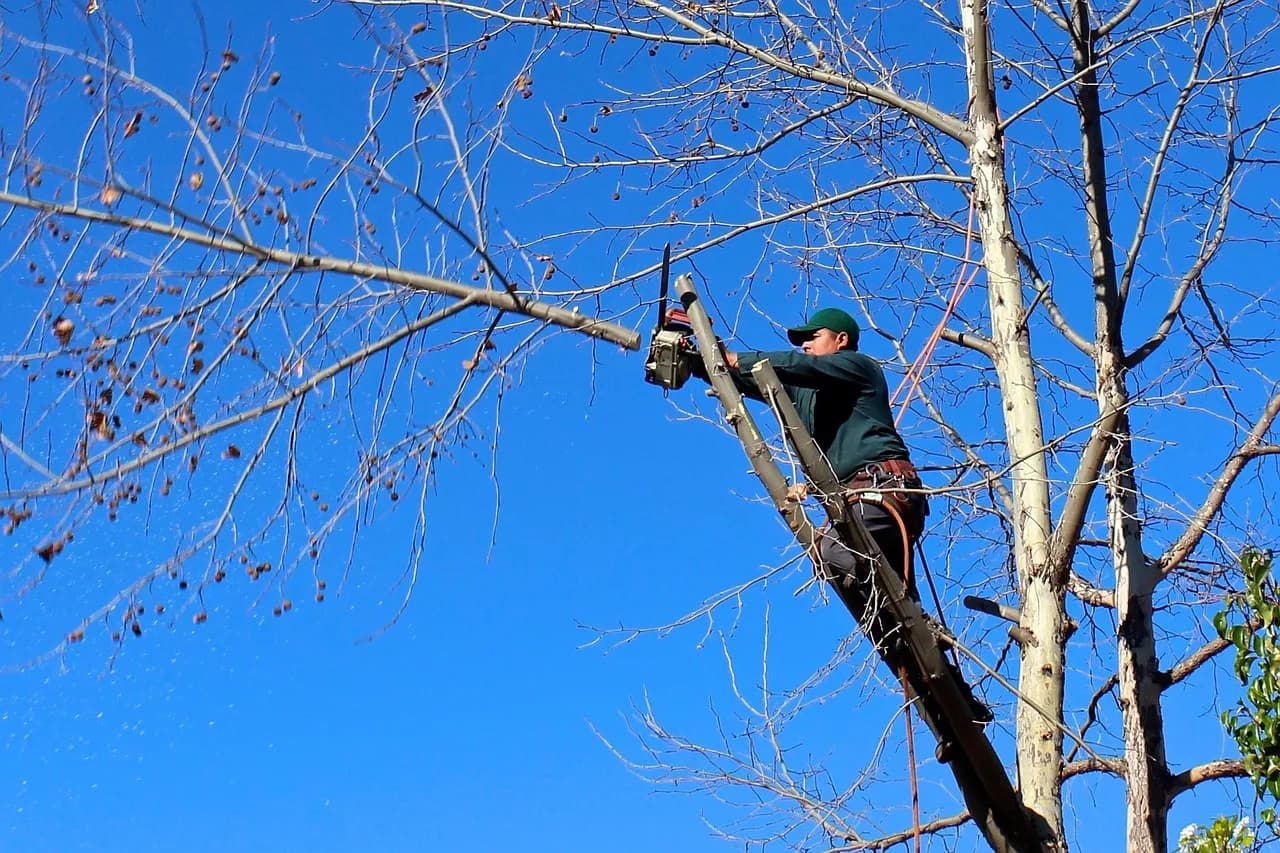
Photo by Erik Chistov on Pexels
Storm demand arrives all at once and rewards whoever answers. In a report on a wet winter in Marin County, California, CBS reported a serious backlog for tree removal companies, with one local operator fielding 20 to 30 calls a day with a crew of six.
That's one county in one season, so don't treat it as a forecast for your market. It does show what a surge looks like from inside the business: more calls than the crew can take, and a customer who calls the next company when nobody picks up.
Before storm season, prepare the pieces that can't be built in a hurry. Have an emergency page ready, a call-handling plan, and a short ad set you can switch on within hours of a weather event. Run one pre-storm campaign in late summer aimed at the trees most likely to fail, since owners will book an assessment before the forecast turns and won't after.
The same crush is where slow manual follow-up costs you most. When we built the TAINC platform for tree service companies, one dashboard combined lead capture, crew scheduling, AI-assisted proposals and billing. A surge week is the clearest argument for having those connected.
Fall cleanup and the reopening of oak season
The Wisconsin DNR recommends avoiding wounding oaks until October 1 at the earliest, and winter is its recommended pruning time. So the pruning conversation can restart in November, and an early-bird offer for oaks lets you fill the dormant calendar before the February rush.
In early fall, lean on cleanup work: leaf removal, deadwood and branches that came down over summer. Late fall is the moment for winter hazard checks, so dead or weak limbs don't fail under snow or ice. Both are useful, low-friction first jobs for a new customer, and a good first job becomes next February's pruning booking.
Which channels carry which season
Match the channel to how urgent the customer is. Dormant pruning is a planned purchase, so it suits email, postcards and social posts that a homeowner can act on next week. Storm work is an urgent purchase, so it belongs in search and on your profile, where the customer is already looking.
Our guides to social media for tree service companies and tree service SEO go deeper on each. And if you'd rather have someone run the calendar for you, that's what our digital marketing and growth work is for.
Finally, write the whole calendar down before January and put each campaign's start date two to three weeks ahead of the work it sells. Then adjust it once a year against your own booking records, since those will tell you more about your market than any template.
Frequently asked questions
Can I run an oak pruning promotion in summer?
It's best not to. The Wisconsin DNR advises against pruning or cutting oaks from April through July, and recommends avoiding wounds on them until October 1. Promote winter booking for oak owners instead.
Why does sap leak from maples and elms after late-winter pruning?
Some elms, maples, birch and walnut trees visibly exude sap when pruned in late winter or early spring. The Colorado State Forest Service says this shouldn't harm the tree.
Is winter a cheaper time to do pruning work?
The Arbor Day Foundation notes that bare branches are lighter and easier to access, which reduces time and cost. Whether you pass that saving on is a pricing decision for your business.
Cover photo by Gustavo Fring on Pexels
Sources
- Late winter months the best time to prune trees — Colorado State Forest Service
- Why should you prune your trees during dormant season — Arbor Day Foundation