A wrapped truck advertises every day it's on the road, and almost nobody can tell you what it earns. Tree service truck wrap marketing leans on impression counts that come from vendors, so the question worth asking is a smaller one: how many extra jobs does it take to cover the bill?
Below you'll find the price ranges we could find on vendor pages, why the usual reach figures deserve suspicion, and a way to measure a wrap so you aren't guessing three years in.
What tree service truck wrap marketing costs
Lettering starts around $250, a full printed wrap on a crew truck, chipper or bucket truck starts around $3,500, and partial wraps fall in between. Every figure here comes from a vendor's page, so treat them as ranges to take to a local shop rather than as quotes.
| Option | Typical price | What it buys |
|---|---|---|
| Commercial lettering | From about $250, final quote by layout | Company name, logo and phone number readable from a distance |
| Partial wrap | Roughly $1,000 to $3,000 (40% to 60% below a full wrap) | Printed graphics on part of the vehicle |
| Full wrap | $2,500 to $5,000 | The whole truck as a moving sign |
| Chippers and trailers | Quoted per job | Lettering, partial graphics or full wraps for flatbeds, enclosed trailers and stump grinders |
The $250 and $3,500 starting prices come from Blackout Window Tinting's guide to tree service truck wraps, which adds that its full-wrap price for a bucket truck leaves out the boom and bucket. The wider range and the partial-wrap discount are from 4OVER4's vehicle wrap statistics page.
Since prices are set per vehicle, a company with a crew truck, a chipper and a trailer is collecting three separate quotes.
How many people actually see a wrapped tree truck?
Nobody has measured it for your truck. The number most pages repeat is 30,000 to 70,000 daily impressions per wrapped vehicle in urban areas, which 4OVER4 credits to the Outdoor Advertising Association of America while QuickBooks' guide to car wraps for business credits Geopath for the same range.
When two pages give different origins for one figure, neither has read the original. And an impression here means someone who could have seen the truck, which is a long way from someone who read the phone number.
Tree trucks also behave differently from delivery vans. They sit outside one house for most of the day, so the audience is smaller than a highway figure implies, but it's mostly homeowners in the area you already serve.
The same statistics page prints a cost per thousand impressions for wraps that undercuts billboards, newspapers and TV by a wide margin. It cites no source for the wrap figure or for most of the comparisons, so leave them out of your plan.
Working out whether a wrap pays back
A wrap pays back when the profit from the jobs it brings in passes what you paid for it. Divide the price by your average profit per job and you have the number of extra jobs you need.
Take a $4,000 wrap, the middle of the full-wrap range. If a typical job leaves you $1,000 in profit, four extra jobs cover it. Those are placeholder figures, so swap in your own average job.
Because the cost is paid once and the graphics stay on the truck for years, the bill is spread across all of them. Signs NYC's wrap ROI guide is candid about the limit of that logic: a wrap builds awareness, and your reputation, website and reviews are what close the sale. It offers no lead or revenue data of its own.
Our view is that lettering or a partial wrap is the safer first purchase for a one-truck company. A smaller bill lowers the number of jobs needed to break even, and a full wrap makes more sense once you can show calls coming from the first.
Tracking the calls a wrap brings in
Without tracking, a wrap's ROI is a guess, and a guess in either direction is expensive. The Signs NYC guide suggests putting a phone number, a web address and a QR code on the rear panel, linked to a booking page or contact form, then counting responses from each.
For a tree service, give the wrap its own phone number and its own short web address. A call to that number can only have come from the truck. Point the address at a page built for it, the kind of page we cover in our guide to tree service website design.
Some people will never dial or scan. QuickBooks suggests a wrap can later send customers to search for your brand, so watch branded searches and the tree service Google Business Profile for lifts after a truck goes out. Asking "how did you hear about us?" on every call catches the rest.
Measurement is what we build for. When we made the platform for TAINC, a growth platform for tree service businesses, untracked marketing spend and ROI and leads lost to slow manual response were among the problems it addressed. It now combines lead capture, crew scheduling, AI-assisted proposals and billing in one dashboard.
If you'd rather have the tracking number, landing page and reporting set up for you, that's the day-to-day of our digital marketing and growth work.
What to put on the truck
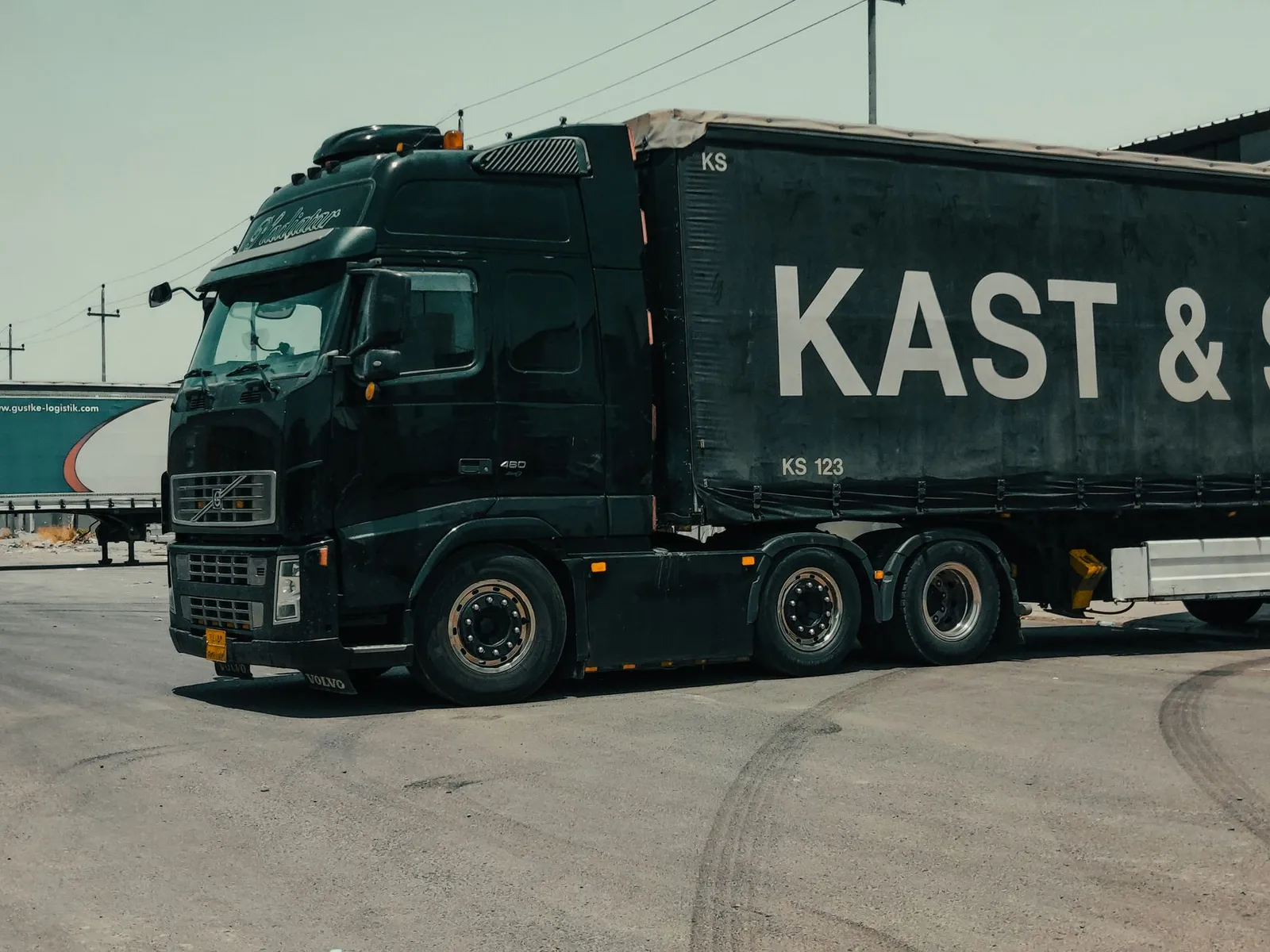
Photo by Dextar Studio ™ on Pexels
A wrap works at a glance or not at all. The Blackout Window Tinting guide gives a short list of what belongs on tree service graphics:
- The company name and logo, sized to be read from a distance.
- A phone number legible at the distance people will actually see it from.
- Only the four or five highest-value services, not every job you do.
- Credentials and insurance wording only if you can substantiate them, and the ISA logo only if you hold ISA certification.
The same page recommends checking any required license or ID wording with the relevant authority before approving the artwork. It also warns against dead-tree or destruction imagery and against dense text, and says orange or yellow accents may help visibility in low light.
The wrap is one channel among several. Our guide to tree removal marketing covers what else gets the phone to ring, and the local SEO guide for tree services covers the people who search before they call.
What sap, chips and scrapes do to vinyl
Tree work is hard on graphics. Sap, branches and wood chips are all named as wear factors, and the vinyl can't prevent every scrape or chemical stain.
The practical step is to ask your installer to review the high-wear areas of each vehicle and to offer a protective finish where one is available, before the artwork is finalised.
Frequently asked questions
How long does a truck wrap last?
Sources disagree. 4OVER4 puts it at three to seven years, depending on the vinyl, the installation and the weather, while QuickBooks says a professionally installed wrap in high-quality materials lasts three to five years. Plan your payback on the shorter figure.
Can I change the message for storm season?
Yes, with a separate printed vinyl decal for seasonal messages, such as a storm damage response line with a call-now prompt. That avoids redoing the whole wrap for a temporary message.
Can I pressure wash a wrapped truck?
Ask your installer first. Solvents and pressure washing near the edges of the graphics can affect the print and the adhesive, which is easy to do on a truck that comes home covered in sap and chips.
Cover photo by Thang Nguyen on Pexels
Sources
- What Vehicle Wrap Advertising Statistics Tell Us in 2025 — 4OVER4
- Tree Service Truck Wraps & Graphics: Branding for Arborists — Blackout Window Tinting