A homeowner with a split oak limb over the driveway no longer has to scroll through ten blue links. They can ask an AI tool who to call and get a short list back. That shift makes tree service AEO optimization a practical job rather than a buzzword: the goal is to be one of the two or three companies named.
The good news is that most of the work is the same work that wins local search, done more carefully. The bad news is that nobody can promise you a place in an AI answer, and you should be wary of anyone who does.
What tree service AEO optimization actually involves
Answer engine optimization means making your business easy for an AI tool to find, understand and trust when someone asks for tree work nearby. For Google's own AI features, the company says there are "no additional requirements" and no "special optimizations necessary" beyond normal SEO.
That statement comes from Google's guidance on AI features and your website, last updated in December 2025. A page only has to be indexed and eligible to show with a snippet, and Google still recommends people-first content, crawlable pages, internal links and an accurate Business Profile.
So the useful question isn't how to trick an AI. It's which ordinary assets a tree company is most likely to have left half-finished.
How homeowners use AI to pick a local business
The shift is large enough to plan around. BrightLocal's Local Consumer Review Survey 2026, published in February 2026 and based on 1,002 US adults, found that use of ChatGPT and other generative AI tools for local recommendations jumped from 6% to 45% in a year. Only Facebook and Google ranked higher as sources.
Trust is the part that matters for a tree company, because the job is expensive and the person on the other end has to come onto the property. In the same survey, 42% of consumers said they trust an AI recommendation as much as traditional reviews.
One caution on scope: this is a survey of consumers in general, not of people hiring arborists. It tells you the habit is real, not how often a given search ends in a booked removal.
Start with your Google Business Profile
Your Business Profile is the one local record that Google can read in a structured way, and it's the part of your presence you control most directly. Google's help page on local ranking says local results rest mainly on relevance, distance and prominence, and that businesses with complete, accurate information are more likely to appear.
For a tree company, the fixes that matter most are plain ones:
- Verify the profile, then check that the address, service area and hours are right, including special hours for storm weeks.
- Choose the category that matches your main work, and make sure the description names the services you actually sell.
- Add real photos and videos of jobs, crews and equipment.
- Reply to every review, good or bad.
Google also states that there's no way to pay for a better local ranking. Anyone selling that is selling something else.
Reviews are the signal you can actually grow
Prominence, in Google's words, includes how many reviews you have, and Google says more reviews and positive ratings can help your local ranking. For a small crew, that means reviews need a routine rather than a hope.
Ask at the moment the customer is happiest, which is usually when the yard is clean and the invoice is paid. A text with a direct link to your profile beats a mention on the way to the truck.
Don't stop at Google. BrightLocal found that the average consumer checks six review sites, and that Google's share of review reading fell from 83% to 71% in a year. A homeowner might read Facebook or Apple Maps before they ever see your website.
Spread your effort sensibly: Google first, then whichever one or two other platforms your customers mention when you ask how they found you.
Write service pages that answer the question first
AI tools build answers from text they can read, so a tree company's website should state plainly what it does. A page titled "Services" with a photo and a phone number gives a model nothing to quote.
Give each main job its own page: tree removal, stump grinding, emergency storm work, and so on. Open each with two or three sentences that answer the obvious question directly. What does the job involve, what areas do you cover, and how does a homeowner get a quote?
Put licensing and insurance in visible text on the page, not only in a footer image. Add a short list of questions customers really ask on the phone, and answer them in full sentences.
Don't invent prices. If your quotes depend on access, tree size and cleanup, say that and say what you look at, because a made-up range will cost you the one thing AI answers reward, which is being the source people trust.
Our guide to tree removal marketing covers how those pages fit with the rest of your lead sources, and the broader walkthrough on optimizing for AI search goes further into content structure.
Do you need schema markup?

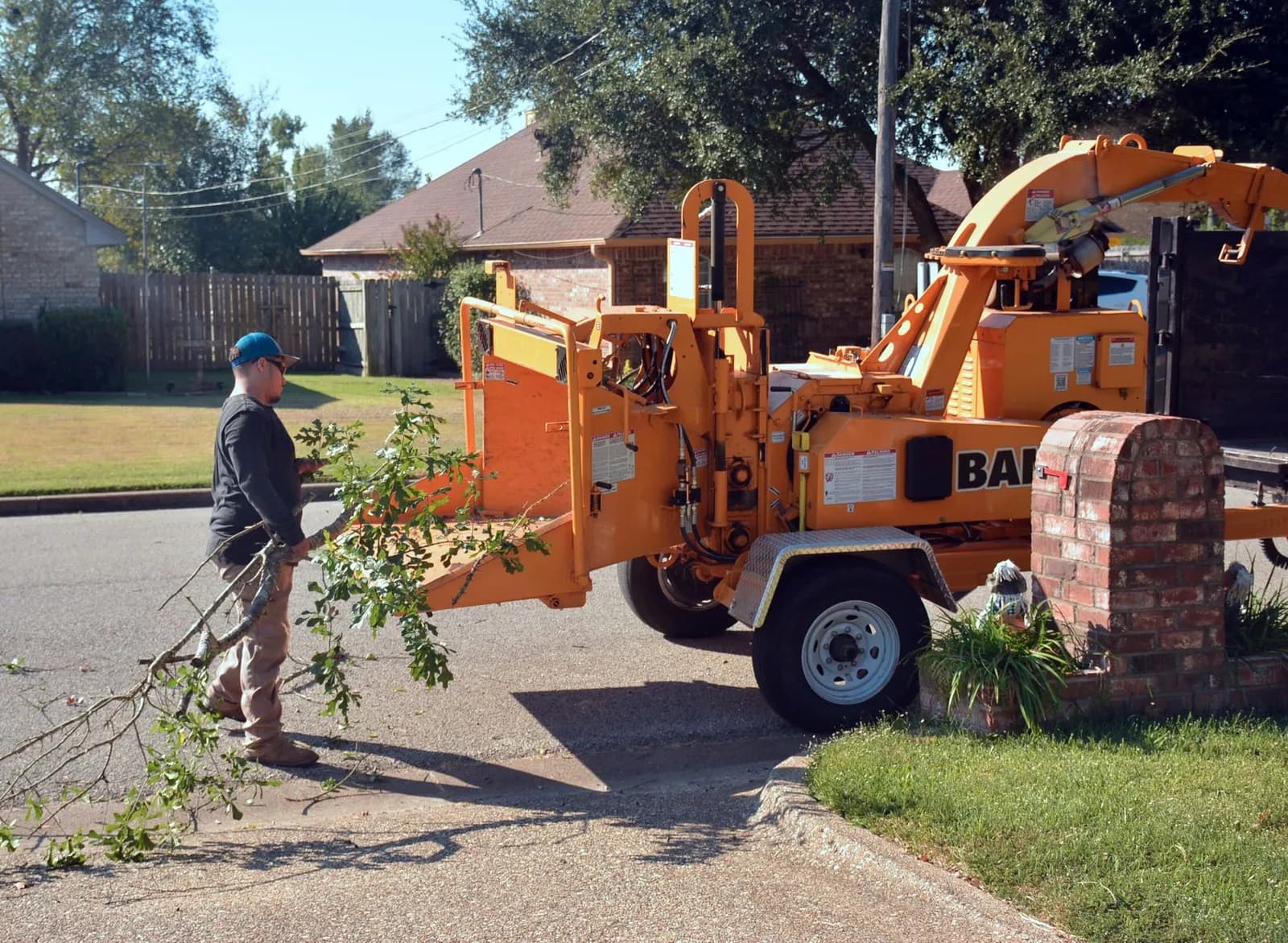
Photo by Muhammed Ensar on Pexels
Not for Google's AI features. Google says there's no special schema.org structured data to add for AI Overviews or AI Mode, though any markup you use should match what's visible on the page.
Standard local business markup is still worth having for ordinary search. Google's LocalBusiness structured data documentation lists name and address as required, and recommends opening hours, geographic coordinates and a phone number.
Treat it as housekeeping. It confirms your details to a search engine, but it won't rescue a thin website or a profile with six reviews.
Storm season is where this pays off fastest
After a storm, people search in a hurry and take the first company that looks credible and answers. That favours the business with current hours, a clear emergency page and a phone that gets picked up.
Build the emergency page before you need it, and update your Business Profile hours the day a storm is forecast. Our post on storm damage marketing goes through what to have ready.
Getting named is only half of it. When we built the all-in-one growth platform for TAINC, it combined lead capture, crew scheduling, AI-assisted proposals and billing in one dashboard, aimed at problems like leads lost to slow manual response. A recommendation you answer two days late is a recommendation wasted.
How to check whether AI tools name you
Nobody publishes a ranking report for ChatGPT, so test it yourself. Once a month, ask the tools your customers use a few plain questions in the words a homeowner would type: "who removes large trees near [your town]", "emergency tree service after storm [your town]", "how much does stump grinding cost in [your town]".
Write down who gets named, which sources are cited, and whether your business appears. Answers vary from one run to the next, so look for patterns across several tries rather than reacting to one result.
If a competitor keeps showing up, look at what they have that you don't. It's usually more reviews, a fuller profile or a service page that actually answers the question.
The longer-run version of this is a steady local presence. Our overview of generative engine optimization for home service companies explains how that thinking applies across the trade, and our digital marketing and growth team can run the monthly checks and fixes if you'd rather not.
Frequently asked questions
Is AEO different from SEO for a tree company?
Mostly no. Google says the same fundamentals apply to its AI features, so a complete Business Profile, helpful pages and good reviews serve both. The difference is in how you measure: you check which businesses the AI tools name, not only where you rank.
Do I need special files or markup for AI tools?
Google says you don't need new machine-readable files, AI-specific text files or special schema.org markup to appear in its AI Overviews and AI Mode. Ordinary indexable pages with text a person can read are the requirement.
Can I pay to be recommended?
Google states there is no way to request or pay for a better local ranking. Be cautious of any offer that guarantees placement in AI answers.
Which reviews matter most?
Google reviews come first because Google is still the most used review source in BrightLocal's 2026 survey. Consumers also check about six platforms on average, so a presence on one or two others is worth building.
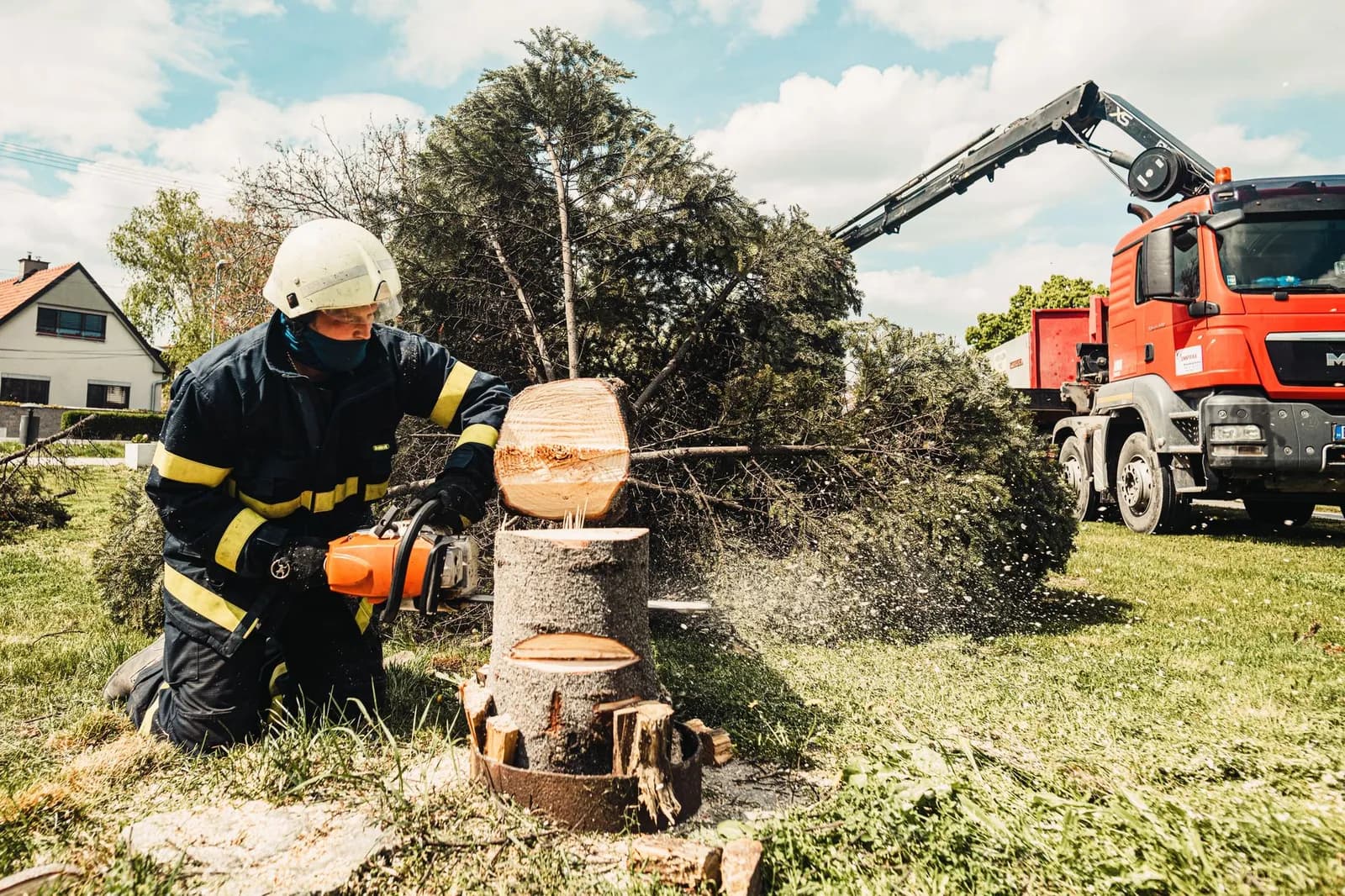
Cover photo by Helena Jankovičová Kováčová on Pexels
Sources
- AI features and your website — Google Search Central
- Local Consumer Review Survey 2026 — BrightLocal