A founder can now have a working SaaS prototype in front of investors in hours: TechTarget's guide for IT leaders says an experienced developer can finish an app in hours instead of days or weeks.
That speed is why vibe coding for SaaS products has moved from weekend experiment to a real budget conversation. The harder question is what the code looks like once the demo is over.
Our view is simple. Use it hard on prototypes and early product discovery, and put engineers between the generated code and your first paying customers. The rest of this article shows where that line sits and what the evidence says about it.
Where vibe coding for SaaS products saves the most time
It saves the most time before the product has users. Prototypes, MVPs, investor demos and internal tools are the cases where a rough edge costs little and waiting several weeks costs a lot.
It also widens who can contribute. Analysts and product managers can shape working screens themselves while developers move toward reviewing and tidying the output, which shortens the loop between an idea and something a customer can react to.
If you want the method explained from scratch, our guide to what vibe coding is and how it speeds up an MVP covers it. The more interesting question here is what changes when the product is subscription software.
Subscription products carry things a landing page never does: logins, separation between one customer's data and another's, billing, and a codebase that has to keep changing for years. Those are the places where fast generated code gets expensive.
What the research says about speed and security
Speed and safety have been measured separately, and the results point in different directions. The speed gains are real on small, well-defined work and uncertain on mature codebases. Security looks weak almost everywhere anyone has tested it.
| Study | What was measured | Result | What it means for a SaaS team |
|---|---|---|---|
| METR, July 2025 | 16 experienced open-source developers on 246 real issues, using early-2025 AI tools | Developers forecast a 24% speedup. Work took 19% longer with AI, yet they still felt about 20% faster | Gut feeling is a poor speed gauge on an established codebase, so measure it |
| Veracode, July 2025 | 80 coding tasks across more than 100 language models | Vulnerabilities from the OWASP Top 10 appeared in 45% of cases, with no improvement in newer models | Every generated change needs a security review |
| SusVibes benchmark | 200 feature requests drawn from 108 open-source projects | The best setup produced working code 61% of the time and secure working code 10.5% of the time | A feature that passes its functional tests can still be unsafe |
Read the METR randomized trial with its own limits in mind. The authors call it a snapshot of early-2025 tools in one setting, and they don't claim AI slows down most developers. METR has since marked the results as out of date and points to follow-up data from February 2026, which we haven't reviewed here.
The security numbers are harder to wave away. Veracode's chief technology officer, Jens Wessling, put it bluntly in the company's GenAI code security report: "GenAI models make the wrong choices nearly half the time, and it's not improving."
Better prompting doesn't rescue you either. In the SusVibes paper on agent-generated code, telling the model which weakness to avoid left the secure-solution rate unchanged at its best setting and lowered the rate of working solutions. The authors note their tests cover mostly Python projects and use test outcomes as a stand-in for security, so treat the exact percentages as indicative rather than a forecast for your stack.
Which parts of a SaaS product need human engineers
Anything that decides who may do what, and anything that moves money. A feature can pass every functional test while letting one customer read another's records, and in the SusVibes results most of the working solutions were still insecure.
Four areas deserve a named owner who reads the code line by line:
- Authentication and authorisation, meaning which user can see which account's records.
- Billing and subscription logic, where a wrong branch means a wrong invoice.
- Handling of sensitive data, which needs strict isolation and shouldn't be pasted into prompts.
- Third-party packages, because AI models can suggest ones that don't exist, so every dependency gets validated before it ships.
Marketing pages, admin screens, internal dashboards and throwaway experiments can lean on generated code much more freely. The difference is what an error costs and who finds it first.
A workflow that keeps the speed and trims the risk

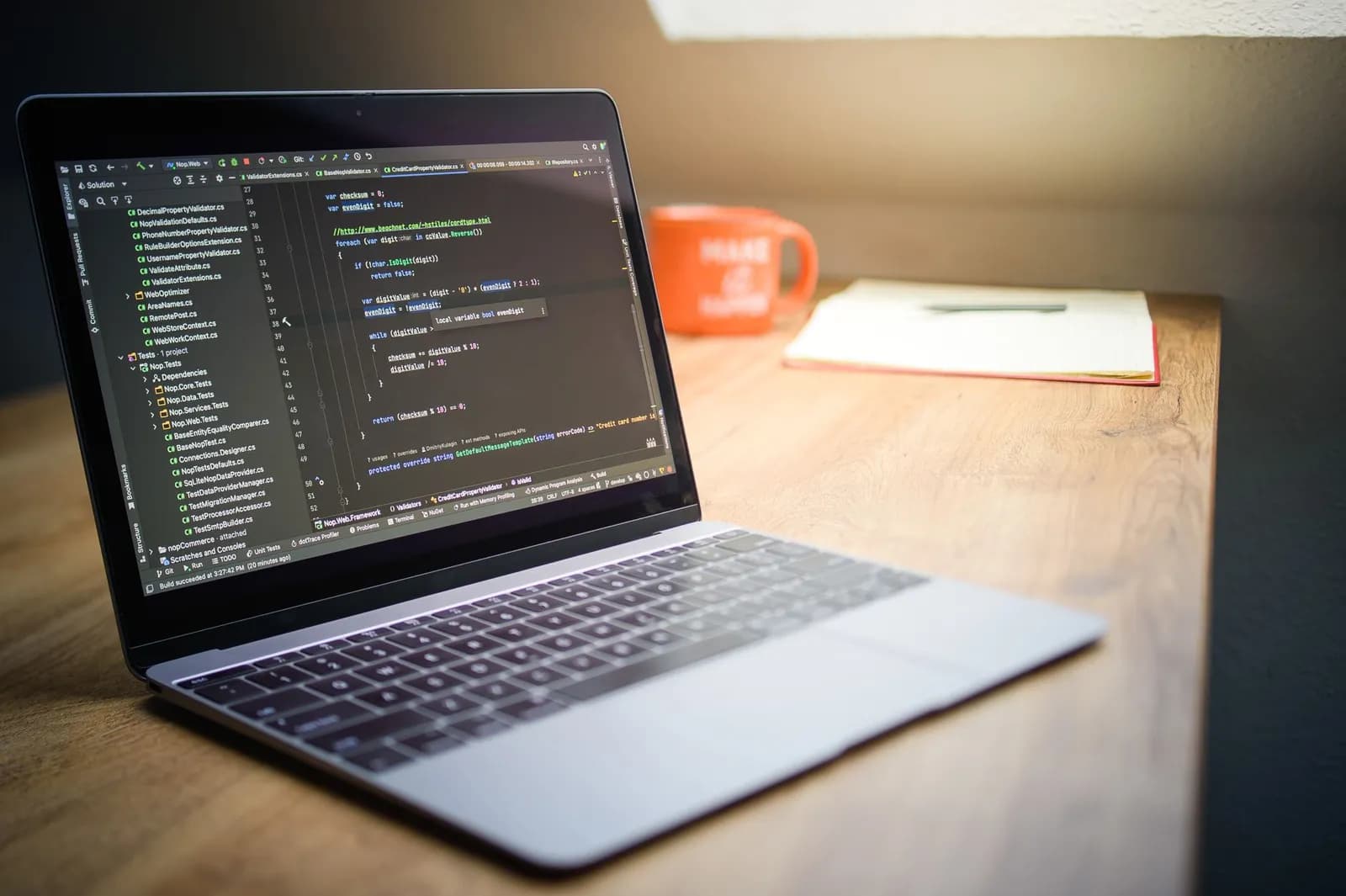
Photo by Vitaly Kushnir on Pexels
Treat generated code as a prototype until a person has reviewed it. That one rule, taken from TechTarget's governance advice, does most of the work, and the steps below make it routine.
- Write down security and coding standards before anyone prompts, so the model has constraints to work inside.
- Keep everything in source control and commit each working state, so a bad generation can be undone in seconds.
- Build in small increments and test after each one, instead of asking for a whole module at once.
- Block unknown or invalid packages at the dependency check.
- Require human review and a security sign-off for anything customer-facing or touching regulated data.
Then track two numbers: how long a prototype takes before and after you adopt the tooling, and what share of AI-generated pull requests fail automated tests, linting or dependency checks. Given how far developers' feelings drifted from the clock in the METR trial, those numbers are the only honest way to know whether the process is paying off.
For the wider list of ways early SaaS builds go wrong, see our rundown of SaaS startup app development mistakes to avoid.
Prototype with it, then ship with engineers
For a new SaaS idea, the sensible split is a vibe-coded prototype to test demand, followed by a build that engineers own. That keeps the cheap part of the speed gain and avoids carrying a prototype's shortcuts into production.
A fully vibe-coded product makes sense for an internal tool or a hobby project. It doesn't make sense for software that holds customer data and takes payments, because nobody on the team can vouch for how the code decides what a user may see.
A conventional build from day one is slower to a first demo but gives you a reviewed codebase from the start. Our comparison of vibe coding vs traditional development goes through that trade in detail.
When a validated prototype is ready to become a product, that handover is what our apps and SaaS development team works on. Before any vibe-coded feature touches a paying customer, have someone other than its author check how it decides who can see what.
Frequently asked questions
Can someone without coding skills launch a SaaS product with vibe coding?
They can launch a working project, according to TechTarget, which lists a lower barrier to entry as a benefit. For a customer-facing service or anything touching regulated data, the same guide advises human review before launch.
Does vibe coding make developers faster?
It depends on the work. TechTarget describes apps finished in hours rather than days or weeks, while METR's trial found experienced developers 19% slower on their own mature repositories with early-2025 tools. Small, well-defined builds and large existing codebases behave differently.
Are newer AI models better at writing secure code?
Veracode found that security performance didn't improve over time even as the code got better at compiling and running. Larger models didn't do significantly better than smaller ones either.
Cover photo by Daniil Komov on Pexels