















Before a homeowner calls about a leaning oak, they usually check who else has been called. In BrightLocal's 2026 survey of 1,002 US adults, 97% of consumers said they read reviews for local businesses, so your tree service reviews are being judged whether you manage them or not.
That makes reviews the cheapest piece of marketing you have, and the one most crews neglect after the truck leaves the driveway. This guide covers what shoppers look at, how Google uses reviews, how to ask for them properly and what to say when one goes wrong.
Why tree service reviews decide who gets the call
Reviews act as a filter before any conversation starts. A homeowner choosing someone to take down a tree near their house is making a high-stakes, hard-to-undo purchase from a stranger, and the star rating is the quickest proof of reliability available.
The filter is strict. In that same BrightLocal survey, 68% of consumers said they would only use a business rated four stars or higher, and 47% wouldn't consider one with fewer than 20 reviews.
Read that second number twice if you're a newer company. A spotless 5.0 from six customers can lose to a 4.6 from two hundred, because shoppers read a thin profile as a risk.
What shoppers look at in tree service reviews
Three things get checked in tree service reviews, in roughly this order: the star average, the number of reviews, and how recently they were written. Most owners only manage the first.
Recency is the one that catches established companies out. According to the same survey, 74% of consumers only consider reviews from the past three months. A big pile of old reviews doesn't help much if the newest one is from last spring.
| What shoppers check | What it tells them | What to do about it |
|---|---|---|
| Star rating | Whether past customers were satisfied | Fix the recurring complaint rather than arguing with it |
| Number of reviews | Whether the rating is based on enough jobs to trust | Ask after every job, not just the easy ones |
| Age of reviews | Whether the company is still doing good work today | Keep a steady trickle going all year, including the off-season |
| Owner replies | Whether anyone is paying attention | Answer every review, in your own words |
A steady trickle beats a burst. Fifty reviews collected in one week and then nothing for a year looks odd to shoppers and leaves you stale by the next storm season.
How Google uses reviews in local rankings
Google lists reviews under prominence, one of three local ranking factors alongside relevance and distance. Its help page on improving local ranking says that more reviews and positive ratings can help your business's local ranking.
Google doesn't publish how much weight reviews carry, and anyone quoting you an exact percentage is guessing. What you can say safely is that reviews serve two audiences at once: the algorithm that decides whether you appear in the map results, and the homeowner who then decides whether to tap your listing.
That double effect is why we treat tree service reviews as part of local search, with reputation as the side benefit. If you're still building your presence, our piece on marketing for new tree service companies covers where a profile sits among the first things to set up.
How to ask for reviews without breaking the rules
Asking for tree service reviews works best right after the job, in person, while the stump is still being ground or the yard is still clean. The request is easiest to make when the customer is looking at the result.
Make it effortless. Google says you can remind customers to leave reviews by sending a link or a QR code, and a text with the link while the crew packs up works better than a business card they'll lose. Customers do need to be signed into a Google Account to post, so expect a few to drop off at that step.
Then there's what you can't do. Google calls offering incentives such as free or discounted services in exchange for reviews fake and misleading content and strictly prohibits it. A discount on the next trim for a five-star review is out.
The FTC rule on fake and bought reviews
The law sits behind that policy. The FTC's rule on consumer reviews and testimonials went into effect on October 21, 2024, and it makes a business liable for writing fake reviews or buying ones it knew or should have known were false. Offering incentives for five-star reviews is prohibited, even if the reviewer discloses the incentive.
The same rule bars using intimidation or groundless legal threats to stop someone reviewing you or to get a review removed. Courts can impose civil penalties for knowing violations, so a bad review is not worth a threatening letter.
A simple ask that works for a crew
Pick one person, usually whoever closes out the job, and give them one sentence to say: that you'd appreciate an honest review, and here's the link. Honest is the operative word. Don't screen out unhappy customers and ask only the pleased ones, because a profile with no rough edges at all is the very thing readers have learned to distrust.
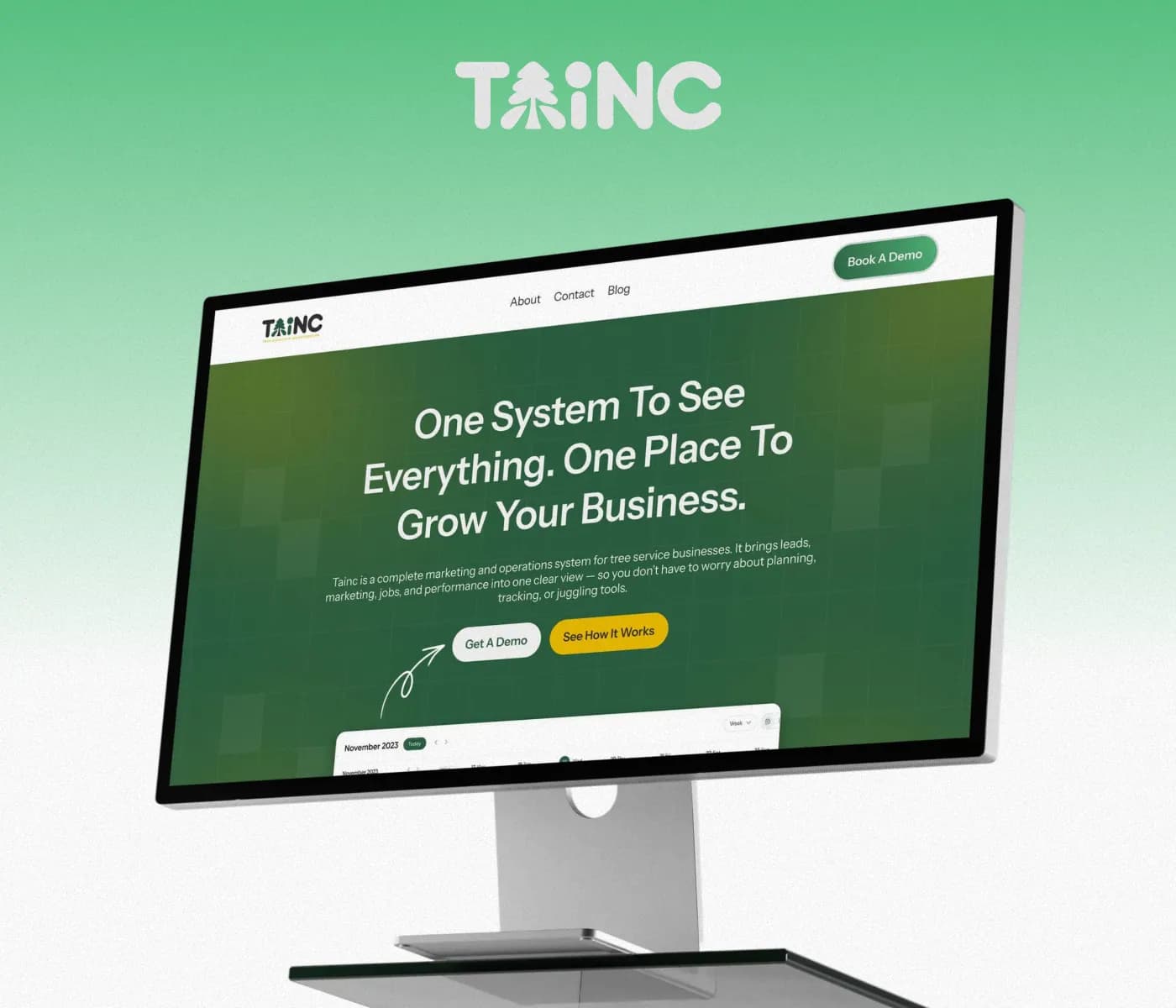
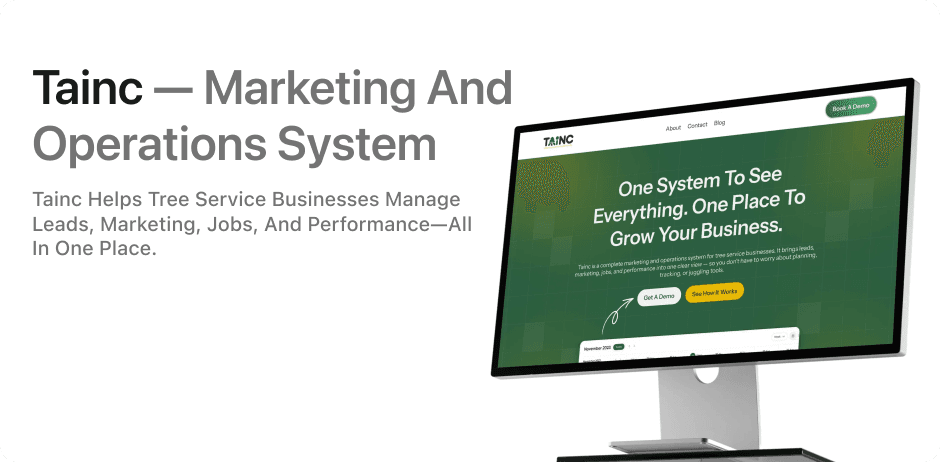
One more practical point. Requests that depend on someone remembering will be skipped in July when every crew is stretched. We built TAINC's all-in-one platform for tree service businesses around one dashboard combining lead capture, crew scheduling, AI-assisted proposals and billing, and that's the kind of setup where a follow-up step can ride along with the job instead of living in somebody's head.
Answering reviews, good and bad

Reply to everything. BrightLocal found that 89% of consumers expect owners to respond to reviews, and 80% are likely to use a business that responds to all of them.
How you reply matters as much as whether you do. Half of consumers in that survey are put off by generic or templated replies, and Google's own guidance asks for the same: avoid identical thank-you messages, and share something useful or answer a question where you can.
For a negative review, the advice from Google is plain. Apologise where it's warranted, be honest about what you can and can't do, sign with your name or initials, and respond promptly. If the dispute is complicated, invite the reviewer to call or email you rather than arguing in public. Never publish their private details.
Consider the reader of the argument, too. The customer who left the review has already made up their mind. The person who matters is the next homeowner scrolling through, deciding whether you're someone they'd trust with a chainsaw near their roof.
Turning reviews into more jobs
Once your tree service reviews exist, put them to work. Pull a few specific lines about punctuality, cleanup or a hard removal into your website and your estimates, with the customer's permission, and mention your star rating wherever you quote prices.
Reviews also tell you what to say elsewhere. If customers keep praising how clean the yard looked afterwards, that's your headline for the next campaign. We go further into this kind of competitive positioning in our guide to competitor analysis for tree service companies.
For the wider picture, from ads to your website and seasonal planning, see tree service marketing ideas that actually bring in jobs. And where you want review requests and replies to happen without anyone chasing them, our AI and automation work is where that gets built.
Start small this week with your tree service reviews. Send the review link to your last ten customers with a short, honest message, and answer every review already sitting on your profile that has no reply. Both take under an hour and both are visible to the next person who searches.
Frequently asked questions
Can I give customers a discount for leaving a review?
No. Google prohibits offering free or discounted goods or services in exchange for reviews, and the FTC rule bans incentives tied to a particular sentiment such as five stars.
Do customers need a Google account to review me?
Yes. Google says customers must be signed into a Google Account to leave a review, though they can create one with a non-Gmail address.
How quickly should I reply to a review?
Promptly. Google advises responding in a timely manner, and in BrightLocal's survey 81% of consumers expect a response within a week.
Can I report an unfair review?
If a review breaks Google's content policies, you can flag it for removal. A review that is merely harsh but genuine should get a calm public reply instead.
Sources
- Local Consumer Review Survey 2026 — BrightLocal
- How to improve your local ranking on Google — Google Business Profile Help