












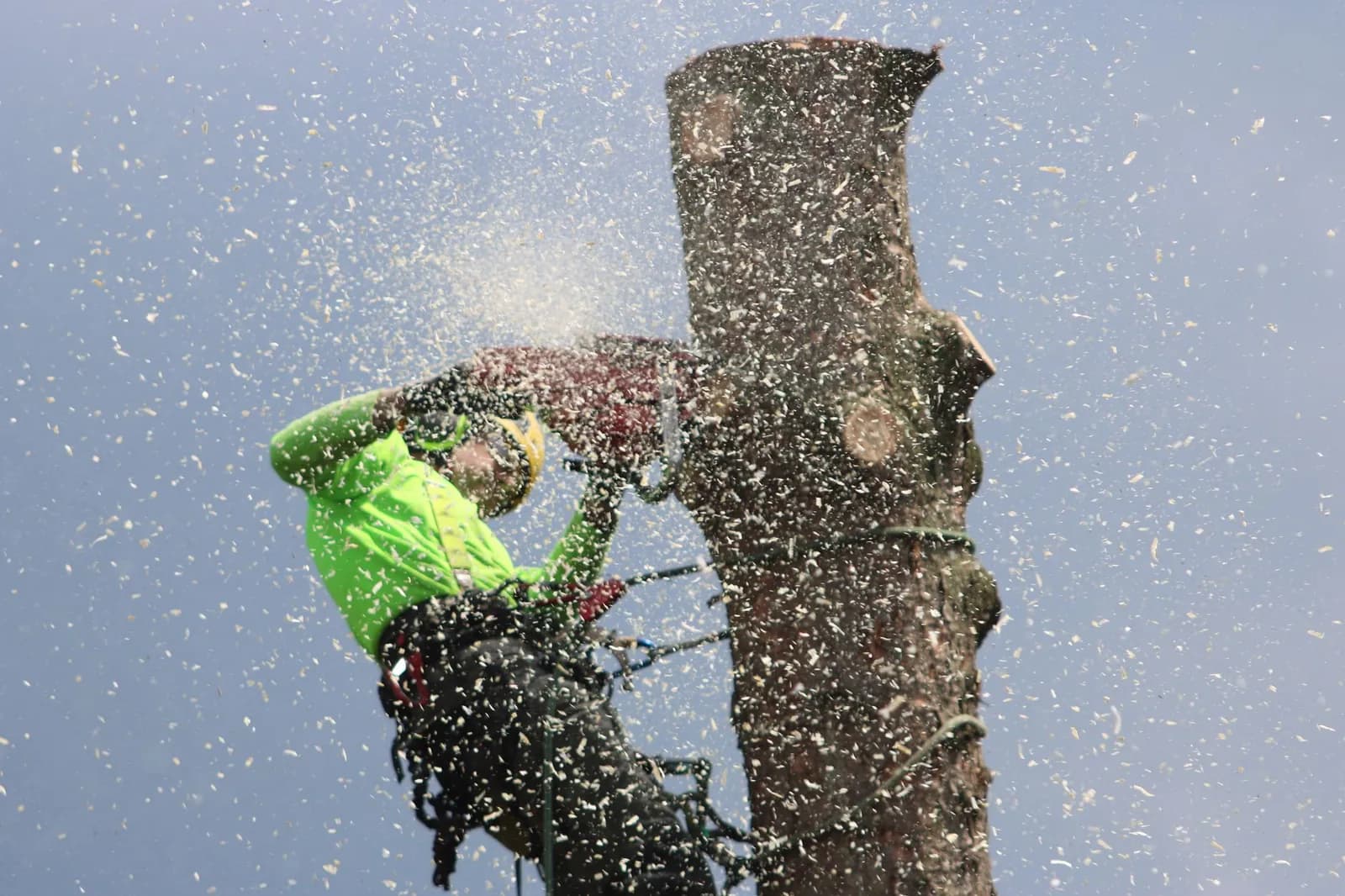
Homeowners with a fallen limb or a leaning oak are choosing a tree service in minutes, and the tree care industry marketing trends that matter most in 2026 all trace back to what they check before they call. Reviews, the map listing and, increasingly, an AI answer do most of the sorting.
This guide covers the shifts with evidence behind them, what each one asks of a tree company, and the order we'd tackle them in. Where a figure comes from a consumer survey rather than a tree care study, we say so.
Tree care industry marketing trends worth acting on
Five shifts stand out: stricter review expectations, a map listing that works as your storefront, AI tools entering the recommendation process, pay-per-lead advertising, and faster automated follow-up. The table pulls out the number behind each and what it means for a crew-based business.
| Trend | Figure | What it buys you |
|---|---|---|
| Higher star bar | 31% of consumers will only use a business rated 4.5 or higher | A rating below that costs calls before anyone reads a word |
| Fresh reviews | 74% only care about reviews from the last three months | Review collection has to be a routine, not a one-off push |
| AI recommendations | 45% of consumers use generative AI for local recommendations | Clear, consistent business details across the web |
| Pay-per-lead ads | Invalid or low-quality leads aren't charged | Spend tied to real contacts, not clicks |
| Instant response | One company reported a 42% rise in lead conversion after adding an AI chatbot | Answers at 11 p.m., not the next morning |
All but the last figure come from the consumer survey and Google documentation covered below. The last is a company's own report, so weigh it as such.
Reviews now carry a higher bar and a shorter shelf life
Of the tree care industry marketing trends covered here, this is the clearest: homeowners are reading more reviews and forgiving less. In BrightLocal's 2026 Local Consumer Review Survey, which polled 1,002 US adults and was published on February 11, 2026, the share who will only use a business rated 4.5 stars or higher rose from 17% to 31%.
Age matters as much as the score. Most respondents care only about reviews from the last three months, and a third want them from the last two weeks.
For a tree company, that rules out the old habit of asking for reviews after a big storm and then going quiet. Seasonal work makes the gap worse: a crew that was busy in October can look dormant by January if nobody asked for feedback in between.
Replies count too. The same survey found 80% of people are more likely to use a business that answers every review, while half are put off by generic, templated replies. Write the reply to the actual job, whether it was a removal, a prune or an emergency call.
Our advice: build the review request into the invoice step so every finished job triggers one, and have the owner or office manager write replies by hand. A request sent the same day the crew leaves the property gets answered while the work is still obvious in the yard.
The Google Business Profile still decides who shows on the map
Google says local results rest on three factors: relevance, distance and prominence. Relevance is how well your profile matches the search, distance is how far you are from the searcher, and prominence draws partly on how many sites link to you and how many reviews you have, according to Google's own help page on local ranking.
You can't change distance, and you can't buy position. Google states plainly that there's no way to request or pay for a better local ranking.
That leaves relevance and prominence, both of which you control. Fill in every service you offer, keep the hours accurate, and treat reviews as ranking fuel rather than decoration. We go deeper on the setup in our guide to tree service marketing ideas that actually bring in jobs.
AI tools have joined the shortlist
Of all the tree care industry marketing trends here, the newest entry in the BrightLocal survey is the biggest mover. Use of ChatGPT and similar tools for local recommendations went from 6% to 45% in a year, which put them third among sources people consult.
That's a survey of consumers in general, not homeowners hiring arborists specifically, so don't read it as a share of your own leads. But it does change what a profile and a website are for.
An AI summary can only repeat what it can find. If your name, service area and services read differently on your site, your listing and your review profiles, there's nothing consistent to repeat. Cleaning that up is cheap and it helps the map listing at the same time.
It also helps that people haven't stopped checking elsewhere: the average respondent used six review sites, and Google's share as a review source slipped to 71% from 83%.
Paying for leads instead of clicks
Google's Local Services Ads suit companies that want to pay only when someone makes real contact. Google's help page on how leads work says you pay for valid leads, that invalid or low-quality ones aren't charged, and that a missed call counts only if the caller stays on the line past 20 seconds during business hours.
Prices vary by location, job type, lead type and bidding mode, so there's no single going rate we can honestly quote. A repeat contact from the same number within 15 days isn't billed again.
The catch is that it only pays if someone picks up. An ad that produces a call your office misses at 4 p.m. on a Friday is money spent on a lead your competitor will answer.
Faster follow-up through automation

Photo by Los Muertos Crew on Pexels
The gap between a homeowner submitting a form and hearing back is where many tree companies lose the job. In a May 2025 piece for TCI Magazine, Monica Hemingway described practical AI uses for tree care businesses, from chatbots that qualify leads on location, service and timeline to automated review requests and seasonal reminders.
She cites a Washington state tree care company that reported a 42% increase in lead conversion within two months of adding a chatbot. That's one company's own claim, not a controlled test.
Her cautions are as useful as the pitch. AI can state things that are wrong, so someone should check its advice against local conditions, and it needs guidance on your business and tone. She recommends starting with one application and expanding.
We'd start with the form that arrives after hours. If you already run a CRM, our walkthrough of customer follow-up strategies for tree service companies shows what to send and when, and our AI and automation work covers building it into your existing tools.
Joining the tools together
Lead capture, scheduling, proposals and billing often live in separate apps, and nothing connects the marketing spend to the job it produced. That's the gap behind several of the trends above: you can't tell which review request, ad or form produced a customer if the records sit in four places.
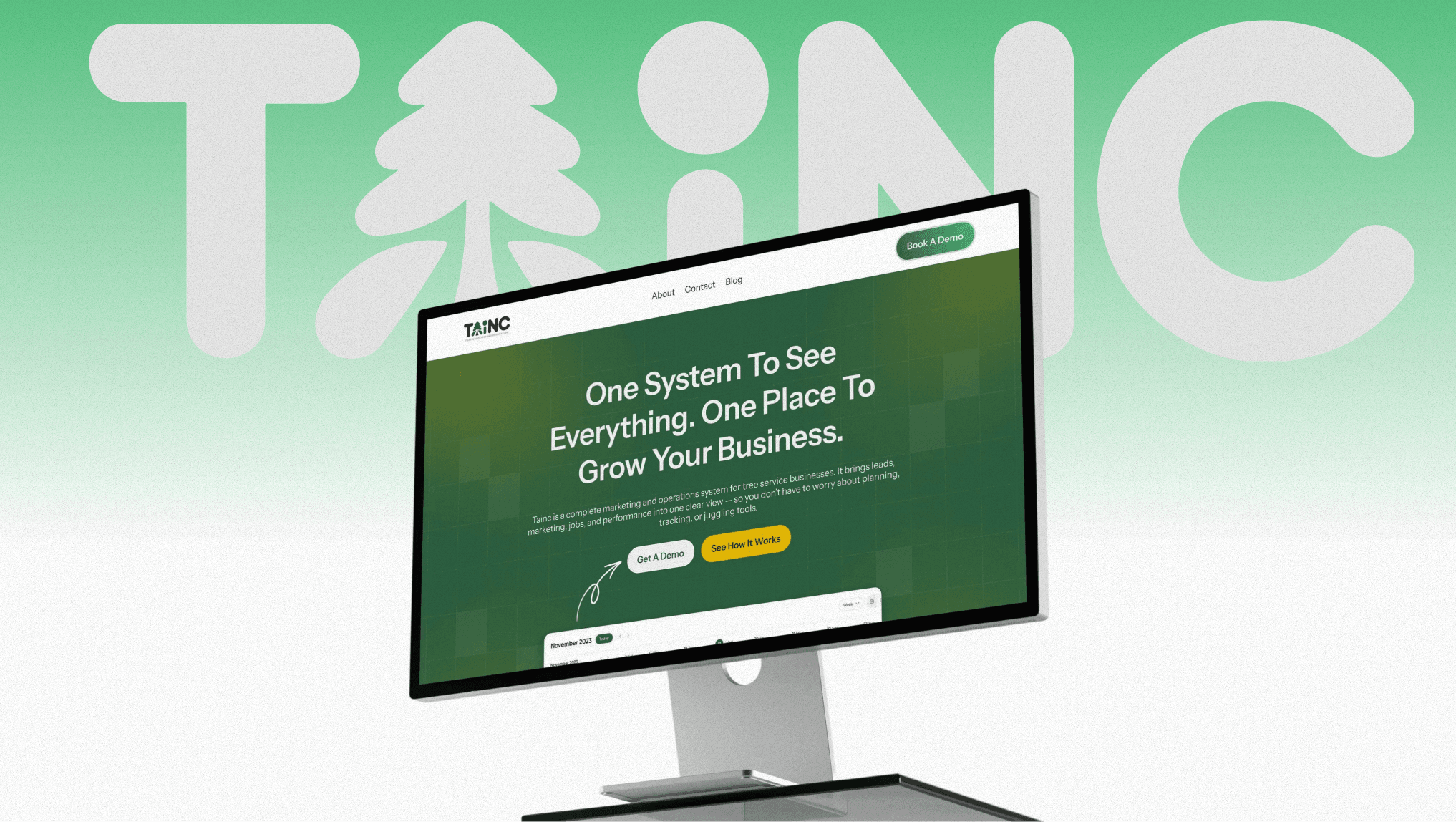
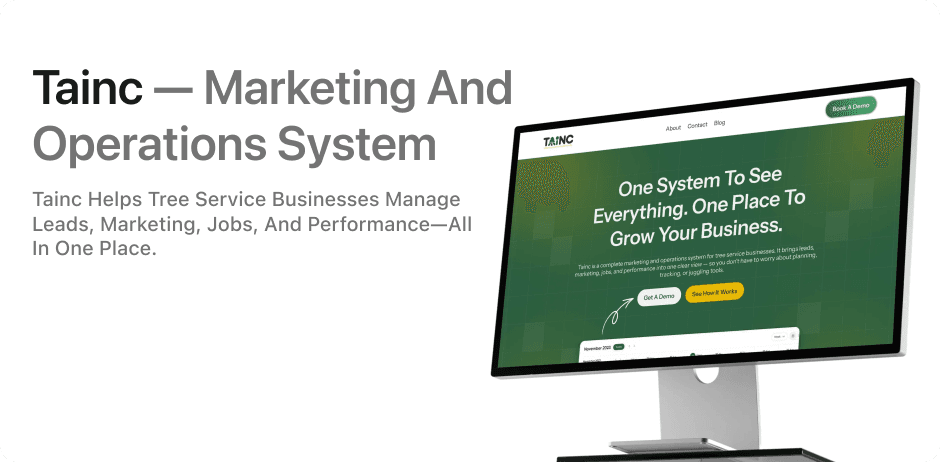
When we built the platform for TAINC, the Tree Associate Incorporation platform for tree service businesses, we designed and developed it end to end, putting lead capture, crew scheduling, AI-assisted proposals and billing in one dashboard. It was built around problems tree companies described: untracked marketing spend, leads lost to slow manual response and tools that don't talk to each other.
What to do first
With tree care industry marketing trends, order matters more than volume, because each step feeds the next. This is the sequence we'd follow:
- Audit your Google Business Profile for complete services, accurate hours and a consistent name and address.
- Set up a review request that fires after every completed job, and reply to each review yourself.
- Make sure every form, call and message gets a response within minutes, even if it's automated at night.
- Only then add paid lead ads, so the leads land in a process that answers them.
- Track which source produced each job so next year's budget follows evidence.
If you want help with the marketing side, our digital marketing and growth service covers this ground. Start with step three: a missed lead costs the same whether it came from an ad or a referral.
Frequently asked questions
Which tree care industry marketing trends should a small company start with?
Start with reviews and your Google Business Profile, since both are free to improve and feed local ranking. Then fix how fast you answer leads, and add paid ads last.
Do online reviews really affect which tree service people call?
Yes. In BrightLocal's 2026 survey of 1,002 US adults, 97% said they read reviews for local businesses, and 41% said they always do. Those are general local-business figures, not tree care specifically.
Can I pay Google to rank higher on the map?
No. Google's help page says there's no way to request or pay for a better local ranking. Ranking rests on relevance, distance and prominence, and reviews feed prominence.
What does a Google Local Services lead cost?
Google doesn't publish one figure. Prices vary by location, job type, lead type and bidding mode, and leads judged invalid or low quality aren't charged.
Is AI worth adding to a small tree company?
It can be, if you start small. TCI Magazine's author says initial costs are mostly time and software, with premium plans around $20 a month, and advises starting with one use such as after-hours lead response.
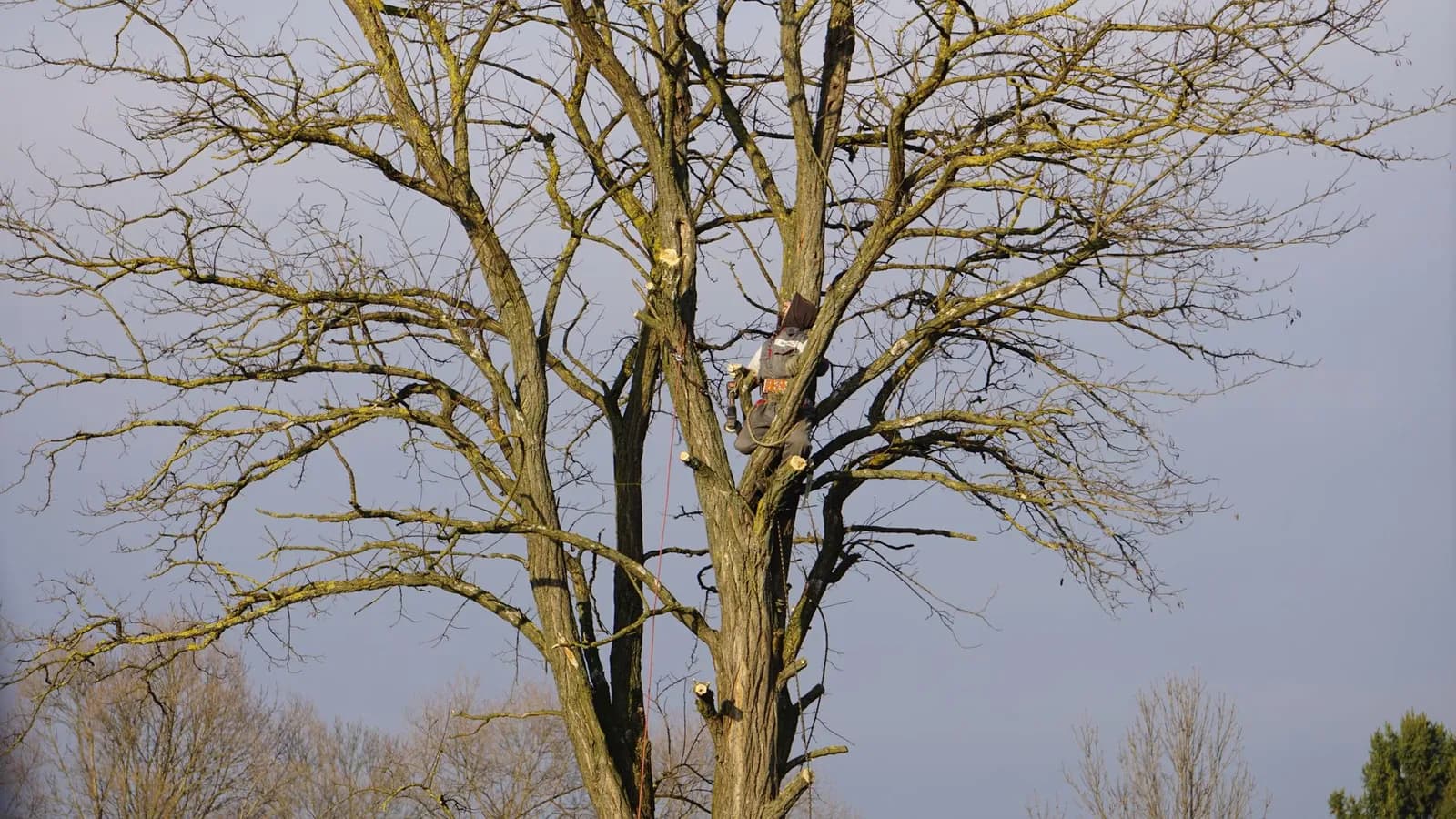
Cover photo by Henk Schuurmans on Pexels
Sources
- Local Consumer Review Survey 2026 — BrightLocal
- Tips to improve your local ranking on Google — Google Business Profile Help