










Almost every homeowner who searches for a tree crew reads reviews first, and your tree service reviews often decide whether your phone rings or a competitor's does. BrightLocal's Local Consumer Review Survey, published February 11, 2026 and based on 1,002 US adults, found that 97% of consumers read reviews for local businesses.
That makes reviews the cheapest marketing asset you have, and the one most owners handle by accident. This guide covers what shoppers screen for, when to ask, what the rules allow and how to reply.
Why tree service reviews decide who gets the call
Reviews work as a filter before they work as persuasion. A homeowner with a leaning oak over the garage doesn't compare five websites; they open the map results and eliminate crews whose ratings look thin, old or low.
BrightLocal's survey shows how strict that filter has become. The share of consumers who only use a business rated 4.5 stars or higher rose from 17% in 2025 to 31% in 2026, and 41% now say they always read reviews when browsing, up from 29%.
What shoppers screen for | Share of consumers | What it means for a tree crew |
|---|---|---|
Will only use 4 stars or more | 68% | A 3.9 average costs you most of the market |
Will only use 4.5 stars or more | 31% | The gap between 4.4 and 4.6 is real |
Won't use fewer than 20 reviews | 47% | A new profile needs volume before it converts |
Only consider the last three months | 74% | Last year's burst of reviews doesn't carry you |
Only 10% will insist on a perfect five stars, so chasing a flawless score isn't the goal. A rating in the mid-fours backed by plenty of recent reviews clears the bar for most shoppers.
How many reviews and how recent do they need to be?
Aim for at least 20 reviews and a steady trickle of new ones. The 20-review line is where 47% of consumers stop considering a business, and the recency finding is the harder one to satisfy: 74% only look at reviews from the last three months, and 32% look for reviews from the last two weeks.
Tree work is seasonal, which makes this awkward. After a storm you may finish thirty jobs in a week and then go quiet, and a profile whose newest review is five months old looks inactive even if the crew is booked solid. Spreading requests across the whole year, instead of asking in bursts, is the fix.
It also means the volume you need depends on how many jobs you complete. A crew finishing a handful of jobs a month can't expect a review every day. What it can do is make sure that nearly every finished job produces a request, so the number of reviews tracks the number of jobs.
When is the best time to ask a customer for a review?
Ask soon after the job, while the cleanup and the result are fresh. Nothing in the sources pins down an ideal hour, so this is judgement: the satisfaction a homeowner feels looking at an open yard or a safely removed limb fades quickly, and a request that arrives a month later competes with everything else in their inbox.
The practical version looks like this:
Mention at booking that you'll send a short request after the work, so it isn't a surprise.
Walk the customer through the finished job, including cleanup, before you leave.
Send the request by text with a direct link the same day or the next, so there's no searching for your listing.
Send one polite reminder to people who didn't respond, then stop.
Google supports the link approach. Its Business Profile help page on reviews says you can ask customers to visit a Google link or scan a QR code, which suits a QR code on an invoice or a door hanger left after the job.
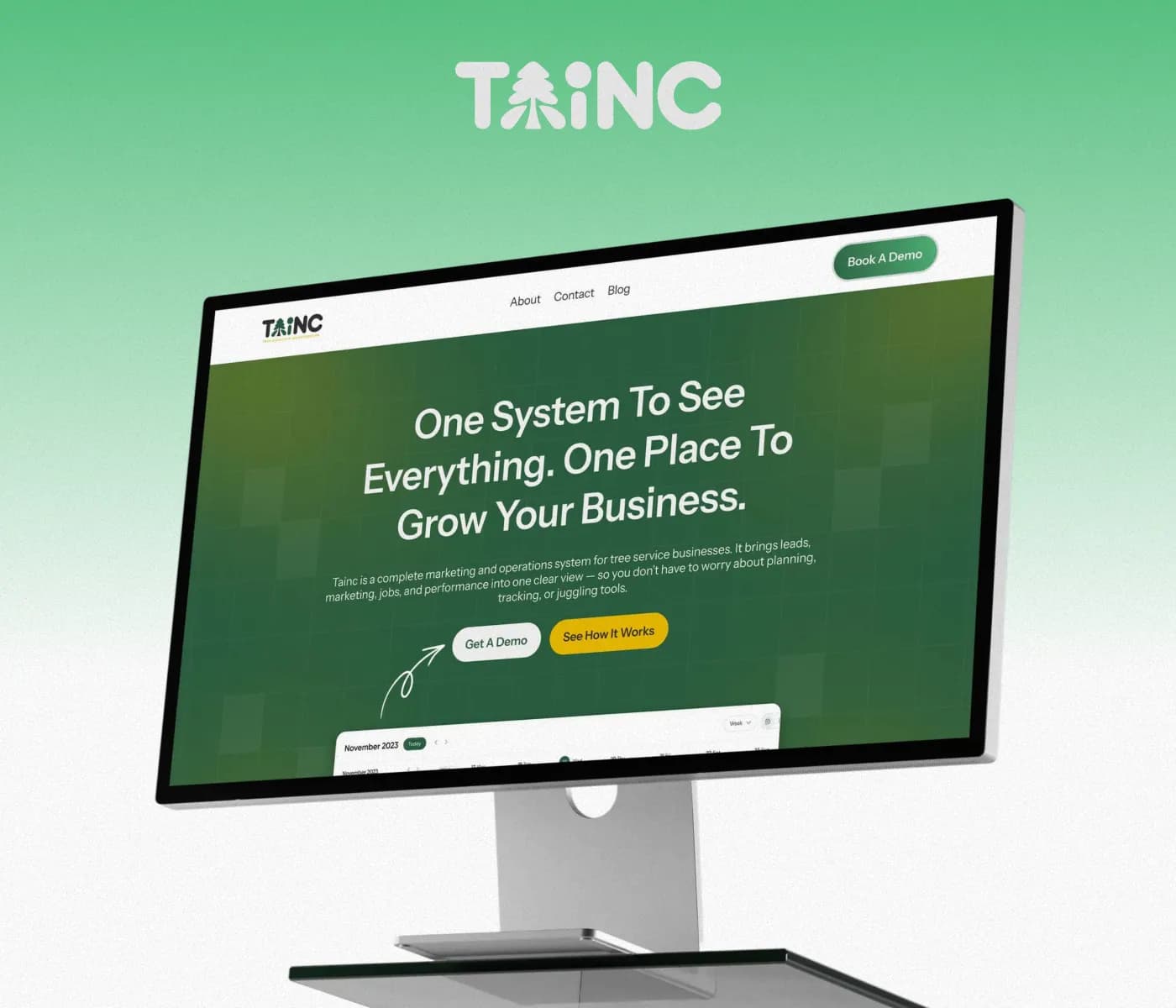
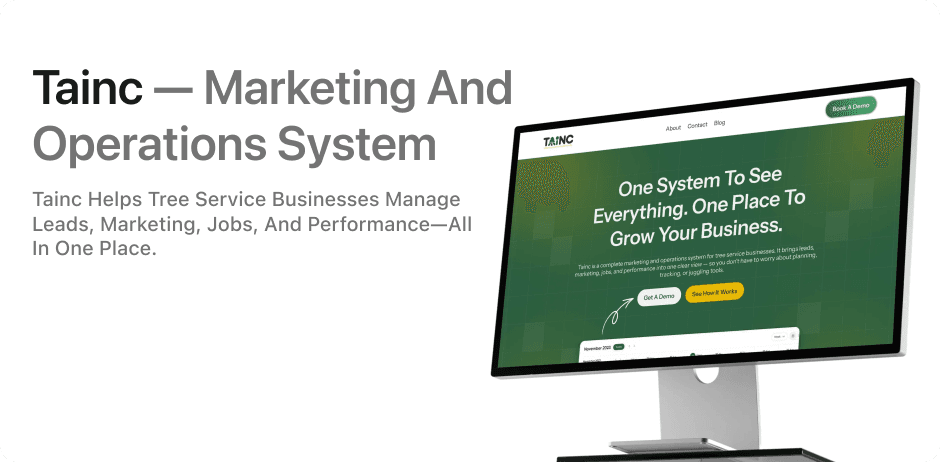
Consistency matters more than any single tactic, and it's where a system beats memory. When we built TAINC's platform, we put lead capture, crew scheduling, AI-assisted proposals and billing in one dashboard, which shows what a connected job workflow looks like; a tree service growth platform is the sort of place a follow-up step belongs, because the job record is already there. If you want the follow-up to run without anyone remembering it, our piece on marketing automation for tree service businesses covers how.
What are Google's rules for asking for reviews?
You can ask, but you can't pay for reviews and you can't pick who you ask. Google's prohibited and restricted content policy says incentivized reviews "are not allowed and will be removed from Maps," and it lists payment, discounts and free goods or services as examples of incentives.
The same policy bars businesses from trying to "discourage or prohibit negative reviews, or selectively solicit positive reviews from customers." That is the rule people call review gating. Sending a satisfaction survey first and passing the review link only to the happy customers is exactly the pattern it describes, and it's tempting because it protects your rating.
Don't do it. Ask everyone, and accept that a few honest three-star reviews make a profile look real. Google's policy also covers fake engagement, which it says "is not allowed and will be removed," including reviews paid for directly or in kind.
That means no discount on the next job for a five-star review, no free stump grinding for a post, and no asking a friend to write one from a second account. The risk isn't only removal. A profile that gets flagged for it can lose the very reviews you worked to collect.
Does the FTC regulate online reviews?

Photo by RDNE Stock project on Pexels
Yes. The FTC's final rule banning fake reviews and testimonials, announced in August 2024, lets the agency seek civil penalties against knowing violators.
The rule bans creating, buying or selling fake reviews, including AI-generated ones, when the business knew or should have known they were fake. It also covers undisclosed reviews from insiders such as managers or employees, and it bars compensation conditioned on writing a review with a particular sentiment, whether the condition is stated or implied.
It also prohibits suppressing negative reviews through groundless legal threats or intimidation. For a small crew, the takeaway is simple: don't have staff review the company without saying who they are, and never threaten a customer over a bad review. The page doesn't describe a general ban on asking real customers for feedback.
How should you reply to reviews, good and bad?
Reply to every review, and make each reply sound like a person wrote it. BrightLocal found that 89% of consumers expect owners to respond, 80% are likely to use a business that responds to all its reviews, and 42% are unlikely to use one that never replies.
Speed counts too: 19% want a reply the same day, 32% by the next day, and 81% within a week. Generic answers backfire, since 50% of consumers are put off by templated or generic replies.
Google's help page gives the same advice, recommending replies that are short, professional and personalized. A good reply to a five-star review names the job ("glad the oak removal went smoothly and the yard was left clean") rather than pasting "Thanks for your business!"
Handling a negative review
Google suggests apologizing when it's appropriate, explaining any limits honestly and avoiding personal attacks. Write the reply for the next homeowner reading it, not for the reviewer. A calm answer that states what happened and offers to fix it tells prospects more about your crew than a spotless rating would.
It may also change the outcome, since Google notes that replies can encourage customers to update their reviews. Never offer something in exchange for a revised review, because that falls under the incentive ban above.
Where else do shoppers read tree service reviews?
Google still leads, but it isn't the only place. BrightLocal reports that the average consumer uses six review sites, with Google used by 71% of respondents, down from 83% in 2025.
AI tools are the new entrant. The survey ranks them third for reading local reviews, behind Google and Facebook, so a homeowner may now ask an assistant for a recommendation and get an answer built partly from the reviews your profile holds.
For writing reviews, people favor Google (45%), Facebook (34%) and Yelp (24%). Put your effort into Google first, keep your Facebook page claimed and answered, and treat the rest as secondary. Reviews also feed everything else you publish, which is why our guides to reputation management for tree service companies and digital marketing and growth treat them as the base layer.
Put the numbers to work this week by checking your rating, your total count and the date of your newest review against the table above. If the newest one is older than three months, that gap is your first job.
Frequently asked questions
Can I offer a discount for a Google review?
No. Google's policy bans incentivized reviews, including payment, discounts and free goods or services, and says such reviews will be removed. The FTC rule also bars compensation conditioned on a review's sentiment.
Is it okay to only ask happy customers for reviews?
No. Google's policy prohibits selectively soliciting positive reviews, so the request should go to every customer after every job.
How many reviews does a tree service need?
BrightLocal found that 47% of consumers won't use a business with fewer than 20 reviews, so 20 is a sensible first target. After that, recency matters more, because 74% only consider reviews from the last three months.
How quickly should I reply to a review?
Within a day if you can. BrightLocal found 51% of consumers want a reply by the next day and 81% within a week.
Can I ask customers for a review by text or QR code?
Yes. Google's help page says you can ask customers to visit a Google link or scan a QR code, as long as you offer no incentive.
Sources
Local Consumer Review Survey 2026 — BrightLocal