












Few app categories draw regulator attention as fast as one that stores mood scores and therapy notes. In July 2023 the FTC finalized an order against online counseling service BetterHelp, which agreed to pay $7.8 million after the agency charged it with sharing consumers' email addresses, IP addresses and health questionnaire answers with Facebook, Snapchat, Criteo and Pinterest for advertising. Any plan for mental health app development that leaves privacy to a late-stage checklist is planning for that kind of problem.
What follows covers the features worth building first, the three legal regimes that decide your obligations, what drives the cost, and how to choose who builds it.
What mental health app development involves before any code
Start by deciding who the app serves and who pays for it. That one answer determines which rules apply, and it's far cheaper to settle on a whiteboard than after the first sprint.
A self-guided app that a person downloads on their own sits in a different position from one a clinic buys and hands to patients. A third shape, an app that diagnoses or treats a condition, pulls in a regulator the other two may never meet. This split is our reading of the sources below, not a rule any one of them states, but every compliance question in this article turns on it.
It also shapes the product. A self-guided app lives or dies on daily use, while a provider-connected one needs scheduling, messaging and a clean handoff into whatever record system the clinic runs.
Features a mental health app needs first
A first round of mental health app development should build the smallest set that lets a person do one useful thing and trust you with what they enter. For most first versions that means:
- A consent screen that says in plain words what is collected and who sees it, with separate choices for anything beyond running the app.
- Mood or symptom tracking that takes under a minute to complete.
- Guided exercises or journaling, depending on the approach the app takes.
- Reminders the user controls, including an easy way to turn them off.
- Secure messaging or booking, only where a clinician is part of the product.
- Visible emergency resources, so a user in distress is never more than a tap from help.
- Account deletion and data export that actually work.
Two of those items look like legal chores and are really product features. The BetterHelp order requires affirmative express consent before certain disclosures to third parties, so the consent screen is a core flow and deserves real design time. Likewise, the order demands a data retention schedule, which means deletion has to be built into the data model from the start rather than bolted on.
Leave out anything that doesn't serve the first use case. Community forums, wearable syncing and a chatbot can all wait, and each of them multiplies the privacy surface you have to defend.
Does HIPAA apply to your app?
Only if a covered entity is involved. HIPAA follows the relationship, not the subject matter, so mental health app development for a clinic client sits inside it while an identical product sold straight to consumers can sit outside.
Hunton Andrews Kurth's 2016 summary of HHS guidance says a developer is likely a business associate if it is hired, or has the app paid for, by a covered entity or another business associate and is directed to create, receive, maintain or disclose protected health information. A developer is likely not one when the consumer picks the app independently and alone decides whether to send data to anyone else.
That guidance is a decade old, so confirm the current text with HHS before you rely on it. If your clinic client is the buyer, plan for HIPAA from day one; our guide to what HIPAA-compliant app development actually takes covers the build side.
What the FTC expects from apps outside HIPAA
Falling outside HIPAA doesn't leave you unregulated. The FTC's Health Breach Notification Rule reaches health apps that HIPAA doesn't, and per Paubox's account of the agency's September 2021 policy statement, an app that can collect information from several sources, such as user input plus an API, is covered.
Penalties are not symbolic. The same account puts civil penalties at $43,792 per violation as of that statement, and the amount is adjusted over time, so check the current one.
In practice, every analytics library, ad pixel and crash reporter in your mental health app development project is a place where mental health data can leave. BetterHelp's problem was advertising, and an advertising SDK added late in a project is exactly how that happens to a team with good intentions.
When FDA oversight enters the picture

Photo by cottonbro studio on Pexels
FDA becomes relevant when the app's intended use moves from wellness to treating or diagnosing something. Software that meets the general wellness intended use is excluded from the device definition, according to a Congressional Research Service note dated February 17, 2026 on the revised guidance FDA published on January 6, 2026. Other software can fall under enforcement discretion or full device oversight.
For mental health app development, intended use is set by what you say the product does, in the store listing, the onboarding copy and the sales deck. A mood journal that promises to relieve stress and one that promises to treat depression are different products in a regulator's eyes, even if the code is the same.
Generative AI is where the picture is least settled. The CRS note says the updated guidance "does not specifically address AI-enabled products" and that questions remain about the wellness policy and generative AI-enabled products. FDA's Digital Health Advisory Committee has discussed generative AI mental health devices, so an AI companion feature is a regulatory bet and should be priced as one.
What drives the cost
We couldn't find a neutral, published price range for mental health app development. The figures in circulation come from development firms pricing their own work, so we haven't repeated them, and you shouldn't anchor on them either.
What we can say is where a budget moves, using the structure above:
- A clinician side, with scheduling, messaging or video, usually adds more scope than the patient app itself.
- Compliance work is real build time: consent flows, audit trails, retention rules and contracts with every vendor that touches data.
- AI features add review effort, because their regulatory status is unsettled.
- Ongoing maintenance for security patches, store updates and content continues after launch.
The cheapest way to find the real number is a narrow first release. Our post on building a healthcare MVP that gets funded shows how to scope one, and the cost drivers behind a telemedicine app carry over to any build with a clinician side.
Choosing who builds it
For mental health app development, ask any prospective partner three things: how they handle consent, which third-party SDKs they would put in the app, and how deletion works in their data model. Vague answers to any of them predict the BetterHelp kind of surprise.
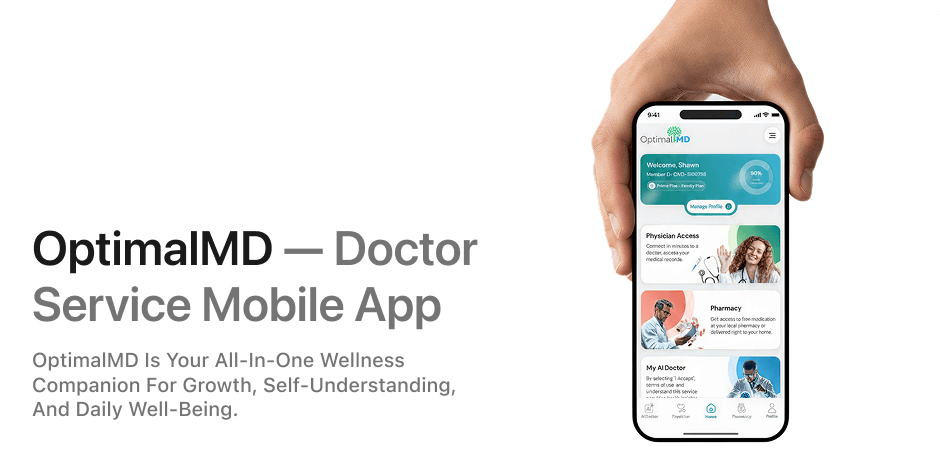
It also helps to see a team that has shipped a full healthcare product. When we built OptimalMD's digital product, we designed and built the website, the members portal and the mobile app, from design through development to launch, and you can read the details in the OptimalMD case study. For a wider checklist, see how to choose a healthcare app development company, or look at our apps and SaaS services.
Before launch, list every third party that receives any data from the app and confirm each one in writing. That single audit would have caught the exposure in the BetterHelp case.
Frequently asked questions
Is an AI chatbot in a mental health app regulated by FDA?
It depends on its intended use, and the rules are unsettled. The CRS note says FDA's updated wellness guidance doesn't specifically address AI-enabled products, and FDA's advisory committee has discussed generative AI mental health devices.
Does sharing data with an ad platform count as a breach?
It can under the FTC's Health Breach Notification Rule. Paubox reports that breaches aren't limited to outside attacks, and that any unauthorized access, including sharing personal information without the person's consent, triggers notification.
What did the BetterHelp order require?
It bars sharing health data for advertising and requires affirmative express consent before certain disclosures to third parties. The FTC also required a comprehensive privacy program, deletion of data shared with third parties, and a retention schedule.
Cover photo by https://kaboompics.com/ on Pexels
Sources
- FTC Gives Final Approval to Order Banning BetterHelp from Sharing Sensitive Health Data for Advertising — Federal Trade Commission
- FDA Oversight of General Wellness Products — Congressional Research Service