















A homeowner with a leaning oak after a storm calls whichever tree company answers first, not the one with the nicest logo. That single habit shapes almost everything that actually works in tree service lead generation right now.
Showing up where people are already looking, and picking up the phone faster than the next crew, beats most of what a rebuilt website ever does. Google Business Profile, Local Services Ads, and the reviews you've already earned matter more than a full site redesign nobody searches for by name.
None of this is exotic, and most of it is free. The paid channels just reward the same fundamentals the free ones do.
How Tree Service Lead Generation Starts With Your Google Business Profile
Most searches for tree work start with something like "tree removal near me" or "arborist" plus a city, and the businesses in the map pack get the calls. Google ranks those results on three factors: relevance, distance, and prominence.
Relevance is how well your profile matches the search. Distance is exactly what it sounds like. Prominence comes mostly from reviews and links back to your site, and Google states plainly that there's no way to pay for a better spot in that ranking.
So the free levers sit entirely in your hands: the right categories and service areas, current hours, real photos of finished jobs instead of stock imagery, and a habit of asking every customer for a review before you pack up the truck.
A profile that lists "Tree Service" alongside the actual subcategories you handle, stump grinding, storm cleanup, emergency removal, gives Google more to match against than a bare business name ever will.
None of this is glamorous. But it keeps producing calls long after you've stopped paying attention to it, which beats most of what an ad budget delivers on its own.
Google Local Services Ads: Pay Only When the Phone Rings
Local Services Ads sit above both the regular search results and the map pack. Google only charges when a customer calls or messages through the ad itself, not for every click the way standard search ads work.
Getting listed takes more than a credit card. Google runs a screening and verification process that checks your licensing, insurance, and background.
The exact requirements shift by state. Some states expect a licensed arborist on staff. Others only ask for a standard contractor license, so it's worth checking your own state's rule before you assume you qualify.
Once you're approved, your ad pulls its reviews straight from your Business Profile, so the two channels reinforce each other rather than competing for the same budget. A crew with fifteen strong reviews and a fast callback time will outrank a rival paying the same per lead but answering slower.
If you're layering Local Services Ads with traditional search campaigns, our guide to tree service Google Ads covers how to avoid bidding against yourself on the same searches.
Reviews and Referrals Still Close More Jobs Than Ads
Tree removal is a bigger, scarier purchase than most home services. It involves heavy equipment working close to a house, and homeowners know exactly what a bad hire could cost them.
That's why a referral or a stack of recent reviews carries more weight here than it would in a lower-stakes category.
Ask for the review the moment the job is done and the yard is clean, not three days later in an email nobody opens. A text with the review link gets answered faster than an email does.
Referral customers close faster because the trust is already built before you show up to quote the job. A small thank-you, a discount on the next trim, a gift card, costs less than a single paid lead and tends to bring back better customers than a cold ad click.
Neither of these shows up as a line item in an ad account, which is exactly why they get neglected in favor of channels you can point a budget at and watch the numbers move.
Why Leads Go Cold Before You Ever Call Them Back

Photo by Perry Wunderlich on Pexels
A storm rolls through and five homeowners submit a form within the same hour, comparing three or four companies at once. Whoever calls back first usually wins the job.
A form sitting in an inbox until lunch is a form a competitor already answered. Most tree crews are built for climbing and cutting, not for chasing leads between jobs, and that gap between a form submission and an actual callback is where a lot of marketing spend quietly disappears.
An AI chatbot on your website can answer basic questions and capture a phone number the moment someone lands on the page, even at 9pm on a Saturday after a windstorm, which is exactly when demand spikes.
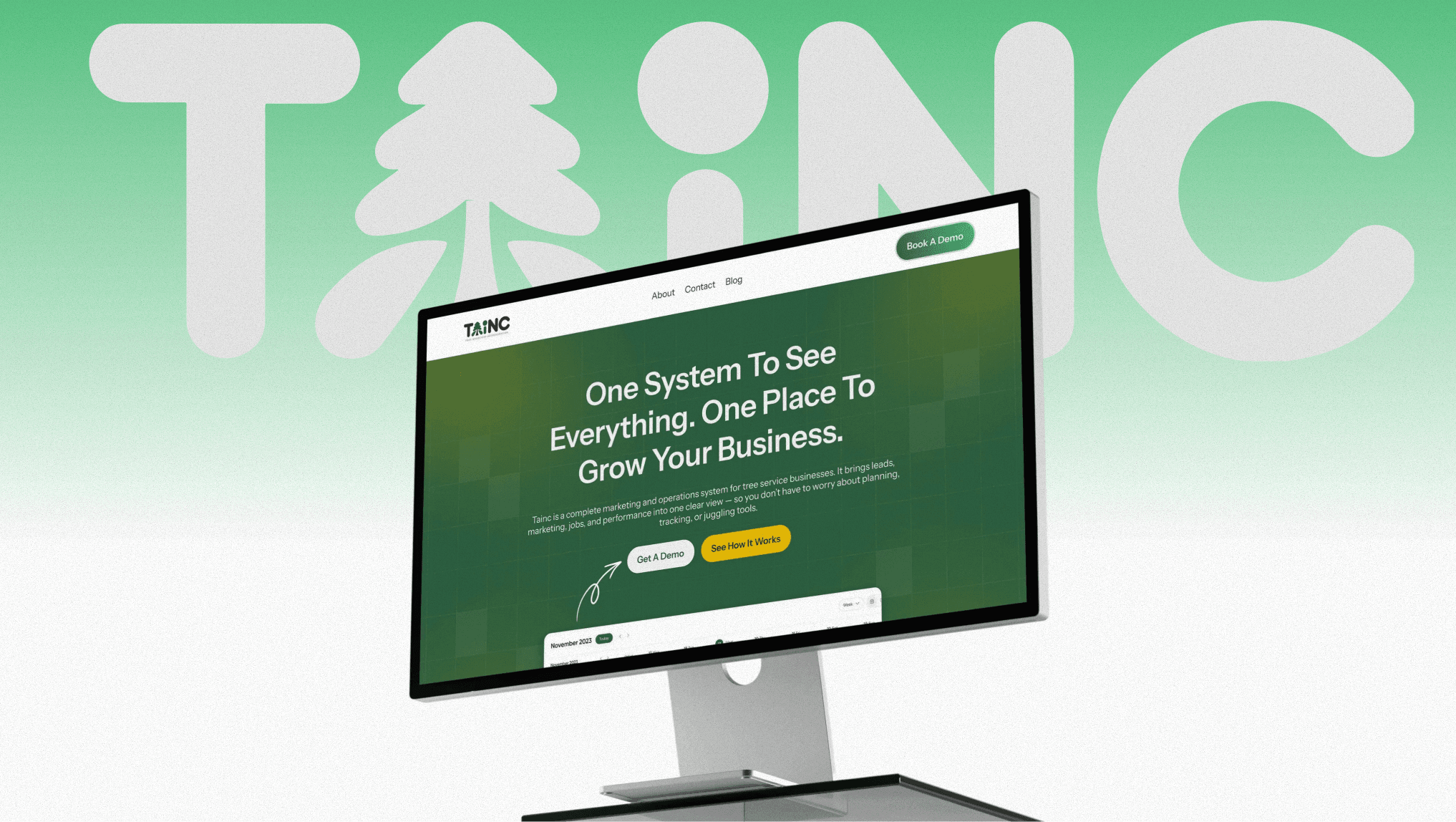
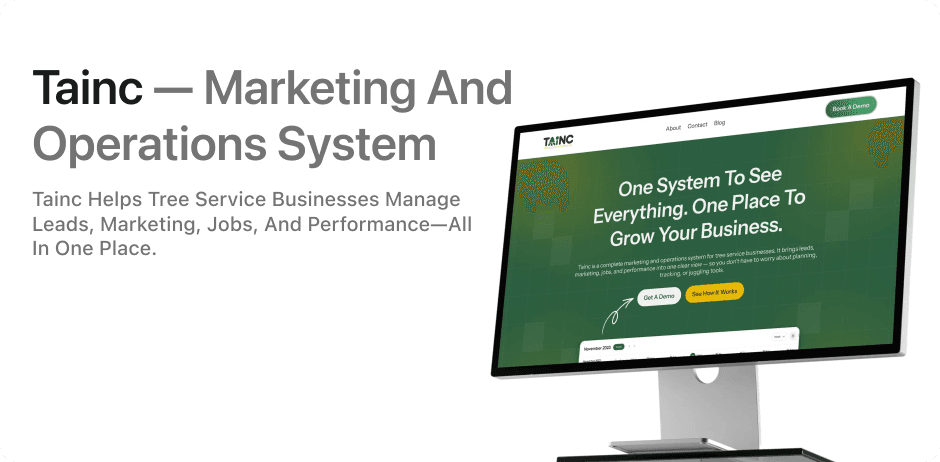
When we built TAINC's platform, the problems on their list were leads lost to slow manual response, no automated follow-up, and marketing spend nobody could tie to a job.
We built one dashboard that combines lead capture, crew scheduling, AI-assisted proposals, and billing, with real-time visibility into leads and crews, at tiered pricing from $99 to $399 a month. The full case study covers how the system works.
The lesson holds no matter which tools you use: someone, or something, needs to own the first ten minutes after a lead comes in.
Building a Lead Generation System That Doesn't Depend on One Channel
Treat tree service lead generation as a stack, not a single decision. Your Business Profile and local search bring in free leads that compound over time.
Local Services Ads and search campaigns add volume you can turn up before storm season and dial back after. Reviews and referrals do the quiet work of pre-selling the job before you ever quote it.
Track which channel actually closes jobs, not just which one fills your calendar with tire-kickers. A referral that converts eight times out of ten is worth more than ten paid clicks that convert once.
For more tactics beyond these core channels, our roundup of tree service marketing ideas digs into specifics, and our digital marketing and growth team can help you work out which channels are worth the budget in your market.
Start with the two channels that cost nothing but attention: your profile and your follow-up speed. Everything paid works better once those two are solid.
Frequently asked questions
How much should a tree service spend on Google Local Services Ads?
Google doesn't publish a flat rate, and cost varies by market and competition. What's fixed is the model: you only pay when a customer contacts you through the ad, not for impressions or clicks that go nowhere.
Do I need a licensed arborist to run Local Services Ads?
It depends on your state. Google's screening requires whatever licensing your state or locality actually requires, and that ranges from a standard contractor license to a licensed arborist on staff depending on where you operate.
Can I pay Google for a better local search ranking?
No. Google states directly that there's no way to request or pay for a better local ranking, so relevance, distance, and prominence are the only levers that move it.
What's the fastest way to stop losing leads to slow response?
Automate the first reply, even if it's just a text confirming you got the message. That way nobody's competing against silence while you're up a tree with no signal.
Sources
Local Services Ads overview — Google
How Google determines local ranking — Google