



















A single removal can bring in more than a whole postcard drop costs, which is the only reason tree service direct mail marketing still gets a seat next to Google and Facebook. The catch is that the math only works when the mail lands on the right streets at the right time, with an offer someone can act on.
Here's what a campaign costs, what response rates vendors report, and how to set one up so you can tell afterwards whether it worked.
Is tree service direct mail marketing still worth it?
For most tree companies, yes, as a steady local channel rather than a one-off blast. Tree work is high-ticket and homeowners rarely search for it until something falls, so a postcard that sits on the counter has a real chance of being the number they dial.
Cactus Mailing, a direct mail vendor that publishes tree-specific pricing, puts trimming at $500 to $1,500 and removals at $1,000 to $5,000 or more, with an average job of about $2,000. On those numbers the vendor says a 5,000-piece campaign breaks even at roughly two new jobs. That's a vendor's own arithmetic, so treat it as the optimistic case, but the shape holds: one or two jobs cover a drop.
Where it falls down is urgency. Mail does nothing for the homeowner who searches at 9 p.m. with a branch through the roof, which is why it belongs alongside the work covered in our guide to tree service marketing ideas that bring in jobs, not instead of it.
What does a tree service mailing cost?
Expect somewhere between about 47 and 56 cents a piece for a full-service program, with the cheaper end only available at higher volume. Cactus Mailing's all-inclusive pricing covers design, list, printing, addressing and postage.
| Pieces per mailing | Price per mailing | About per piece | What it buys |
|---|---|---|---|
| 2,500 | $1,405 | $0.56 | A test across a few neighborhoods |
| 5,000 | $2,510 | $0.50 | A full service-area drop |
| 10,000 | $4,670 | $0.47 | Wider coverage or a storm surge |
Those are one vendor's quoted prices, and its recurring program starts at 1,500 postcards a mailing. A separate home-services page from DirectMail.io gives a wider all-in range of $0.55 to $0.95 a piece, which shows how much the quote moves with list type and print spec. Get two or three quotes before you commit.
If you'd rather handle the logistics yourself, EDDM Retail postage is $0.260 a piece as of July 12, 2026, according to 4over4's EDDM pricing guide. That covers postage only, so printing comes on top.
What response rate should you expect?
It depends far more on the list than on the design. DirectMail.io's home-services guide reports 3% to 9% for targeted carrier-route lists, 8% to 15% for new movers, and only 0.5% to 2% for EDDM saturation drops.
Those are the vendor's published ranges, not audited results, and they describe home services in general rather than tree care.
A smaller guide aimed at local businesses lands in the same place from another angle: its EDDM walkthrough reports 2.0% to 4.4% for cold prospect lists and 5% to 9% when you mail your own customers.
The practical reading is that your past customers are the best list you own. People you've already cut or trimmed for are the likeliest to respond, and trimming customers often rebook every one to two years according to Cactus Mailing, which makes a reminder card an easy win.
EDDM or addressed lists: which one fits?
EDDM suits a company that wants cheap coverage of a few specific routes, and an addressed list suits one that wants to reach the homes most likely to pay. DirectMail.io frames the trade-off neatly: EDDM wins on cost per impression, while pre-sorted carrier-route mail wins on cost per conversion.
Why EDDM is attractive for a small crew
You pick routes by ZIP code with a free USPS tool, address pieces to "Postal Customer", and need no names. Retail drops need no permit, run a minimum of 200 pieces, and are capped at 5,000 pieces per ZIP code per day.
That makes it ideal for mailing the blocks around a job you've just finished. Neighbors have watched the truck and chipper all day, and a card in their box that afternoon puts a name to the noise.
Why a filtered list can win anyway
An addressed list lets you mail single-family homes only and screen out apartments and commercial addresses, which is how Cactus Mailing builds its tree campaigns. If your best jobs are mature trees on older lots, a list that skips the condo blocks stops you paying postage on people who can't hire you.
Our rule of thumb: start with EDDM around completed jobs, mail your customer list twice a year, and only move to bought lists once you know which neighborhoods convert.
What belongs on the postcard

Photo by Beyzaa Yurtkuran on Pexels
One offer, one action, and proof that you're a real, insured company. Cactus Mailing suggests a free estimate plus $50 to $100 off the first job, scaled to your average ticket, and putting credentials such as ISA certification and insurance on the front.
A specific, time-limited offer beats a logo and a list of services, and the same local-business guide says to make the call to action prominent and repeat it on the card. Photos do more work than copy, so use a before-and-after or a crew shot from your own jobs rather than clip art.
Give the card somewhere to send people who don't call. A short web address that lands on a page matching the card is worth more than a homepage, which is the problem our post on tree service website design deals with. And since people check you out before they dial, a complete Google Business Profile is what they'll find when they search your name.
When to send
Send ahead of the seasons when people think about trees, and within a couple of days of a storm. DirectMail.io says to mail within 24 to 48 hours of a storm event for tree service, and Cactus Mailing recommends monthly mailings all year with larger drops before spring and fall.
Monthly is the vendor's own program and you may not need it. A reasonable small-company schedule is:
- A spring drop for pruning and cleanup.
- A fall drop before winter storms.
- A storm-response drop as needed.
- A twice-yearly reminder to past customers.
Repetition matters. Cactus Mailing asks for a three-month minimum before judging results, and while that's a convenient number for a vendor, one mailing rarely tells you anything. For a cheaper hyperlocal cousin of the same idea, our piece on door hanger marketing for tree services covers the option.
How to tell whether it worked
Give every mailing its own phone number or promo code, and record where each call came from. The local-business guide above recommends testing a few routes first, tracking with unique promo codes or phone extensions, and scaling only what returns calls.
Without that, a good month and a bad month look identical, and the money gets blamed on the wrong channel. Count the jobs booked, not the calls, because a postcard that brings forty tire-kickers is worse than one that brings six removals.
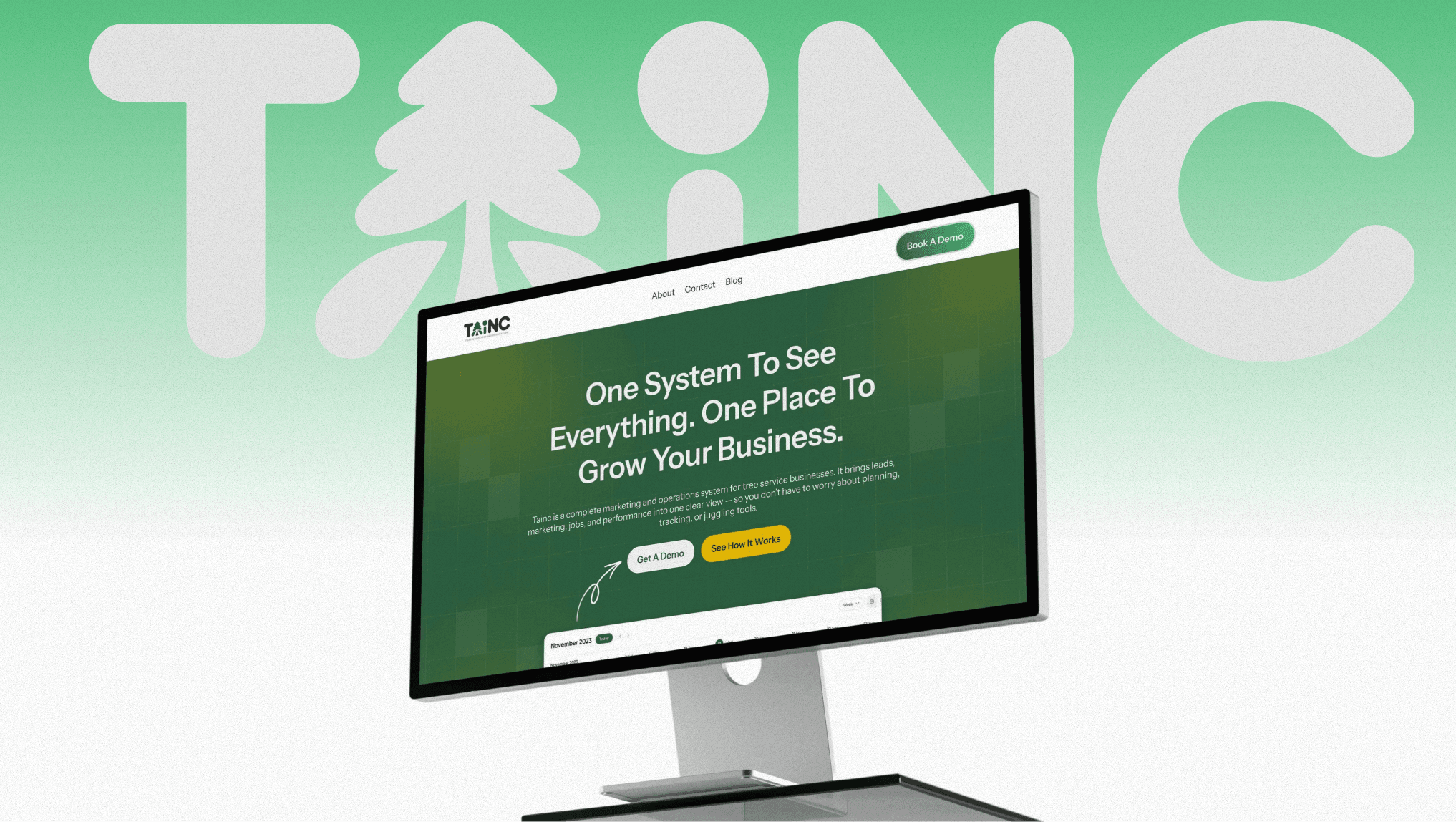
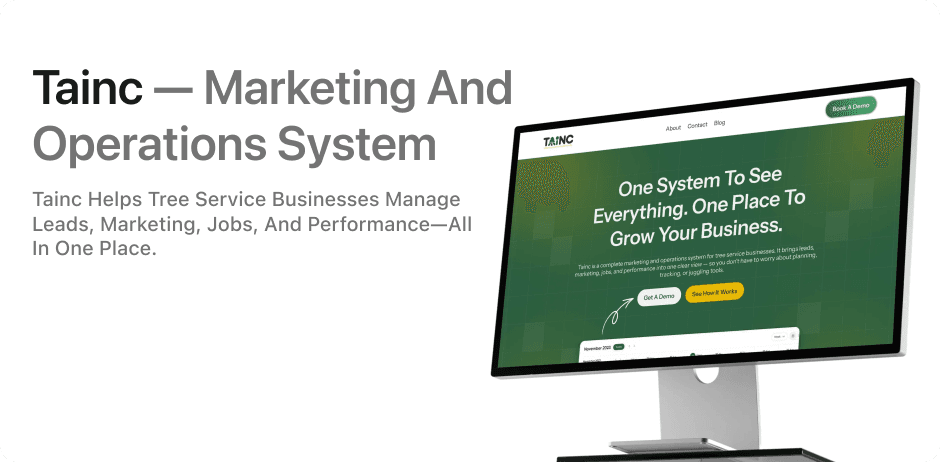
It also helps to know what happens to a lead after it comes in. When we built the growth platform for TAINC, a tree service business, we put lead capture, crew scheduling, AI-assisted proposals and billing in one dashboard, so a caller from a postcard doesn't vanish between the phone and the quote.
If mail is one of several channels you're juggling, our digital marketing and growth team can help you work out which are earning their keep.
Frequently asked questions
How much does it cost to mail 5,000 tree service postcards?
One vendor, Cactus Mailing, quotes $2,510 per mailing for 5,000 pieces, all-in. EDDM postage alone is $0.260 a piece as of July 12, 2026, before printing.
Is EDDM good for tree service companies?
It's good for cheap, route-level coverage, such as the streets around a finished job. DirectMail.io reports lower response from EDDM saturation (0.5% to 2%) than from targeted lists, so judge it by cost per booked job, not cost per piece.
How often should a tree service send direct mail?
Cactus Mailing mails monthly and asks for three months before judging. A smaller company can reasonably start with spring, fall and storm drops plus a reminder to past customers.
Do I need a mailing permit for EDDM?
Not for EDDM Retail, according to 4over4. Bulk EDDM does require a permit and an annual fee.
Cover photo by Kindel Media on Pexels
Sources
- Tree Service Postcard Marketing: What to Send, Who to Target, and What It Costs — Cactus Mailing
- Direct mail for home services: Postcard format — DirectMail.io