

















Ninety-five percent of U.S. office-based physicians now run some form of electronic health record. That number comes from the Office of the National Coordinator for Health Information Technology. It tells you the fight isn't over adoption anymore.
It's over fit. That's exactly the question that pushes healthcare organizations toward custom healthcare software solutions instead of another licensed package.
Why Custom Healthcare Software Solutions Beat Generic Tools
A certified EHR checks a compliance box. It doesn't necessarily match how a clinic triages patients, bills a specific payer mix, or hands data to a specialty tool the software's original designers never anticipated.
Certified EHR adoption among office-based physicians has climbed sharply since 2014, reaching 91% by 2024, according to ONC's physician adoption data. Almost everyone has a system now. Fit, not access, is the open question.
Off-the-shelf software gets built for the average customer, and healthcare has very few average customers. A pediatric practice and a behavioral health group don't run the same workflow just because they share a regulatory framework.
Custom software gets built around the workflow that actually exists.
The Compliance Work a Custom Build Has to Absorb
None of that flexibility removes the legal floor underneath it. HIPAA's Security Rule requires administrative, physical and technical safeguards for anywhere protected health information lives.
Federal guidance on protecting electronic health information spells out what that means: access controls that limit who can open a record, encryption so a lost device doesn't hand over readable data, and audit trails that log who touched what and when.
A custom build has to bake those in from the first sprint, not patch them in after a security review flags something. That's the real cost driver, more than any feature on the list. The safeguards aren't extras layered on top of the product. They're part of it.
Interoperability Is Where Off-the-Shelf Tools Struggle

Photo by Jakub Zerdzicki on Pexels
Once the system exists, it has to talk to everything else a patient's care touches: labs, referring physicians, insurers. Hospitals have made real progress here.
In 2025, 96% of non-federal acute care hospitals engaged in electronically sending care records, up sharply from a decade earlier, according to ONC's hospital information exchange data.
But sending isn't the same as using. A meaningful share of those same hospitals still struggle to fold what they receive into the record where a clinician actually looks first, and fewer still manage every step of that exchange at once.
That gap between technically exchanging data and doing something useful with it is where a lot of licensed platforms hit a wall. A system can export a file, but it can't necessarily place a referral's lab results where a specific clinic's workflow needs them, because that placement was never part of the license anyone sold.
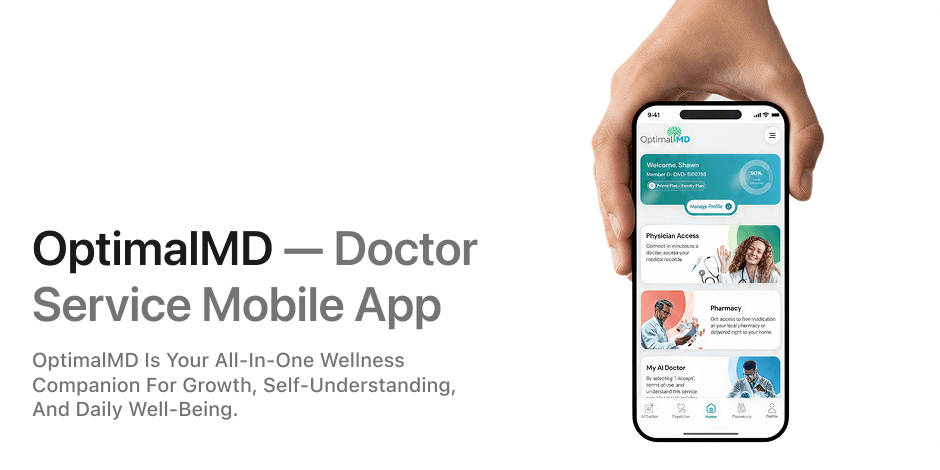
Our apps and SaaS work spends most of its time closing exactly that gap. The OptimalMD project is one example: building the connective layer around an existing care model rather than replacing it outright.
Deciding If a Custom Build Is Worth It
Custom software isn't the right call for every practice. A solo provider with a standard billing setup and no unusual workflow is usually better served by a mature, certified EHR than by commissioning something bespoke.
The calculation changes once a workflow, a data-sharing requirement or a patient volume outgrows what licensed software was built to handle. At that point, the real question isn't whether to build something custom.
It's whether the team building it understands HIPAA's safeguards as well as it understands the clinical workflow, since getting either one wrong is expensive in a different way. Our guides on building a HIPAA-compliant healthcare app and healthcare software development done compliance-first cover what that work actually involves.
Cover photo by Cedric Fauntleroy on Pexels
Sources
- Office-Based Physician Electronic Health Record Adoption — ONC (Office of the National Coordinator for Health Information Technology)
- Your Health Information Security — ONC (Office of the National Coordinator for Health Information Technology)