





















A healthcare software development guide has to start somewhere different than it would have five years ago. Almost every hospital already runs a certified electronic health record, according to an ONC data brief covering non-federal acute care hospitals: adoption reached 99.4 percent by 2024.
The real work now is building software that plugs into that system safely, not building one from scratch.
Where a Healthcare Software Development Guide Should Start: HIPAA
HHS proposed a major rewrite of the HIPAA Security Rule on January 6, 2025, according to HIPAA Journal's tracking of the rule.
The plan would require encrypting all electronic health information at rest and in transit, mandate multi-factor authentication for anyone touching that data, and force network segmentation so a breach in one system can't spread to the rest.
It also drops the old "addressable" category. Some safeguards are currently just recommended. Under the proposal, they'd all be required, alongside twice-yearly vulnerability scans, annual penetration tests, and a 72-hour window to restore data after an incident.
None of that is law yet. OCR had targeted May 2026 for a final rule, but the 2026 Unified Agenda pushed the release to July 2027.
Build to it anyway. It's already the bar a hospital's security team or a payer's due diligence process holds new products to, and retrofitting encryption after launch costs far more than designing around it from the first sprint.
We treat that as part of the architecture in our own app and SaaS builds, not a compliance pass added before launch.
How Interoperability Rules Are Changing What You Build
FHIR, Fast Healthcare Interoperability Resources, is the HL7-built standard most new health software now has to speak. It runs over ordinary REST APIs instead of the custom, point-to-point HL7 interfaces hospitals used to wire between systems by hand, according to the federal government's own explainer on the standard.
Clinical information gets represented as discrete resources, a blood pressure reading or a lab result, that any FHIR-compliant system reads the same way.
That's no longer optional. The first phase of the CMS-0057-F Interoperability and Prior Authorization Final Rule took effect in January 2026, requiring Medicare Advantage, Medicaid, and CHIP plans to decide urgent prior authorization requests within 72 hours and standard ones within seven days. The FHIR APIs for prior authorization follow in January 2027, so anything built today should be designed around them.
HL7's Da Vinci Project even ran a community roundtable just to help vendors get through the rollout, which says something about how much of this is still being worked out in real time.
It's also the kind of prior-authorization workflow that fits naturally under the automation work we build around, once the FHIR plumbing exists to trigger it.
A patient portal or referral tool built without a FHIR-based API is building itself out of a system other software already expects to talk to.
What EHR Adoption Numbers Mean for New Software

Photo by Markus Spiske on Pexels
Consolidation is the other half of the picture. Hospitals running the same EHR vendor across inpatient and outpatient settings became far more common over the same period.
Epic alone now holds just over half of the U.S. hospital EHR market, up sharply from a small slice in 2010, per the same ONC data brief. That kind of concentration changes who you're really building alongside.
ONC's June 2026 Coordinator's Quarterly reported another milestone: the TEFCA network, built to let systems exchange patient records nationwide, hit one billion records exchanged, part of what the agency now calls universal EHR adoption across the industry.
Build for that landscape, and a new product's job is rarely to replace an EHR. It's to sit next to whichever system a client already runs, pull and push data through a FHIR API, and give patients or staff an interface the core record never bothered to build well.
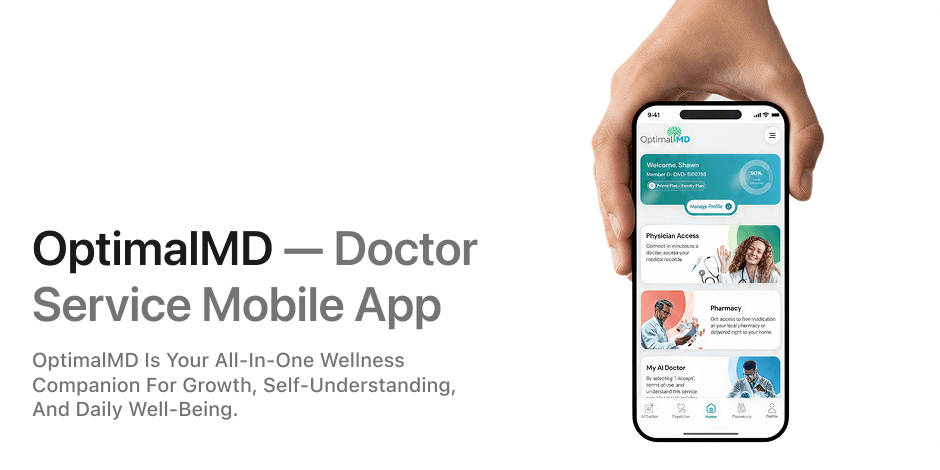
We've applied that same brief in our accessibility-focused work for OptimalMD.
Whichever piece you're building, check what FHIR endpoints already exist before writing the first integration. It's usually less work than expected.
Cover photo by Daniil Komov on Pexels
Sources
Driving Change in 2026: Use Case Progress and Preparing for HL7 FHIR Adoption — HL7
FHIR - Fast Healthcare Interoperability Resources - About — eCQI Resource Center (ONC/CMS)