


















Every customer a tree crew loses has to be replaced by a new one, and that's the expensive way to grow. Writing in Harvard Business Review, Amy Gallo reports that acquiring a new customer costs anywhere from five to 25 times more than retaining an existing one, depending on the study and the industry.
Tree service customer retention is harder than it sounds, because so much tree work is a single event: a removal, a storm cleanup, one round of pruning. Customers don't rebook unless something prompts them. What follows are practices from tree care trade writing that give them a reason to.
Tree service customer retention starts on the job site
Retention starts with the job itself: arriving when you said you would, finishing what you quoted and leaving the property cleaner than you found it. Mason Brandenberger, an ISA Certified Arborist who owns Brandenberger Tree Care Professionals in Auburn, Indiana, argues in TCI Magazine that reliability is what sets a company apart.
He recommends a documented process for every stage, from the first consultation to job completion, so every client gets the same service whoever turns up. Intake questions help too. Ask what matters most to this client, then shape how you deal with them around the answer.
When something goes wrong, whether it's a staffing gap or a broken piece of equipment, take ownership and say so openly. A client who hears about a delay from you is in a far better position than one who finds out from an empty driveway.
Explain the work before and while you do it
Clients stay with a company that tells them what to expect. Chris Kemp's line in the PHC series applies to any tree work: clients have to understand what you are doing, why you are doing it and what to expect.
In practice that means plain language instead of jargon, and questions before recommendations. Good tree service customer retention depends on a client who feels informed, because a surprise on the day, even a small one, is what they remember when it's time to rebook.
Follow up after the job, and again months later
Contact the client after the job to confirm it met their expectations, then check in again months later on how their trees are doing. The same article describes both as personal calls or site visits, and the second is easy to skip because the invoice has long been paid.
A working follow-up schedule can be short:
- A call or visit after the job to confirm expectations were met
- A handwritten note, call or small token of appreciation
- A request for feedback on what went well and what to improve
- A check-in months later on tree health
The feedback request does double duty. It shows the client you care, and it surfaces problems while you can still fix them quietly.
Be honest with yourself about the payoff, too. Relationships matter more than transactions, the author says, and his company has put significant time and money into them, often without an immediate return.
Our guide to customer follow-up strategies for tree service companies covers the mechanics, and email marketing for tree services fills the gaps between calls.
Turn one-time jobs into recurring programs
Recurring work builds retention into the service itself, because the client is already booked for the next visit. Plant health care (PHC) programs show how it works. Some pest problems recur, and as Chris Kemp says in TCI Magazine's series on selling PHC contracts, that makes a seasonal contract or program easier to sell.
Start with clients who already trust you
Don Staruk's installment advises beginning with clients you have good relationships with, since they're more patient with a new service. Pitch PHC to existing pruning clients as tree preservation.
Make the first step small. Staruk describes a low-cost entry such as a soil test, possibly free, which then leads into fertilizer or biostimulants. Put PHC in every estimate next to pruning rather than tacking it on at the end. As Zack Shier puts it, PHC should never be "Oh wait, by the way, do you want this?"
Keep the pitch honest
A program only retains clients if they believe the recommendation. The series is blunt on this: don't invent problems to treat, and don't overpromise.
It also suggests sending someone with strong people skills who knows plants and uses clients' names. Arriving with proper safety equipment helps as well, since neighbors notice professionalism.
Re-market to past clients
The same installment recommends re-marketing to past clients by email, mail or phone. They're the warmest audience you have, so this belongs in your wider digital marketing and growth plan rather than being an afterthought.
Photos of pest damage and treatment results help, and so does stating the dollar value of the work instead of only its biological and aesthetic benefits. A follow-up soil test about a year later lets the client see the progress for themselves.
If you don't offer PHC, borrow the shape: a defined seasonal service the client agrees to once. Our seasonal marketing calendar for tree service companies is a place to plan when those reminders go out.
Let referrals do the selling

Referrals follow from everything above rather than from a separate tactic, which makes them the best measure of whether your tree service customer retention work is landing. Satisfied clients' referrals carry more weight than traditional advertising, according to the same TCI Magazine article, and the aim is to "show up so well that people can't help but tell someone about you."
Treat that line as a test of your own operation. Would last month's customer volunteer your name to a neighbor? If the honest answer is maybe, work on the job and the follow-up before spending more on advertising.
Build a system so follow-up doesn't depend on memory
Follow-up fails when it lives in someone's head. Brandenberger's company uses a CRM to log client interactions, track follow-ups and personalize communication, which is what keeps a schedule like the one above from slipping.
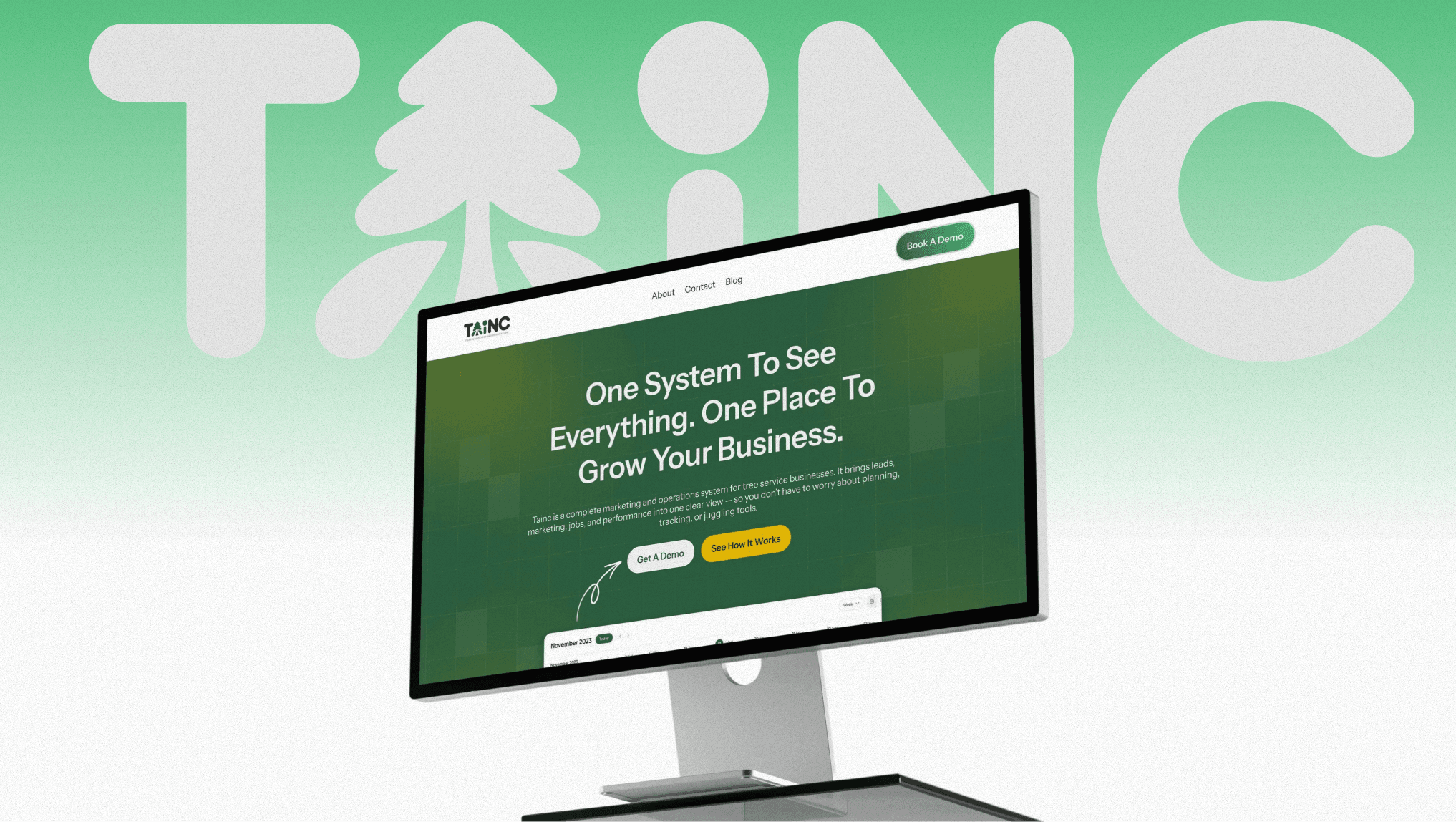
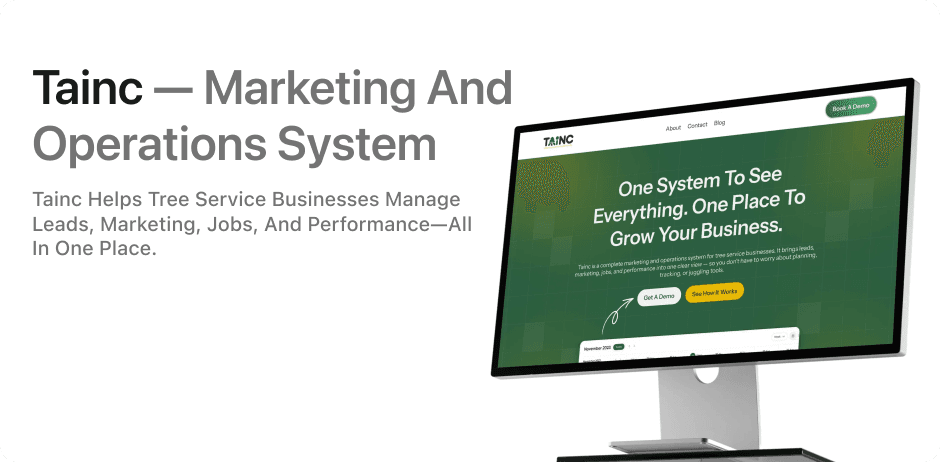
A tree service customer retention plan lives or dies on whether those contacts actually happen. When we built TAINC's platform for tree service companies, we put lead capture, crew scheduling, AI-assisted proposals and billing in one dashboard, aimed at problems like leads lost to slow manual response and no automated follow-up system.
If you're choosing a tool, our guide to the best CRM for tree service companies covers setup. Whatever you pick, start by writing down who contacts each customer after every job, and when.
Frequently asked questions
Do I need a CRM for tree service customer retention?
You need a reliable record of every client interaction and every follow-up that's due. The CRM in the TCI Magazine example does exactly that: it logs interactions, tracks follow-ups and helps personalize communication.
Is a flyer enough to sell a recurring program?
No. Jon Welch, quoted in the PHC series, says you won't have a high closing rate using a flyer or a brochure. The series favors in-person conversations backed by photos of pest damage and treatment results.
What should I do when a client says I dropped the ball?
Take the complaint seriously even if you think you were right. The TCI Magazine author writes that whether you actually dropped the ball or not, if the client believes you did, that's what matters.
How do I keep service consistent as the crew grows?
Consistency can slip as a team grows. The same author's answer is to revisit the company's mission, vision and core values, hire trustworthy people, give clear direction and hold them accountable.
Sources
- The Value of Keeping the Right Customers — Harvard Business Review
- Generating High-Value Leads Through Exceptional Customer Experience: Consistency, Relationships and Follow-Through — TCI Magazine