





















A patient portal that runs fine on an ordinary day can buckle the moment an insurer pushes a network change and volume spikes without warning. Building scalable web architecture healthcare organizations can rely on starts with planning for that kind of spike, not average traffic.
Protected health information also can't leak between patients, or between providers sharing the same multi-tenant platform. AWS's own healthcare industry lens architecture guide treats this as the baseline: a reference architecture only counts as compliant once access controls, encryption and audit logging are built in, not added after launch.
What Scalable Web Architecture Healthcare Systems Actually Need
AWS's reference architecture for healthcare analytics shows what that looks like. Raw data lands in an encrypted object store like Amazon S3, and high-volume feeds get batched through a streaming service like Kinesis rather than written record by record.
Cataloging tools tag the schema automatically, and ETL jobs normalize the data before anyone touches it.
None of that replaces access control. IAM and Lake Formation scope who can see what, CloudWatch and CloudTrail log every touch, and Amazon Macie finds PHI that's drifted somewhere it shouldn't be.
That permissions model is what keeps the system compliant, not the diagram alone.
The Real Cost of Scaling at the Infrastructure Level
A study on remote patient monitoring platforms published on PubMed Central priced out both major clouds for a system supporting 200 concurrent patients.
| Cloud platform | Est. monthly cost (200 patients) | What the study found |
|---|---|---|
| AWS | $409-$567 | Roughly 10% cheaper overall, and faster on database query latency in testing |
| Microsoft Azure | $463-$645 | VM performance within about 5% of AWS, but pricier at this patient count |
Cost isn't the bigger caveat. The researchers built their platform on Kubernetes, using pod and cluster autoscalers to add capacity as load increased, and in testing those autoscalers took ten to fifteen minutes to kick in.
That lag is fine for gradual growth. It's not fine for a predictable spike, like the day open enrollment starts.
Interoperability Rules Are Catching Up to the Architecture

Photo by Markus Winkler on Pexels
Architecture decisions here are increasingly regulatory decisions too. FHIR, the data-exchange standard maintained by HL7, has grown from 49 resources at its 2012 debut to 145 today, according to the Office of the National Coordinator for Health IT.
ONC has also drafted a Federal FHIR Action Plan to align how agencies use it.
Adoption is real but uneven. Firely and HL7's 2026 State of FHIR report surveyed 101 interoperability experts across 63 countries and found 62% already running active FHIR use cases, with a lack of FHIR knowledge cited most often as the obstacle to adopting it further.
The same report found most respondents disagreed that AI reduces the need for FHIR investment. Interoperable data is what AI features actually run on.
That's the same gap we found looking at how AI search engines cite healthcare content. The sites that get cited are the ones structured cleanly enough for a model to parse.
Skipping that groundwork to ship a chatbot faster tends to mean rebuilding the data layer later, under more pressure, which is exactly the kind of work our AI and automation team gets called in for.
Where to Start When You're Already Behind
You don't need to rebuild everything on day one. Start with whichever layer is currently the least compliant or the most brittle under load, usually the data layer rather than the front end.
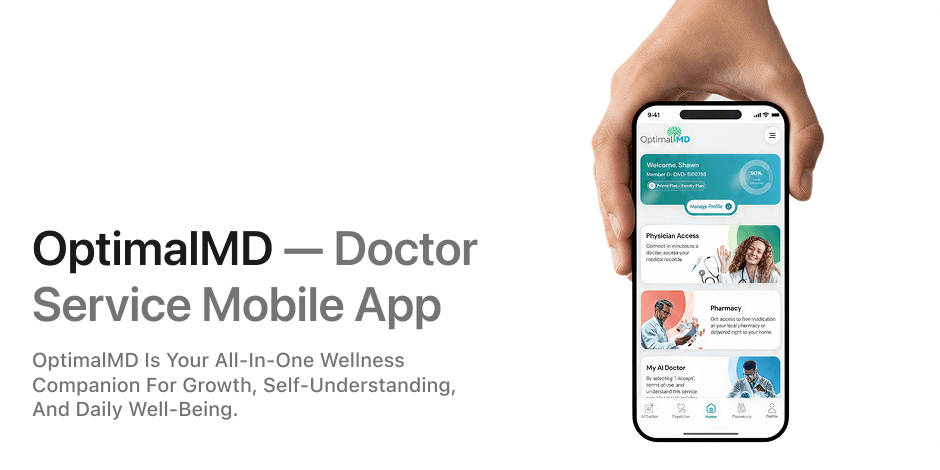
That's the approach behind our accessibility work with OptimalMD: fix the layer that's actually blocking people first, rather than rebuilding everything at once.
The fix is rarely a full rewrite. It's usually narrower: proper access scoping around data that's already there, and batching ingestion that's hitting the database row by row.
Our apps and SaaS team treats that kind of phased rebuild as the default, because a healthcare platform rarely gets a clean slate.