



















Dental practice SaaS MVP cost questions usually start with the wrong number. A founder gets a software estimate, builds to it, then finds out HIPAA adds a second bill nobody budgeted for.
Fortune Business Insights values the dental practice management software market at $2.15 billion in 2026, growing at a 10.77% CAGR through 2034. That growth is why so many founders are trying to build into it right now.
The cost splits into two separate budgets: the software itself, and the compliance work that comes with touching patient data. Most estimates only price the first one.
What a Baseline SaaS Build Costs
Clutch, the B2B research platform, tracks project pricing from verified client reviews across small and mid-sized software firms. Small-business projects typically land between $10,000 and $50,000, well under what a full enterprise build runs.
Rates split hard by geography, too. Clutch's pricing data shows US-based teams charging $50 to $99 an hour, while outsourcing hubs like Ukraine and India charge roughly half that.
A tightly scoped MVP for a dental or medical practice sits at the lower end of that band, not the average. Skip the imaging integrations and the lab interfaces for version one, and the build stays inside that same window before compliance enters the picture.
Working with a team that specializes in building SaaS products from the ground up is usually how that scoping call gets made correctly the first time, rather than after a feature has already been built twice.
What Pushes Dental Practice SaaS MVP Cost Higher
The number moves once patient data enters the system. Accountable HQ's year-one compliance cost breakdown prices a pre-seed team of one to ten people at $8,000 to $25,000, covering policies, a third-party risk assessment and signed business associate agreements.
None of that touches the software build. It's a separate line item, and it's the one most first-time healthcare founders miss until a customer's security team asks for a signed BAA mid-negotiation.
Costs don't stop at launch, either. That same pre-seed budget carries $3,000 to $10,000 a year in ongoing monitoring and renewed assessments once the product is live.
| Cost component | Typical range | What it buys |
|---|---|---|
| Baseline MVP build | $10,000 - $50,000 | Scheduling, booking flow, basic admin dashboard |
| Year-one HIPAA compliance (pre-seed) | $8,000 - $25,000 | Policies, risk assessment, signed BAAs |
| Ongoing compliance (annual) | $3,000 - $10,000 | Monitoring, renewed assessments, training |
Where to Spend First

Photo by Dany Kurniawan on Pexels
Sequencing matters more than the total. A founder who builds out the full monitoring stack before signing a single practice as a customer ends up paying maintenance on controls nobody is reviewing yet.
Ship the MVP with the policies and the BAA in place first. It's non-negotiable the moment protected health information touches the system.
The deeper monitoring tools can wait until a practice group's security review actually asks for them.
Designing for the People Who'll Actually Use It
A scheduling tool that a front-desk team refuses to use doesn't save anyone money, whatever it cost to build. That's the argument for designing the booking and admin flows around how a practice actually runs its day, rather than around what's easiest to code.
The same logic applies underneath the interface. A product that has to scale past its first few practice customers needs the kind of architecture decisions that hold up under real patient load, not just the demo.
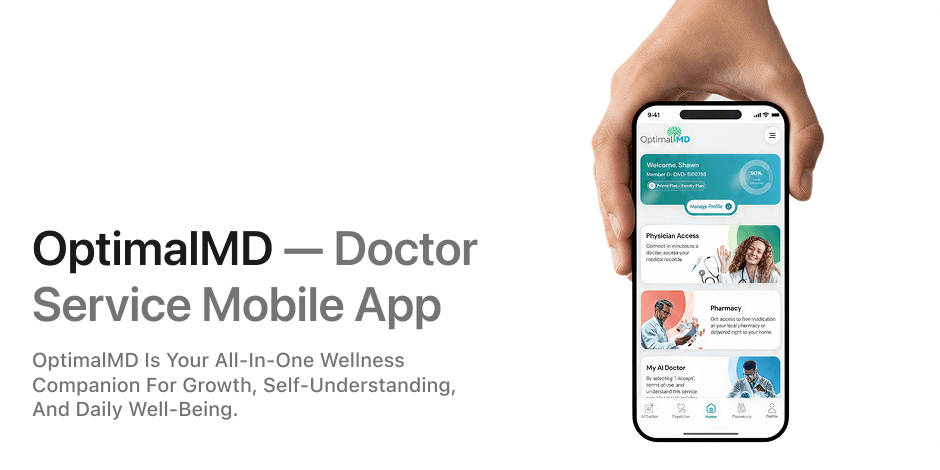
Octopi Digital's work rebuilding OptimalMD's platform for healthcare accessibility shows what those decisions look like once real patients are on the other end. Get the interface and the architecture right, and the build stays a build. Skip either one, and the compliance budget stops being the expensive part.
Cover photo by Cedric Fauntleroy on Pexels
Sources
- Dental Practice Management Software Market Size & Share — Fortune Business Insights
- Software Development Company Pricing Guide — Clutch