




















The healthcare blockchain solutions with the strongest evidence behind them hold almost no patient data. They record proofs: that a drug changed hands, or that a record hasn't been altered since it was written.
That distinction explains where the technology has worked, where it hasn't, and what a hospital or health-tech team should ask before budgeting for it.
Where healthcare blockchain solutions are actually used
Two uses have documented projects behind them: tracing prescription drugs through the supply chain, and proving that electronic health records haven't been tampered with. Both use the ledger as a witness, not as a place to store clinical data.
Drug supply chain tracing
The best-documented case is pharmaceutical tracking. The FDA ran a DSCSA pilot project program to help the supply chain build electronic, interoperable ways of tracing certain prescription drugs, and several of its pilots tested blockchain or distributed ledgers. They included a joint IBM, KPMG, Merck and Walmart pilot and a UCLA project built on blockchain.
The FDA's page says it considered all viable technologies and methods from the pilots when it looked at enhanced tracing and verification. It doesn't name blockchain as the winner, and that's worth keeping in mind when a vendor says the regulator endorsed it.
The MediLedger group is the pilot with the most published detail. Its working group of 25 organizations spanned manufacturers, wholesalers, dispensers and logistics companies, and its report to the FDA concluded that blockchain was feasible for package-level tracing.
On the ledger sat change-of-ownership records for each serialized unit, plus a smart-contract rule that only one company can legally hold a unit at a time. The report also admits the pilot found potential performance issues and that at least four sets of standards still needed developing.
Integrity checks on patient records
The second use is proving a record is genuine. Estonia's national health system is the example people cite, and its own description is modest. The e-Estonia health page says the country uses "blockchain inspired technology" to guarantee data integrity and prevent tampering, with every record linked to the national electronic ID system.
The same page reports more than 40 million health documents in the system. It doesn't say how many of them are covered by the integrity technology, so don't read that figure as a blockchain deployment count.
Notice what the ledger does here. The records live in conventional systems, and the chain only lets someone confirm afterwards that a record or an access log is unchanged.
What stays off the chain
Patient data stays off the chain in every documented design we found, and that's deliberate. A ledger is built so entries can't be quietly changed or removed, which collides with the way health data has to be handled.
MediLedger's answer was to exchange confidential messages directly between trading partners and post only obfuscated transactions to the ledger, using zero-knowledge proofs. The pilot report says those proofs let nodes be hosted by several parties without exposing confidential data.
The privacy problem gets worse with open networks. On a public blockchain, Paubox argues, the transparency that lets anyone view transactions conflicts with keeping patient information confidential, and it calls public chains incompatible with HIPAA's privacy and security requirements.
So the practical pattern is a hybrid. Sensitive data stays in a compliant database you already run, and the chain holds a fingerprint or proof that points back to it. If a vendor pitches storing full records on a ledger, treat that as a design flaw, not a feature.
Why most healthcare blockchain projects stall
Integration is the usual wall. Healthcare organizations run complicated IT estates, with EHRs and billing systems that any new ledger has to connect to, and Paubox notes the move takes significant investment of time and expertise, which is hard on organizations with limited resources.
Coordination is the second wall. A blockchain only has value when several parties write to it, so hospitals, insurers, pharmacies and labs must agree on data formats and rules before a single record gets anchored.
The MediLedger report points the same way. It says governance should come from the industry itself and that the implementation date and the FDA enforcement date could be set separately, because rollout is complicated and needs a stabilization period.
Take that as a planning signal. A blockchain project is rarely a software build with a delivery date. It's a consortium project with software inside it, and the software is often the easier half.
Public, private or consortium chains

Photo by Roger Brown on Pexels
For regulated health data, public chains are the weakest fit. Paubox walks through each model and the problem that comes with it:
- Public chains: open visibility conflicts with patient confidentiality and, in Paubox's view, with HIPAA.
- Private chains: one organization controls the network, which raises questions about data ownership and central authority. Hospitals, insurers and pharmacies each running their own would also struggle to exchange data.
- Consortium chains: members with different interests have to agree on rules and consensus, and getting every member's privacy requirements and access controls to line up is hard.
The consortium model is the one MediLedger used, which tells you where the working examples sit. It also tells you that the hard part is the membership agreement, not the cryptography.
How to decide whether you need one
Ask whether several organizations that don't fully trust each other need to share one record of events. Drug custody between manufacturers, wholesalers and pharmacies fits. A single clinic's patient portal doesn't.
If one organization controls the data, a conventional database with solid audit logging and access controls will usually cover the integrity need at lower cost and with less regulatory risk. That's our judgement from the evidence above, not a finding from any one source.
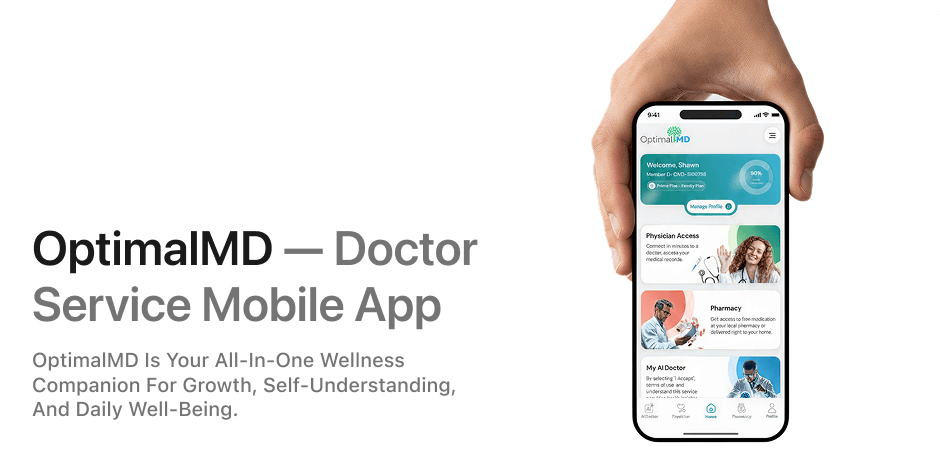
Most healthcare software work happens in the products patients and staff touch every day. When we built OptimalMD's digital product, that meant the website, the members portal and the mobile app, designed and developed through to launch.
For a deeper look at where custom builds earn their cost, read our piece on when custom healthcare software makes sense. If your real goal is faster responses or automation, healthcare AI software is a better place to start than distributed ledgers.
And if a ledger-based proof layer does fit your case, it will sit next to a conventional application built to healthcare standards. That application is where our apps and SaaS development work comes in.
Frequently asked questions
Does blockchain store patient records in healthcare?
In the documented examples, no. MediLedger kept confidential data between trading partners and posted only obfuscated proofs, and e-Estonia describes its technology as guaranteeing data integrity and preventing tampering, which is a different job from storing records.
Is blockchain HIPAA compliant?
It depends on the design. Paubox argues public blockchains are incompatible with HIPAA, and says private and consortium chains still have to meet HIPAA's ownership, accountability and access-control requirements.
Did the FDA approve blockchain for drug tracing?
No endorsement appears on the FDA's pilot page. It says only that the agency considered all viable technologies and methods from the pilot projects, blockchain ones included.
What's the biggest barrier to adopting it?
Integration with existing EHR and billing systems, and getting multiple organizations to agree on shared rules. The technology itself is rarely the limiting factor.
Cover photo by Morthy Jameson on Pexels
Sources
- DSCSA Pilot Project Program — U.S. Food and Drug Administration
- Track and Trace: Summary of the MediLedger DSCSA Pilot Project Report to the FDA — Tablets & Capsules