




















Healthcare software development cost is set by what the software touches, not by how many screens it has. A scheduling tool that never stores a diagnosis and a patient portal that pulls records from an EHR can look identical in a wireframe and sit far apart on the invoice.
No neutral body publishes build prices for this market, so this guide doesn't pretend to. It shows you the factors that move the number, backs the ones that can be measured with named sources, and ends with a way to make quotes comparable.
What sets the price of a healthcare software build
Four things set healthcare software development cost: how much protected patient data the product handles, which outside systems it must talk to, whether a regulator treats it as a medical device, and how much the team has to prove afterwards. Screens and features come after those.
The first one is the easiest to underestimate. Once a product stores or transmits patient data, hosting, access control, logging, vendor contracts and staff procedures all become part of the build rather than something added later.
Integrations are the second driver. Connecting to an EHR means working to someone else's standards, schedule and review process, and each connection is its own piece of work. We cover the standards side in our HL7 and FHIR integration guide.
Then comes scope. A first release that handles one workflow for one type of user costs far less than a platform for patients, clinicians and administrators at once, which is why our posts on healthcare startup MVP cost and the drivers behind telemedicine app pricing both start by cutting scope.
Why quoted price ranges for healthcare apps disagree so widely
Published ranges disagree because the same label covers very different products. A figure for a healthcare app might mean a booking tool with no patient records or a platform with EHR sync, video visits and an admin console, and the number rarely says which.
Treat any healthcare software development cost range you find as a statement about someone's assumed scope. If a page doesn't list those assumptions, you can't compare it with your project, and you shouldn't budget from it.
The sensible move is the reverse: write your scope first, then ask for a quote against it. We'll come back to what that scope document needs to contain.
How much does HIPAA compliance add to healthcare software development cost?
Compliance adds cost in engineering time, hosting choices and ongoing review, and the amount depends on how much patient data you hold. We aren't quoting a percentage uplift here because the figures in circulation come from companies selling development and none of them states how it was measured.
What can be sourced is what a mistake costs. HIPAA penalties are tiered by how much the organisation knew and whether it fixed the problem, and HIPAA Journal's January 2026 report on the inflation adjustment lists the current per-violation amounts.
| Culpability tier | Per violation | What it tells a budget |
|---|---|---|
| Did not know | $145 to $73,011 | Even an honest oversight carries a penalty range |
| Reasonable cause | $1,461 to $73,011 | The floor rises once a problem should have been caught |
| Willful neglect, corrected | $14,602 to $73,011 | Fixing it fast limits the penalty, not the exposure |
| Willful neglect, not corrected | $73,011 to $2,190,294 | The same figure is the annual cap |
The same report notes that OCR currently applies lower annual caps for the first three tiers under a 2019 enforcement discretion notice. It also flags that the multiplier behind the 2026 amounts may not be final, so check the current figures before you cite them to a board.
Those numbers are the argument for counting compliance inside healthcare software development cost from the first estimate. Paying for access controls and audit logging in week two is cheaper than rebuilding data storage after a review.
Does your cloud host handle compliance for you?
It handles part of it. AWS says it offers a standard business associate addendum and that customers should only process, store and transmit protected health information in the HIPAA-eligible services the addendum names. The same page states there is no HIPAA certification for a cloud provider.
So the host gives you a signed agreement and a list of permitted services. Configuring them correctly, and proving you did, stays with your team and shows up in the estimate. Our write-up on healthcare cloud migration covers the risks on that side.
Will FDA rules change the budget?
They can, and it's best to find out before design starts. Software that meets the legal definition of a medical device carries extra obligations, and decision support features are where many products cross the line.
The FDA's final guidance on clinical decision support software, dated January 2026, explains which functions fall outside the device definition under section 520(o)(1)(E) of the FD&C Act. It says existing digital health policies still apply to functions that do meet the definition, including those aimed at patients or caregivers, and it includes examples of each.
For healthcare software development cost, the practical point is timing. A feature that turns out to be a device function after the interface is built can force rework in design, testing and documentation, so ask the question when you write the scope.
What EHR integration really costs

The sourced part is smaller than most buyers expect. Epic describes its FHIR developer site as a free resource for developers, with a testing sandbox that runs against example data, so reaching the sandbox isn't where the money goes.
The spend comes later: building and testing against real workflows, going through each customer organisation's review, and maintaining the interface as standards and versions change. Epic's page links to guides on the app request process and implementing apps at customers, but it doesn't put a price on any of it.
Certification adds another layer if you sell EHR technology. The ONC program has pre-certification testing by authorised labs and bodies, plus ongoing surveillance after certification. It doesn't publish fees on that page, which means you should ask any team you hire whether certification is in or out of their quote.
One test for any integration line in an estimate: does it say which systems, which direction the data flows, and who handles each customer's rollout? If not, it's a placeholder, not a price.
The cost that arrives after launch
Running costs are the part of healthcare software development cost that buyers skip, and security is the largest single reason. IBM's 2025 Cost of a Data Breach report, as reported by TechTarget in July 2025, put the average healthcare breach at $7.42 million, the highest of any industry for the 14th year running.
The same coverage notes healthcare took the longest to identify and contain a breach, 279 days. It also carries a caution: healthcare made up only 2% of the 600 organisations studied, so treat the figure as a signal about scale rather than a forecast for your product.
That risk is why monitoring, patching, access reviews and incident procedures belong in the monthly cost of owning the software. A quote that stops at launch is quoting half the project.
How to build a budget you can compare across quotes
Comparable healthcare software development cost quotes start with one scope document sent to every team you ask. If each vendor prices their own interpretation, you'll compare guesses.
Ask each quote to itemise the same lines:
- Discovery and design, including the compliance and device-status questions above
- Core build for each user type, with the first release clearly separated from later phases
- Each named integration, its direction of data flow and who handles rollout
- Hosting setup, signed vendor agreements and security testing
- Monthly running costs: hosting, monitoring, patching and support
Reading the totals against that list shows you quickly where one quote has quietly left something out. A cheap quote with no integration line isn't cheap, it's incomplete.
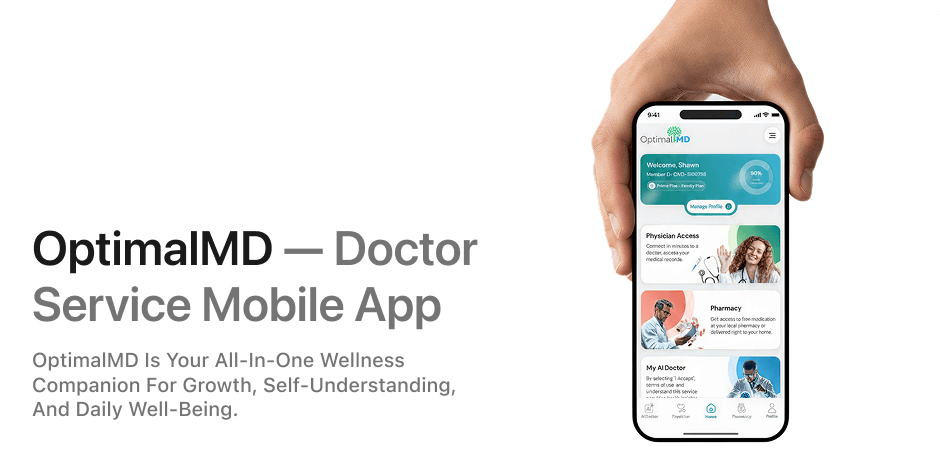
When we built OptimalMD's digital product, we took it from design through development to launch across the website, the members portal and the mobile app, as described in the OptimalMD case study. Delivering all three surfaces as one project is what kept their scope in a single document.
If you're still deciding what goes in a first release, our MVP cost breakdown shows how to cut scope without cutting the parts a regulator cares about. When you're ready for a scoped estimate, our Apps and SaaS team can price it against your document.
Frequently asked questions
Do I need a signed agreement with my cloud provider?
If patient data will live there, yes. AWS, for one, offers a standard business associate addendum and says protected health information should only be handled in the HIPAA-eligible services it names.
Is Epic's FHIR developer access free?
Epic describes its FHIR developer resources as free, including a testing sandbox with example data. Costs appear later, in the build, testing and customer-by-customer rollout.
Is my clinical decision support feature a medical device?
It depends on whether it meets the criteria for non-device decision support in section 520(o)(1)(E) of the FD&C Act. The FDA's January 2026 guidance includes examples of both outcomes, so compare your feature with them before design is fixed.
Cover photo by erwinbosman on Pixabay
Sources
- HHS applies inflation increase to penalties for HIPAA violations — HIPAA Journal
- HIPAA Compliance — Amazon Web Services