








A boutique inn swapping out its logo and color palette is solving a different problem than a resort group rebuilding its identity across forty properties, a website and every printed guest touchpoint.
That's the reality behind the travel and hospitality branding cost question: what you pay depends far more on the scope of the work than on the word "branding" itself.
Design a logo, a color system and basic guidelines, and that's one job. That calculus changes once the same identity has to survive a website, a booking engine, in-room signage, staff uniforms and every OTA listing photo too.
Each extra system means another approval round, and every approval round adds time before it adds cost.
What Drives Travel and Hospitality Branding Cost
Most small businesses don't budget for branding as its own line item. They fold it into marketing spend, and that's a reasonable way to size it.
The Small Business Administration tracks how much U.S. businesses spend on marketing as a share of revenue, broken out by category:
| Business type | Avg. marketing spend (% of revenue) |
|---|---|
| All businesses | 1.08% |
| Restaurants | 1.93% |
| B2B service firms | 6.9% |
| B2C service firms (most hotels and travel operators) | 11.8% |
Those are 2018 figures cited in a 2019 SBA analysis of marketing spend, and they describe marketing overall, not a branding line item.
Still, the pattern is useful: hospitality sits near the high end because it sells directly to individual guests, not to other companies.
If a hospitality brand is already spending in that range to win guests, a full identity refresh is a project inside that existing budget rather than money layered on top of it.
Size the branding piece to how much of the guest journey the new identity actually has to touch, not to a flat figure pulled from somewhere else.
Why Guests Notice the Difference
Because a guest can't inspect a stay before booking it, travel decisions run more on trust signals than most purchases do. Booking.com's 2024 survey of more than 31,000 travelers across 34 countries found 83% saying sustainable travel matters to them personally.
Guests also want that signal to be consistent. The same survey found that most travelers want booking platforms to use uniform sustainability labeling instead of each property making its own claim, a preference reflected in the 45% who say a sustainably labeled stay is more appealing outright.
That's a design and copy problem before it's anything else: a label only works if a guest sees the same signal wherever they're actually deciding, from the OTA photo set to the property's own site.
An identity that looks different on the booking engine than it does on the front door is asking a guest to trust two different brands instead of one.
Scoping the Project Without Overpaying

Photo by Markus Winkler on Pexels
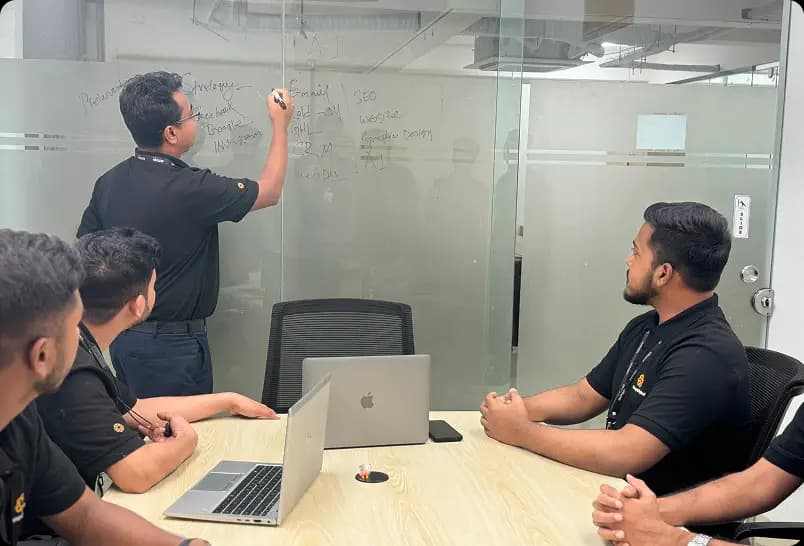
The fastest way to control the number is deciding upfront how far the new identity has to reach. For a single-property refresh, a logo, palette and short guidelines document is enough.
Scale that up, and a larger operation needs the same system carried through the booking flow and every digital touchpoint a guest actually uses, not just a new mark on the homepage.
Signage, staff uniforms, printed collateral and OTA photography all cost money to update once a new identity is locked, and each sits as a separate line item outside the design fee itself.
Scoping those out upfront, rather than discovering them mid-project, keeps a rebrand inside the budget set at the start.
A brand identity project and the marketing spend that puts it in front of guests are easiest to plan together rather than in sequence. Treated separately, an identity guests never see perform in those channels is money spent twice.
Elsewhere in service industries, the same discipline behind building trust through visual branding holds true: consistency across every guest touchpoint earns more than a redesign guests only see once.
Sources
- Latest Booking.com Sustainable Travel Data Reveals Ongoing Challenges for Consumers & Highlights a Heightened Opportunity for Cross-Industry Collaboration — Booking.com
- How to Get the Most From Your Marketing Budget — U.S. Small Business Administration