




















A health plan that misses the January 1, 2027 deadline for its prior authorization API has a compliance problem, and every provider-facing product that depends on that data inherits it. That date anchors the healthcare software development trends below, because the ones that matter most this year are the ones with a calendar or a clinical study behind them.
We've kept the list short and sourced. Where a trend rests on a vendor's claim or a single pilot, the text says so.
Healthcare software development trends start with payer API deadlines
If you build for Medicare Advantage plans, Medicaid and CHIP programs or Qualified Health Plan issuers, the CMS interoperability rule sets one date for four APIs: January 1, 2027. They are the Patient Access, Provider Access, Payer-to-Payer and Prior Authorization APIs, as laid out in the CMS fact sheet on the final rule.
The Prior Authorization API has to list covered items and services, identify the documentation a request needs, and return one of three answers: approved (with an end date), denied with a specific reason, or more information needed. Drugs are excluded.
Opt-in and opt-out handling is where the build gets fiddly. Patients opt in to payer-to-payer sharing, and they can opt out of provider access, so consent state has to travel with the data. Only records with a date of service in the five years before a request must be shared.
The rule also sets decision clocks: 72 hours for urgent requests and seven calendar days for standard ones. Those clocks do not apply to QHP issuers on the federally facilitated exchanges.
For provider-side teams, the practical read is simple. Once payers expose these interfaces, an EHR built with compliance and usability in mind can surface authorization status where clinicians already work, instead of sending staff to a portal.
AI scribes have the best evidence of any clinical AI category
Of all the healthcare software development trends involving AI, ambient documentation has the most measured results behind it, though the strength of that evidence varies by study. A Healio report on the research describes a JAMA Network Open study in which AI scribes cut time in the EHR by 8.5%, roughly 2.4 minutes per appointment.
A second study followed clinicians at Mass General Brigham and Emory Healthcare through an 84-day pilot, and burnout fell from 52.6% to 30.7%.
Read that second figure with care. It compares clinicians before and after a pilot, with no control group described, and Healio notes that one of the researchers reports ties to an AI scribe company. It's encouraging, not proof of a fixed effect.
The same report lists the problems a product team inherits. Background noise reduces accuracy, physicians can miss errors when they trust the output too readily, and patient consent and the handling of sensitive conversations remain open questions. One study cited puts hallucination rates at around 1% to 3%, which in a clinical note is not a rounding error.
So build the review step first. A scribe that drafts a note and makes the physician's correction fast and visible is a better product than one that drafts faster.
What the FDA's AI device list does and doesn't tell you
If your software informs diagnosis or treatment, the FDA's list of AI-enabled medical devices is the closest thing to a map of what has already cleared review. It's updated in batches, and the newest entries we saw carried final decision dates in late June 2026.
The FDA is explicit that the list is not comprehensive. Devices are found mainly through AI-related terms in their authorization summaries, so a product can be authorized and still missing.
One line matters for anyone building on large language models. The FDA says it plans to explore how to identify devices that use foundation models, and it encourages sponsors to describe that use in their public summaries. Expect more questions about model provenance, not fewer.
We'd treat the list as a research tool for predicate devices and intended-use wording, and not as a statement that any given feature is or isn't regulated. That call belongs to your regulatory counsel.
The HIPAA Security Rule overhaul slipped, and you should still build toward it
The proposed rewrite of the HIPAA Security Rule is not in force. As Paubox reported on July 15, 2026, OCR moved final action from a May 2026 target to at least July 2027 and shifted the rulemaking to the long-term actions list. The current rule remains the law.
Among healthcare software development trends, security is the one where waiting is the wrong plan for new builds. The proposal would remove the split between "required" and "addressable" safeguards, which means encryption, multifactor authentication and network segmentation become mandatory in nearly every case. It would also require a written asset inventory and network map, vulnerability scans every six months and penetration testing every 12.
Retrofitting those controls into a live system costs far more than designing them in, and none of them is controversial as engineering practice. Our walkthrough of what HIPAA-compliant app development takes covers the baseline you'd need either way.
One more recovery requirement deserves a design review now: restoring critical systems within 72 hours after a disruption, based on a required criticality analysis. That's an architecture question, not a documentation task.
The dates that should set your roadmap

Photo by Vitaly Gariev on Pexels
Four dates from the sources above sort these healthcare software development trends into what's binding and what's still proposed.
| Date | What happens | Status |
|---|---|---|
| January 1, 2026 | Operational provisions, including denial reasons, begin | Final rule |
| March 31, 2026 | First public prior authorization metrics due | Final rule |
| January 1, 2027 | Patient Access, Provider Access, Payer-to-Payer and Prior Authorization APIs due | Final rule |
| July 2027 (earliest) | HIPAA Security Rule overhaul, projected final action | Proposed, delayed |
The first three are law, and the last is a projection that has already moved once. Agency timetables aren't binding, as Paubox points out, so don't schedule hard commitments against it.
Where to start if you're planning a build this year
To turn these healthcare software development trends into a plan, begin with the integration that has a legal date attached. If you serve payers, that's the four APIs. If you serve providers, it's the workflow that will consume them.
Second, design security as if the HIPAA proposal were final. It costs little at the start of a project and a great deal at the end.
Third, treat AI features as products with a review loop, not as a model call. The scribe evidence is strongest where a clinician stays in control of the note.
Whether to build custom or buy is a separate decision, and when custom healthcare software solutions make sense sets out how to make it. For the wider picture, our complete 2026 guide to healthcare software development covers process and team structure.
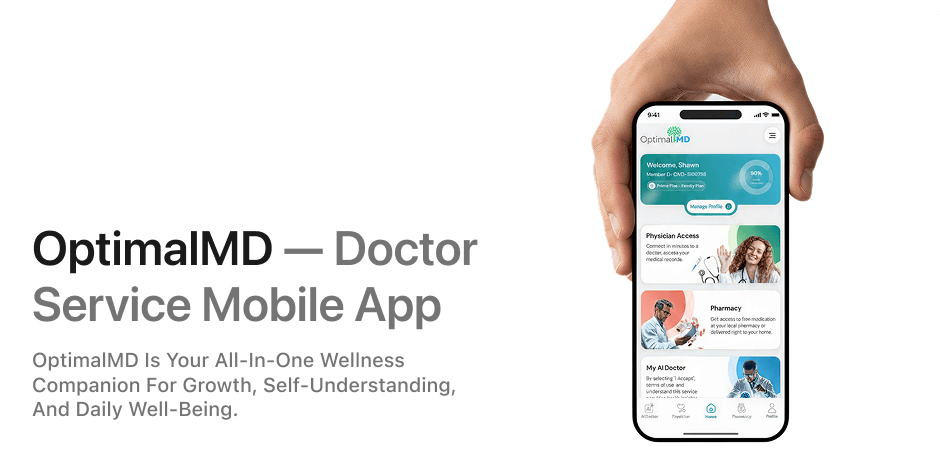
When we built OptimalMD's digital product, we took it from design through development to launch across the website, the members portal and the mobile app. You can read how that came together in the OptimalMD case study, and our apps and SaaS team works on products like it.
Whatever your healthcare software development trends roadmap ends up containing, put the consent model on paper before any code. Every API above, and every AI feature, depends on knowing who agreed to what.
Frequently asked questions
Is the HIPAA Security Rule overhaul in effect?
No. It's a proposal published January 6, 2025, and OCR now points to at least July 2027 for final action. The existing Security Rule stays in force until then.
Which organisations have to build the prior authorization API?
Medicare Advantage organizations, state Medicaid and CHIP fee-for-service programs, Medicaid managed care plans, CHIP managed care entities and QHP issuers. Their API deadline is January 1, 2027.
How fast must payers decide prior authorization requests?
Within 72 hours for urgent requests and seven calendar days for standard ones. These timeframes don't apply to QHP issuers on the federally facilitated exchanges.
Does the FDA's AI device list cover every AI medical product?
No. The FDA says it is not a comprehensive resource, because devices are identified mainly by AI-related terms in their authorization summaries.
Cover photo by Tima Miroshnichenko on Pexels