


















Venture money is returning to digital health, but it's landing on fewer companies. Rock Health counted $7.4 billion raised in the first half of 2026, with deals of $100 million or more taking 45% of it.
For anyone shopping for health tech startup ideas, that means a specific problem, owned by people who understand it, beats a generic app with AI on top.
Each idea below is tied to something we could check: where 2026 money is going, which deadlines force buyers to spend, and where the evidence on new tools is thin. The ideas are our judgement, and none of them guarantees a fundable company.
What the 2026 funding numbers say about health tech startup ideas
In its July 16, 2026 report on Rock Health's first-half data, Healthcare Dive noted that mental health was the most-funded clinical area for a seventh consecutive year. Weight management ranked second, driven by demand for GLP-1 weight loss drugs.
Two other details matter more than the totals. Rock Health no longer treats AI use as a distinguishing feature, and investors want founders with healthcare expertise, because AI makes products easier to build while making buyers' concerns harder to anticipate.
Buyers also expect support after deployment, which raises the bar for measurable ROI. So test every idea against two questions: does a named buyer already have a budget or a deadline for this, and could you show the result six months after launch?
Ideas driven by the CMS prior authorization deadline
Deadlines create budgets, which makes this the least speculative cluster of health tech startup ideas. Reed Smith's summary of the CMS final rule, issued January 17, 2024, says Medicare Advantage organizations, Medicaid managed care plans, CHIP managed care entities and QHP issuers must have FHIR-based APIs running by January 1, 2027.
Since 2026 those payers have also owed decisions within 72 hours for urgent prior authorization requests and seven days for standard ones.
1. A prior authorization API layer for smaller payers
The rule's Prior Authorization API has to list covered items and services, identify the documentation needed for approval, and report an approval with an end date, a denial with a specific reason, or a request for more information.
A smaller plan running older claims systems has little appetite for building that from scratch. A hosted FHIR layer that sits on top of what they already run is the product. Compliance runs through every feature, which our guide to health insurance software features and compliance covers in detail.
2. A submission tool for the practice side
Once payers publish exactly which documents each service needs, the person at a practice chasing approvals can have those requirements pulled into the workflow and checked against the chart before anything is sent. That's a narrower, cheaper product than a payer platform, and the buyer is a practice manager who feels the pain daily.
It also connects naturally to revenue cycle work, which we've written about in our revenue cycle management software guide.
3. Data handoffs between plans and providers
The same rule requires a Provider Access API that shares claims, encounter data and USCDI data classes with in-network providers. A Payer-to-Payer API must move most of that data to a new plan, with the patient's permission, for patients with a date of service in the last five years.
Moving a member's history cleanly when they switch plans is mostly integration work, and integration work is a perfectly good business.
Ideas for clinics and patients
4. Tools for the work that follows the AI scribe
A multisite JAMA study followed more than 1,800 clinicians using AI scribes against 6,770 controls at five US hospitals. Documentation time fell by about 16 minutes a day, but time in the EHR outside work hours didn't differ significantly between the groups.
Only 32% of users relied on the scribe for more than half their visits. The saved minutes didn't send anyone home earlier, which leaves room for tools that handle what comes after the note: inbox triage, orders, follow-up tasks.
5. Digital intake for the provider side
CMS's Health Technology Ecosystem includes a goal called Kill the Clipboard, which aims to let patients share health information across providers, for example by showing a QR code that connects securely to their record. HFMA's May 2026 analysis of the initiatives notes that most of the organizations pledging are tech companies, with only a small number of providers.
That imbalance is the opening. Clinics need intake that receives this data and fits their existing scheduling and records, and few vendors are building for them.
6. A patient navigator that reads the whole record
HFMA also relays an anecdote from the CMS adviser leading the initiative: her daughter loaded her entire EHR into a conversational AI program, which found a clinical trial she might qualify for and flagged an earlier diagnosis, the one that had ruled her out, as an error.
One anecdote isn't evidence, and the same article says proof for many wearables and related technologies is limited, with few randomized trials. A navigator worth building shows its sources and lets the patient take what it finds to a clinician.
Ideas in the most-funded categories

Photo by Free-Photos on Pixabay
7. Support around GLP-1 treatment
Money is following weight management because of the drugs, and the drug is only one part of treatment. The opportunity sits in the support around it: tracking, check-ins and a clean handoff to the prescribing clinician.
Expect competition: of all these health tech startup ideas, a category ranking second in funding is the one most founders are already circling.
8. Mental health care with a clinician in the loop
Mental health has led clinical funding for seven years, so a new entrant needs a sharper angle than an AI companion. At its November 6, 2025 meeting on generative AI mental health devices, an FDA advisory committee heard that no AI-enabled device had been authorized for mental health use.
Members raised over-trust in AI output, inaccurate or biased content, and the risks of chatbots used outside supervised therapy. We'd build the tools that support a human therapist, such as scheduling, between-session check-ins and documentation, and keep generative AI away from the therapeutic conversation itself.
9. ROI reporting for health systems that already bought software
If buyers expect measurable returns after deployment, someone has to measure them. A product that connects a purchased tool to the outcomes it was bought to change, and reports them to the executive who signed the contract, serves an audience that's already skeptical of meager returns.
10. A narrow workflow product built by a clinician
Investors are asking for healthcare expertise first. A nurse, billing specialist or practice manager who knows one specialty's daily friction can build a tool a generalist team would never think to prioritise. Among health tech startup ideas, the unglamorous workflow is often the one worth picking.
How to choose between these ideas
Of all these health tech startup ideas, start with the one where a buyer's deadline is already printed. A rule with a January 1, 2027 date makes the first three ideas easier to sell than anything that depends on someone changing their mind.
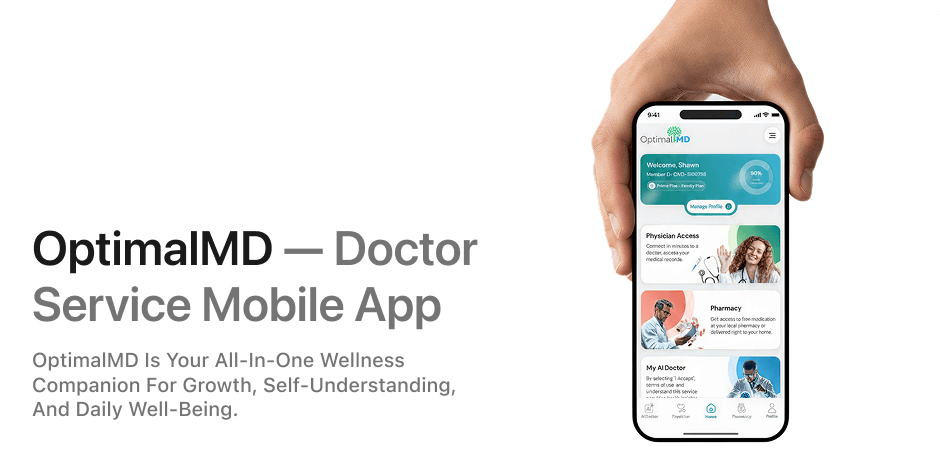
Then put a clinician or operator on the founding team before writing code. We designed and built OptimalMD's digital product end to end, from design through development to launch: the website, the members portal and the mobile app, as described in our OptimalMD case study.
Whatever you choose, ship one workflow first. Our guide on building a healthcare MVP that gets funded walks through that scope, and our apps and SaaS team builds products like these.
Write down, before launch, the single number you'll report to your first customer after 90 days.
Frequently asked questions
Which health tech startup ideas have the clearest demand in 2026?
Those tied to a dated requirement or to the most-funded categories. The CMS API deadline of January 1, 2027 covers the payer-side ideas, while mental health and weight management lead clinical funding.
Is AI enough to raise money for a health tech startup?
No. Rock Health has stopped treating AI use as a distinguishing feature, and investors are looking for founders with healthcare expertise and products that show measurable ROI.
Does an AI mental health app need FDA authorization?
At the FDA advisory committee's November 2025 meeting, no AI-enabled device had been authorized for mental health use. Whether your product counts as a device depends on its intended use, so get regulatory advice before you build.
Cover photo by erwinbosman on Pixabay
Sources
- Large funding rounds help boost digital health investment in H1 — Healthcare Dive
- AI scribes linked to modest reductions in EHR documentation time — Mass General Brigham