












Ask ChatGPT where to get good pizza tonight, and there's a real chance your favorite spot never gets named. A restaurant AI search case study from Uberall, published in May 2026, tested that exact scenario across five AI platforms.
Eighty-three percent of restaurant locations never showed up in the answer, despite nearly all of them keeping an active Google Business Profile. That gap is quietly deciding which restaurants get the reservation and which ones don't make the shortlist at all.
The Restaurant AI Search Case Study Behind the 83% Number
Uberall built a report it calls Fast Food, Faster Discovery: The 2026 GEO Playbook for Multi-Location QSRs from its own GEO Studio benchmark and its base of quick-service clients, tracking how ChatGPT, Gemini, Perplexity, Copilot and Google AI Overviews answered questions like where to grab a good burger nearby.
The pattern wasn't evenly spread. In every food category, the top three brands captured over half of the total visibility. Uberall's CMO, Stephanie Genin, put it directly: AI now decides which restaurants get discovered, and most QSR brands aren't built for the signals AI relies on.
Getting picked at all comes down largely to star ratings, and the platforms don't agree on where the bar sits.
| Platform | Typical rating floor | What that means for a listing |
|---|---|---|
| ChatGPT | 4.3+ stars | Needs to sit near the top of local reviews, not just above average |
| Perplexity | 4.1+ stars | A little more forgiving, still well above a typical 3-star listing |
| Gemini | 3.9+ stars | The lowest floor of the three, though still ahead of a middling score |
Four stars flat is often enough for Google's map pack. On ChatGPT, that same score falls short more often than not.
Why Growing Chains Show Up and Struggling Ones Don't
A side-by-side comparison of expanding and shrinking restaurant chains, published by Search Engine Land on September 8, 2026 using SOCi's Local Visibility Index, lined up eight brands opening new locations against eight that are losing them.
The AI recommendation gap was the widest measure in the study. ChatGPT recommended the expanding brands in roughly one in five queries, against one in thirty for the shrinking ones. The growing brands also carried higher star ratings and answered far more reviews.
None of that is a coincidence.
Opening new locations usually means updated listings, current menus and faster replies to customers, and that combination is exactly what feeds an AI system's confidence in a recommendation.
What Actually Gets a Restaurant Into the Answer
Photo by Zeeshaan Shabbir on Pexels
The mechanism behind both studies is the same. AI systems build their answers from structured, checkable information rather than a homepage's own claims about itself.
Google's own guidance on LocalBusiness structured data lists what that structure looks like: a verified name and address, hours, phone number, price range, cuisine type and a link to the actual menu, marked up so software can read it directly instead of guessing from a paragraph of text.
Restaurants that skip this step aren't necessarily worse. They're just harder for a language model to verify quickly, and an AI assistant answering in real time doesn't wait around for a maybe.
This healthcare local SEO case study found the same pattern in a different industry: the businesses that keep listing data current are the ones that show up.
The order matters less than starting. Clean up the Google Business Profile first, since it feeds nearly every other platform. Add LocalBusiness and Menu schema next, then keep answering reviews, the one habit every growing chain in the Search Engine Land data shared.
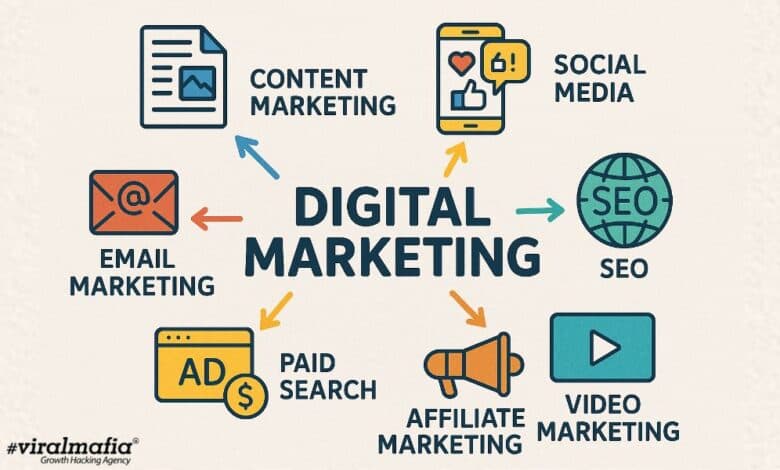
That's the groundwork behind a digital marketing and growth plan built for how people search now, close to what a full-service digital agency does for restaurants.
Automating the upkeep across dozens of locations is where AI and automation work earns its keep. No one updates fifty menus by hand every time a price changes.
Cover photo by Bingqian Li on Pexels