






















HealthCare.gov insurers denied about 20% of in-network claims in 2023, according to KFF's analysis of federal marketplace data. That is the problem healthcare RCM software development exists to solve: a claim leaves your system clean, comes back denied, and nobody has the tooling to find out why.
Your own denial rate will differ, but the design question is the same. Does the software only send claims, or does it help you get paid for them?
What healthcare RCM software development involves
It means building the system that carries a claim from an eligibility check to a posted payment, and the follow-up work when a payer says no.
Federal standards fix most of the surface area. The real design decisions in healthcare RCM software development sit around them: how denials are surfaced, how work is routed, and what gets reported.
Billing is one slice of that. If you're scoping the billing side on its own, our medical billing software development guide goes deeper on it.
Which HIPAA transactions does the software have to support?
Every step of the revenue path maps to a standard transaction, and CMS publishes the adopted list. All of them use ASC X12N Version 5010 except the payment transfer itself, which runs over ACH.
| Workflow step | Standard | Federal operating rules | Standard effective |
|---|---|---|---|
| Claim submission | 837 | None listed | Jan 1, 2012 |
| Eligibility and benefits | 270/271 | Yes, from Jan 1, 2013 | Jan 1, 2012 |
| Claim status | 276/277 | Yes, from Jan 1, 2013 | Jan 1, 2012 |
| Prior authorization and referrals | 278 | None listed | Jan 1, 2012 |
| Payment transfer (EFT) | ACH CCD+Addenda | Yes, from Jan 1, 2014 | Jan 1, 2014 |
| Remittance advice (ERA) | 835 with TRN trace number | Yes, from Jan 1, 2014 | Jan 1, 2012 (835), Jan 1, 2014 (TRN) |
The practical reading: eligibility, claim status and payment have federally mandated operating rules behind them, so a build can treat those three as well-specified. Claims and prior authorization leave more room for payer-by-payer variation, which is where most of your testing time will go.
In our view, the 835 remittance is the transaction to get right first. It is the one that tells the system what actually happened to a claim, and everything downstream, from payment posting to denial work, reads from it.
Why denials should shape the design
A system built around submission treats a denial as an exception. A system built for revenue treats it as a normal event with its own queue, its own owner and its own deadline.
The KFF data hints at why that matters. Among the denials insurers reported with a reason, administrative causes (about 21%) were far more common than medical necessity (about 6%), which means a large share of denials are the kind that cleaner front-end data and better routing can address.
Fixing them requires someone to act, and in the marketplace data that mostly didn't happen. Fewer than 1% of denied in-network claims were internally appealed, and insurers upheld 56% of the appeals that were filed.
Treat those as marketplace figures only. KFF covers post-service claims on HealthCare.gov plans, and leaves out employer group plans, state-based marketplaces and prior authorization denials. Your payer mix decides how much of this applies to you.
Which denial metrics should the dashboard report?
Define them before you design the screens. The Healthcare Financial Management Association's Claim Integrity Task Force argues that standard definitions give providers and payers a common language and make benchmarking possible, and it recommends six denial metrics:
- Initial denial rate, by volume and by dollars, using the average of the prior three months.
- Primary denial rate, based on zero-pay remits from primary payers over the past four weeks.
- Denial write-offs as a percentage of net patient service revenue (MAP Key AR-6).
- Time from initial denial to appeal.
- Time from initial denial to claim resolution.
- Percentage of initial denials overturned.
One definition deserves care in the data model. An initial denial counts only the first denial on a claim, and rebills are excluded, so your schema needs to link a resubmission back to the claim it replaces. Without that, every appeal inflates the denial rate you're trying to lower.
The task force also treats line-level reporting as best practice, with charges taken from each denied line. That decides whether you store denials per claim or per line, and it's far cheaper to choose at the start of a healthcare RCM software development project than to migrate later.
Should you build custom, buy, or extend what you have?

Photo by Andrea Piacquadio on Pexels
Off-the-shelf RCM products and the billing modules inside an EHR cover standard workflows well, and for a practice with a conventional payer mix and conventional processes they are a reasonable answer. Custom development earns its cost when the workflow itself is the differentiator: unusual payer rules, a service model that doesn't fit a billing module, or reporting the vendor's roadmap doesn't include.
A hybrid is common in practice. You keep the system of record you already trust and build the layer that's missing, such as denial routing or the reporting above. We cover that decision more broadly in when custom healthcare software solutions make sense.
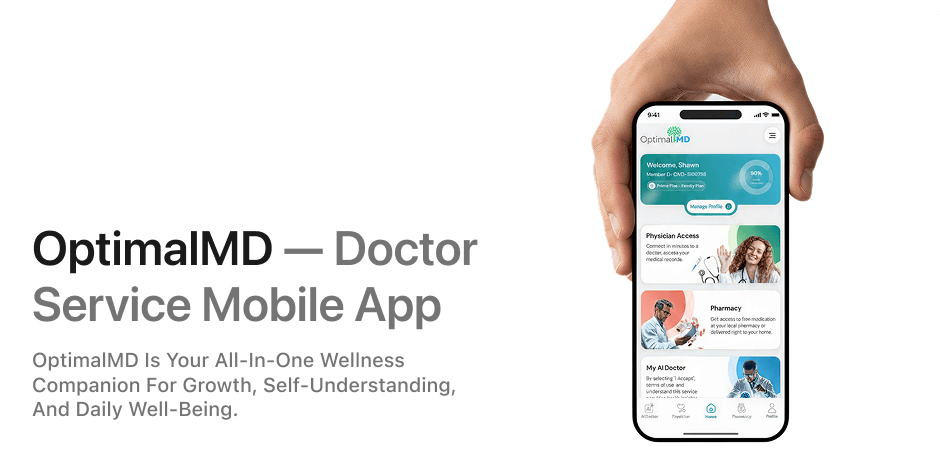
We can speak to the build side from our own work. We designed and built OptimalMD's digital product end to end, from design through development to launch: the website, the members portal and the mobile app. The write-up is in the OptimalMD case study.
Where security and compliance fit
Any healthcare RCM software development project handles patient and payment data by definition, so privacy and security belong in the first sprint rather than the last. Our guide to HIPAA compliant app development covers what that takes in practice.
A sensible build order
Sequence matters more than scope in healthcare RCM software development. Start with the 837 and 835 pair, because together they close the loop from claim to payment. Add eligibility checks next, then claim status, and leave prior authorization until the core is stable, since its standard has no federally mandated operating rules behind it on the CMS list.
Build the denial queue and the six HFMA metrics alongside the 835 rather than after it. A first release that can already tell you why claims came back is worth more than a polished one that can't, and teams scoping custom healthcare apps and SaaS tend to see that quickly once the first remittances arrive.
Frequently asked questions
Do federal operating rules apply to claim submission in RCM software?
Not according to CMS's adopted-standards list, which shows federally mandated operating rules for eligibility, claim status and payment and remittance, but none for the 837 claim. The claim standard itself is still required, in Version 5010.
What counts as a denial when I report my denial rate?
Under HFMA's task force definitions, an initial denial is the first chronological denial on a claim, and rebills are excluded. That keeps a resubmitted claim from being counted twice.
Is a 20% denial rate normal for a practice?
Not as a general benchmark. The 20% figure covers in-network post-service claims on HealthCare.gov plans in 2023, and insurers ranged from 1% to 54%. Employer group plans weren't included.
Does prior authorization have a federal standard?
Yes. CMS lists the ASC X12N 278 Version 5010 standard, effective January 1, 2012, though it doesn't list federally mandated operating rules for it.
Cover photo by Gustavo Fring on Pexels