













A scoping review of mobile apps built to improve medication adherence screened 691 articles and found only 11 that qualified, which tells you how thin the evidence behind most healthcare gamification software still is. The idea is popular. The proof is patchy.
That doesn't make it a bad bet. It means the decisions that matter are narrow ones: which behaviour to target, which mechanic to use, and how to tell whether it worked.
What healthcare gamification software looks like in practice
Healthcare gamification software adds game mechanics such as points, levels, quests and rankings to health tasks a patient would otherwise skip: taking a pill, logging a walk, finishing a rehab exercise. The game layer sits on top of a normal clinical or wellness product and doesn't replace it.
In the trials we read, that layer was thin. A patient earned points for doing the thing, and the app showed progress. The sophistication was in how the points were framed, not in the graphics.
Game mechanics that have been tested
Most of what's been studied falls into a handful of mechanics, and they combine easily. The review above found point-based systems in four of its five effectiveness studies, including leaderboards, levelling up, quests and in-game rewards. A smaller number used mini-games or a lottery that awarded gift cards.
The STEP UP trial, a physical activity study published in JAMA Internal Medicine, shows how much design sits inside a simple points system:
- Points and levels. Participants started each week with 70 points and moved through five levels, from blue to platinum, as they collected them.
- Loss framing. Missing the daily goal cost 10 points, rather than a day simply earning nothing.
- Fresh starts. People stuck in the lowest levels had their points reset partway through, so falling behind didn't become permanent.
- A social layer. Depending on the group, a friend received weekly reports, three strangers shared a team score, or a weekly email ranked three strangers against each other.
None of that needs a game engine. It needs a rules table and a notification system, which is good news for anyone costing a build.
Does healthcare gamification software improve medication adherence?
Sometimes, and the honest summary is "promising, not proven." Of the five effectiveness studies in the review, three found significantly better adherence than control groups. A fourth found no overall effect, yet saw a significant benefit in patients who had only recently started antiretroviral therapy.
The fifth reported sustained optimal adherence at three and six months, but it was retrospective, and the reviewers flagged serious concerns about confounding and missing data. The authors themselves describe the strength of evidence as varying.
They also note that the studies leaned on self-reported adherence, which tends to overstate it. If your own pilot does the same, you'll be measuring how patients feel about their habits rather than what they swallowed.
The review covered Parkinson disease, HIV in young people, breast cancer patients on chemotherapy, older adults and a general chronic-conditions group. That spread is the second reason to be careful: a mechanic that worked for one population tells you little about another.
Do the effects last once the game stops?
Mostly they fade, and the arm that held up best was the competitive one. In STEP UP, 602 overweight or obese adults wore step trackers for 36 weeks. All three gamified arms beat the control group on daily steps while the programme ran, then researchers watched what happened after it ended.
| Group | Extra daily steps vs control, weeks 5 to 24 | Extra daily steps vs control, follow-up weeks 25 to 36 |
|---|---|---|
| Competition (weekly ranking of 3 strangers) | 920 | 569, still statistically significant |
| Support (a friend gets reports) | 689 | Reported inconsistently within the paper |
| Collaboration (shared team score) | 637 | 126, not significant |
The three gamified arms didn't differ significantly from one another during the programme, so the ranking in the middle column shouldn't be oversold. The follow-up gap is the more interesting result.
Read the study's limits before you copy its design. Participants were employees of one consulting firm, mostly college-educated and with a smartphone, and the trial was supported by Deloitte Consulting and the University of Pennsylvania Health System. It measured steps only, not health outcomes.
Our own reading is that a ranking against strangers will suit some patients and feel hostile to others, particularly anyone managing a serious diagnosis. That's reasoning, not a finding, which is why the safer product choice is to make social features opt-in.
What to build into a first version

Photo by Ketut Subiyanto on Pexels
For a first healthcare gamification software release, start with one behaviour and one way of measuring it. The reviewers recommend involving patients early in development and using independent adherence measures such as pill counts or electronic monitoring, and both are cheap to plan for at the start and expensive to retrofit.
Relevance matters as much as mechanics. In the design studies the review covered, about 80% of participants found the game motivating, yet five of eleven found its topics irrelevant to their lives, and users complained of repetitiveness and a lack of content.
So content is a running cost. A game with two weeks of material becomes a notification patients mute.
Build the measurement layer before the fun layer. Log which mechanic each patient saw, which prompts they acted on and when they dropped off, because without that you can't tell a working mechanic from a busy dashboard.
Privacy rules for a gamified health app
A consumer-facing healthcare gamification software product often sits outside HIPAA, but that doesn't leave it unregulated. The FTC's Health Breach Notification Rule covers health apps and similar technologies that HIPAA doesn't, and its 2024 update made that explicit.
Under the rule, a vendor must notify affected people, the FTC and sometimes the media after a breach of unsecured health data. For breaches affecting 500 or more people, the deadline is 60 calendar days after discovery. A breach now includes unauthorised disclosure, so sharing data with a third party without permission counts even if nothing was hacked.
Gamification raises the stakes because streaks, rankings and shared team scores are built from continuous behavioural data, and social features push some of it in front of other users. If a clinical provider is involved, the hosting underneath matters too, and our guide to HIPAA-compliant cloud hosting options covers that side.
Where the game layer fits in your product
Healthcare gamification software works best wherever the patient already returns. For most providers that means the portal or the app, and our breakdown of what patient portal development actually takes is a useful starting point before adding anything on top.
Devices change the equation. If you're collecting readings from home, a points-and-streaks layer can make daily measurement stick, and the question of whether to commission or license that stack is covered in remote patient monitoring software: build vs buy. The broader product context is in our look at healthcare mobile app trends.
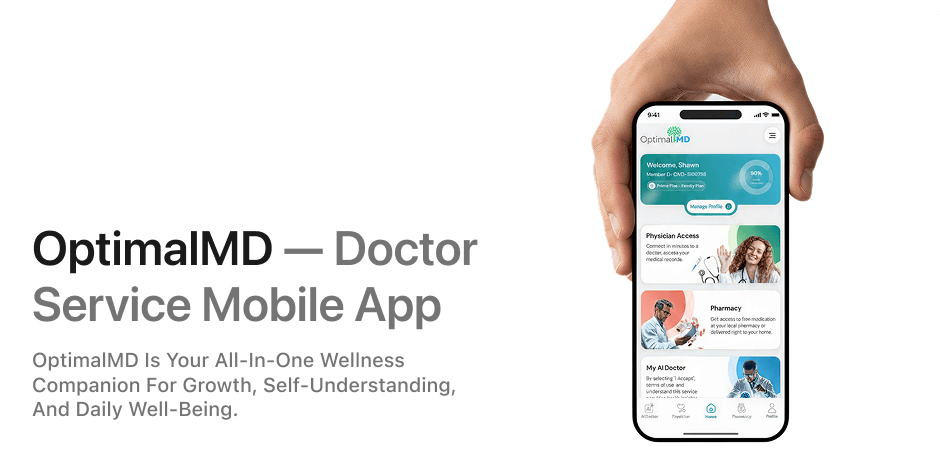
When we built OptimalMD's digital product, we took it from design through development to launch across the website, the members portal and the mobile app. You can read how that came together in the OptimalMD case study, and if you're planning something similar, our apps and SaaS team builds this kind of product.
Pilot with one cohort and one mechanic, measure it against something independent, and keep any ranking opt-in. If the follow-up numbers fade like they did in STEP UP, that's a result worth knowing before the whole product depends on it.
Frequently asked questions
Which health conditions has gamification been tested on?
The medication adherence review covered Parkinson disease, HIV in young people, breast cancer patients on chemotherapy and older adults. Its design studies also looked at cardiovascular conditions such as heart failure and hypertension. STEP UP tested physical activity in overweight and obese adults.
Is a gamified health app covered by HIPAA?
It depends on who runs it. The FTC says its Health Breach Notification Rule covers health apps and similar technologies that HIPAA doesn't, so a consumer app can still carry legal duties after a breach. Check your specific setup with counsel.
Do patients like gamified health apps?
Many do. In the review's design studies, about 80% of participants found gameplay satisfying. Even so, nearly half found the topics irrelevant to their lives, so content has to match the patient group.
Cover photo by Helena Lopes on Pexels
Sources
- The Use of Gamification and Incentives in Mobile Health Apps to Improve Medication Adherence: Scoping Review — JMIR mHealth and uHealth
- Effectiveness of Behaviorally Designed Gamification Interventions With Social Incentives for Increasing Physical Activity Among Overweight and Obese Adults: The STEP UP Randomized Clinical Trial — JAMA Internal Medicine