
















A healthcare digital marketing strategy built around a website and a few keywords is answering a question patients stopped asking. Most people researching a health issue or a provider now pass through an AI chatbot or a search summary before they reach anyone's site.
Both are getting things wrong often enough that physicians are starting to notice it in their own exam rooms.
Where Healthcare Digital Marketing Strategy Actually Starts Now
Pew Research Center surveyed 5,111 U.S. adults this past October, publishing the results in April. The pattern that emerged was clear: providers remain the anchor, but they're no longer the only stop.
Pew's data shows 85% turn to a provider at least sometimes, against 36% for social media and 22% for AI chatbots, and trust follows the same order: 65% call providers highly accurate, compared with just 7% for social media.
Physicians see the same shift from the other side. A PatientPoint-sponsored survey of U.S. doctors, run by Talker Research this March, found most believe patients now search online or check social media before ever calling the practice.
Two-thirds of those doctors said a patient had brought up AI-sourced health information during a visit. That's no longer a fringe habit worth ignoring.
AI Is Already Answering For Patients, Not Always Correctly

Photo by Vitaly Gariev on Pexels
This wouldn't matter much if the answers patients found were reliable. They often aren't.
Google pulled AI Overviews for several medical queries in January 2026 after an investigation found the summaries giving liver test reference ranges that ignored age, sex and ethnicity. A result like that could tell someone genuinely unwell that their numbers were normal.
Patients are leaning on that kind of synthesis anyway. Rater8's 2026 Patient Choice Report, covered by TechTarget this June, found close to half of patients now use an AI chatbot to research providers.
Roughly two in three of them ran into a wrong address, phone number or insurance detail along the way. Most trusted the AI's summary anyway, without verifying it.
What That Means for a Working Strategy
None of this makes search or content obsolete. It means the target changed: a practice now needs to be the source an AI system trusts enough to summarize correctly, not just the page a person clicks.
That takes a few concrete habits, most of which practices skip because they're unglamorous.
- Keep hours, addresses, insurance and services identical across the website, Google Business Profile and every directory, since AI tools pull from whichever listing loads first.
- Publish content with a named, credentialed author or reviewer attached, since that's the trust signal both search and AI systems weigh most.
- Check regularly what ChatGPT, Gemini and Google's AI Overviews actually say about your practice, the way you'd check a review site.
- Route the highest-stakes pages, like insurance and appointment information, through your own patient portal rather than a third-party aggregator you don't control.
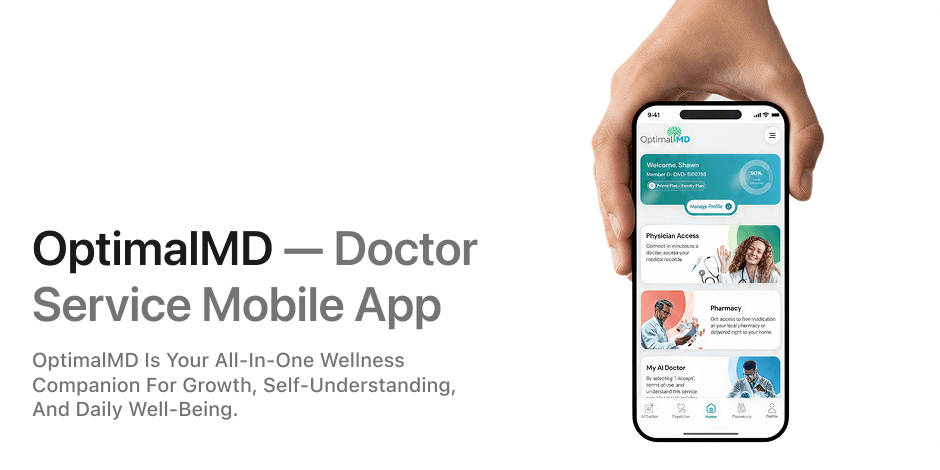
That last point matters more than it sounds. Our work rebuilding OptimalMD's patient-facing platform came down to the same principle: patients trust information they can act on directly, not a summary of it.
A site that's structured clearly for patients tends to be structured clearly for AI systems too. That overlap is part of why AI and automation work increasingly sits next to content and SEO rather than apart from it.
None of this replaces a solid digital marketing and growth plan built on real search visibility and consistent content. It just means that plan now has to assume an AI system will read the page before a patient does, and account for what it's likely to get wrong.
A practice that gets its own facts straight everywhere they appear has a real advantage over one still treating its website as the only place that matters.
Cover photo by AS Photography on Pexels
Sources
- Where Do Americans Get Health Information, and What Do They Trust? — Pew Research Center
- Search engines, social media often beat physicians as patients' first stop — Talker Research