


















Patients arrive at a practice's website with a question already in their head, and the blog posts that earn traffic are the ones that answer it. The healthcare blog topics that rank are specific patient questions, written by someone who can show they're qualified to answer them.
That sounds obvious, yet most practice blogs run on announcements, staff birthdays and generic wellness roundups. Nobody types those into a search box.
Why patients start with search
In Pew Research Center's Health Online 2013 survey of 3,014 US adults, 77% of people who looked for health information online began at a search engine such as Google, Bing or Yahoo. Specialised health sites were the starting point for far fewer.
The survey was fielded in 2012, so treat the exact percentage as a snapshot rather than today's number. The direction is the useful part: the first stop is a search box, which means your page competes for a typed question.
Pew also found that 35% of adults had gone online to work out what condition they or someone else might have. Those readers type symptoms, not diagnoses, and a blog that only uses the clinical term misses them.
Which healthcare blog topics rank?
The topics that rank match a question a patient actually types, at the level of detail they type it. Broad conditions are crowded, while narrow questions tied to a procedure, a symptom or a decision are where a practice can realistically show up.
A 2016 article from Kuno Creative on using patient search data for healthcare content makes the point with an example. A search for "hip replacement" is broad, whereas "how to alleviate itching after hip replacement" is a question someone with a specific problem asks. The first is contested by every large health publisher, and the second has far fewer pages answering it properly.
Kuno also reports that one in every 20 Google searches is health-related. That volume is why the big health sites own the broad queries and why you shouldn't try to take them head-on.
Formats that fit patient questions
Four shapes cover most of what patients search, and each suits a different stage of the decision.
- Symptom questions. "Why does my knee swell after running?" brings in people who don't yet know they need a specialist.
- Procedure explainers. What happens on the day, what recovery looks like, what to ask beforehand.
- Cost and logistics. What a first visit involves, what to bring, how referrals work at your practice.
- Comparisons between treatments. Patients weighing two options search both names together.
These formats are our own grouping, not a ranking taken from a study. Test them against your own search data before you commit a quarter of publishing to any one of them.
How to find topics in your own search data
Start with the questions your front desk already answers every week, then check each one against real search data. Kuno's article names Google's Keyword Planner for volume and competition, FAQfox and KeywordTool.io for the granular questions behind a broad term, and Google Analytics for how current visitors arrive.
Analytics deserves more credit than it gets. If a page about one procedure already pulls visitors, the neighbouring questions on that procedure are the safest next posts.
Write the list down before drafting anything. Eight or ten questions, with a rough sense of which are narrow enough to win, give you a quarter of content and a reason for each piece.
Local intent beats general information
A national publisher can't answer "where do I go" for a patient in your city, and you can. Pairing a condition or procedure with the place you treat it is the one angle the large sites can't copy.
That's also where a blog and your local listings start working together. A post answering a procedure question gives you something to link from your profile, and our guides on how patients find a provider through local SEO and on optimising a healthcare Google Business Profile cover the other half of that setup.
What Google expects from health content
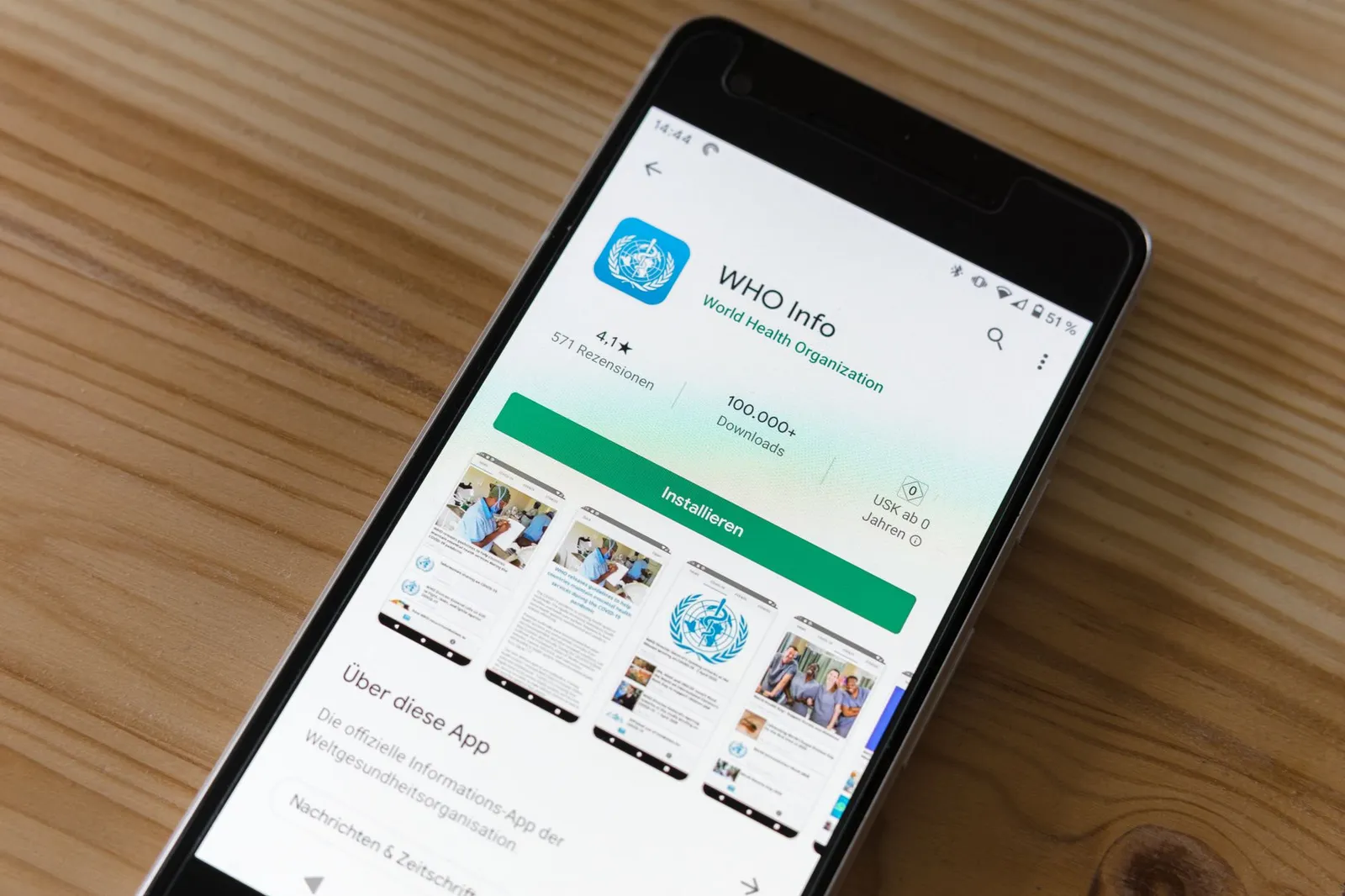
Photo by Markus Winkler on Pexels
Health pages get stricter treatment than most. Google's own guidance on creating helpful, people-first content says its systems "give even more weight to content that aligns with strong E-E-A-T" for topics that could significantly affect people's health. E-E-A-T stands for experience, expertise, authoritativeness and trustworthiness, and Google adds that trust is the most important of the four.
The same page says E-E-A-T isn't itself a ranking factor. It describes what Google's systems try to reward, so building for it is still the sensible plan, just not a box you can tick.
Who wrote it, how, and why
Google frames this as three questions. Is it clear to visitors who wrote the content, with a byline and background? Is it clear how the content was produced, including any use of AI? And why does the page exist: to help people, or to capture search traffic?
For a practice that translates into a named clinician on every post, a short line on their credentials, and topics you can answer from your own clinical work. Publishing a post about a condition you don't treat is the quickest way to fail the third question.
Review and updating
Healthcare Success, quoting Google's Search Quality Evaluator Guidelines, says high-quality medical advice should be written by people or organisations with appropriate medical expertise, and "edited, reviewed, and updated on a regular basis". The article is undated and references the 2018 Medic update, so read it as a summary of the guidelines rather than current policy.
Build a review date into your process. A post on a treatment that changed two years ago is a liability, however well it ranked.
Turning one question into a page that ranks
Put the answer in the first two sentences, then explain. A patient reading on a phone wants to know whether the symptom is urgent before they want the physiology, and a search engine quoting your page will lift that opening.
Use the patient's own wording in the heading, and keep one question per page. If a post tries to cover a condition from diagnosis through recovery, it ends up competing with the biggest publishers on every part of it.
Link between your own posts as well. A symptom post should lead to the procedure explainer, and the explainer to the page that explains how to book.
Where a blog fits with paid and local channels
A blog is the slow channel. A well-chosen post can bring patients for years, but it takes time to build, so it works best beside faster routes. If you also run search ads, our piece on building a compliant healthcare Google Ads strategy covers that side, and the questions that convert in ads are good candidates for organic posts too.
If you'd rather have a team plan the topic list and keep the publishing consistent, that's the work we do in digital marketing and growth.
Whichever route you take, start with the five questions your staff hear most often. Check each against a keyword tool, write the narrowest one first, and put a named clinician's name on it before it goes live.
Frequently asked questions
How many people search for health information on Google?
Kuno Creative reports that one in every 20 Google searches is health-related. In Pew's 2012 survey, most people seeking health information online began with a search engine.
Do healthcare blogs need a medical reviewer?
Google's guidance for health topics puts heavy weight on expertise and trust, and its quality guidelines, as quoted by Healthcare Success, expect medical content to be written by people with appropriate expertise and reviewed regularly. A named author with credentials, plus a review date, is the practical way to show it.
Is E-E-A-T a ranking factor?
No. Google's own documentation says E-E-A-T isn't a specific ranking factor, but its systems give more weight to content that fits strong E-E-A-T on health topics.
Which tools help me find what patients search?
Kuno Creative names Google's Keyword Planner, FAQfox, KeywordTool.io and Google Analytics. The first gives volume and competition, the next two surface detailed patient questions, and Analytics shows how your current visitors find you.
Cover photo by Negative Space on Pexels
Sources
- Health Online 2013 — Pew Research Center
- Use Patient Search Data to Craft Effective Healthcare Content — Kuno Creative