

















Seventy-one percent of medical practices still have fewer than a quarter of their patients booking through digital self-scheduling, according to a July 2025 poll from the Medical Group Management Association.
That gap is usually the first clue a dental practice website redesign is overdue. Patients expect to book without calling, and a site that can't do that loses them before the front desk ever picks up the phone.
The problem isn't always obvious from the inside. A site that looks fine to the team running the practice can still be quietly turning patients away.
Is Your Dental Practice Website Redesign Overdue?
Start with speed. A 2016 study Google ran with SOASTA found that 40% of visitors abandon a page that takes longer than three seconds to load.
Dental sites built years ago on older templates, carrying unoptimized photo galleries and a stack of plugins, routinely miss that mark on a phone connection in a parking lot between appointments.
Booking is the other half of it. An online booking flow built into the site itself closes a gap most practices haven't closed yet, since the tools to do it have existed for years and adoption still lags behind what patients expect.
Once a site routes every booking through a phone call during business hours, patients who'd rather book at 9pm on a Tuesday just pick the practice down the street.
Accessibility Compliance Isn't Optional Anymore
The W3C published WCAG 2.2 in October 2023, with an update in December 2024.
Screen-reader support, keyboard navigation and color contrast aren't extras bolted onto a nice design anymore. They're baseline requirements, and a site built before the current guidelines existed is worth auditing rather than assuming it still holds up.
This matters more for healthcare sites than most, since patients navigating a new diagnosis or a mobility limitation are exactly the audience least served by a cramped, low-contrast intake form.
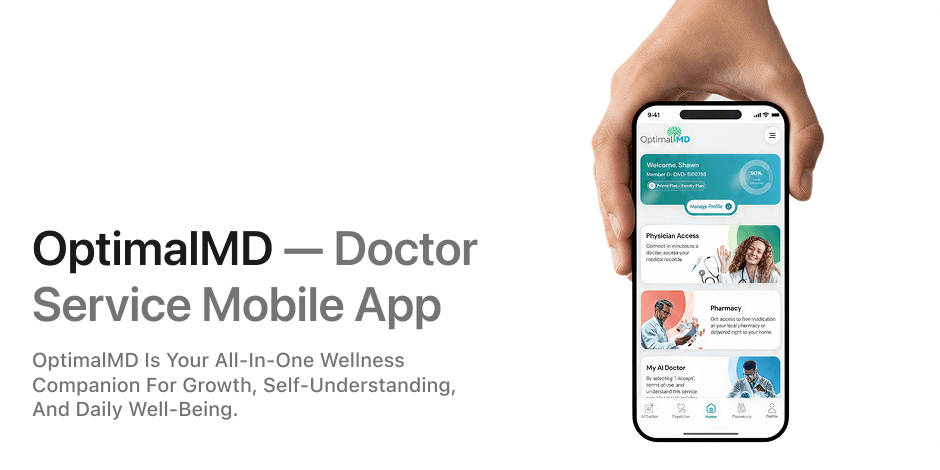
When we rebuilt the patient experience for a client in a similar position, the accessibility work for OptimalMD came before anything cosmetic, because a redesign that looks sharper but still fails a screen reader hasn't fixed the actual problem. Good UI/UX work treats accessibility as structural, not decorative.
What to Prioritize When You Rebuild

A Software Advice survey of U.S. physicians found that 67% plan to increase their software spending over the next year, with rising costs and workforce strain cited as the top pressures behind it.
Much of that spending is going toward patient engagement and scheduling tools, which is exactly the layer a redesign has to get right. The homepage photography can wait.
Two things matter most before anything else: whether the new build can actually run a booking flow patients will use, and whether your team can update hours, insurance lists and provider bios without filing a ticket.
That second point is worth comparing before committing to a platform. Headless CMS options behave differently from WordPress once a practice has multiple locations or a compliance reviewer checking every page before it ships.
Fix whichever sign above is costing you the most patients right now. That's a better place to start than whichever one happens to be easiest.
Cover photo by drshohmelian on Pixabay
Sources
- Meeting the competitive pressure on patient digital self-scheduling — Medical Group Management Association
- Why & how to focus on mobile page speed — Think with Google