





















WordPress plugins picked up 42% more vulnerabilities in 2025 than the year before, according to Patchstack's State of WordPress Security report. For a healthcare practice, that number carries more weight than it would for a restaurant.
A breach involving patient data triggers HIPAA reporting duties most small businesses never face. The headless CMS vs WordPress healthcare decision comes down to that difference: which platform keeps protected health information further from the parts of the internet that attack it.
Why the admin login is the real fault line
A standard WordPress install puts wp-admin on the public internet by default. Bots try to log into it every day.
Patchstack found 91% of last year's new WordPress vulnerabilities sat in plugins, not in core, which logged only six low-priority issues all year. Once a vulnerability goes public, the clock moves fast: the weighted median time to first exploitation was five hours.
A headless setup changes that shape. Editors still log in somewhere, but that login doesn't sit on the same public surface as the website. The published site talks to the content store through an API, not a public login screen.
Neither platform is HIPAA compliant out of the box
It's tempting to treat this as headless winning on compliance and WordPress losing. That's not quite right. No CMS, headless or otherwise, is HIPAA compliant by default.
Compliance comes from infrastructure, encryption and a signed business associate agreement, not a platform label.
Under HIPAA, a vendor becomes a business associate the moment protected health information touches its systems, according to HIPAA Journal's guide to business associate agreements. That covers the host and, depending on setup, the CMS vendor too.
HIPAA Journal notes settlements for missing agreements have ranged from $31,000 to $2.7 million.
The real work isn't picking the CMS with a compliance badge. It's confirming every vendor touching patient data has signed one, the same question that comes up when a clinic rebuilds patient-facing intake forms patients will actually use.
Where the integration work actually happens

Photo by Miguel Á. Padriñán on Pexels
Healthcare sites rarely stand alone. They connect to patient portals and increasingly to electronic health record systems through FHIR-standard APIs.
Research from the Office of the National Coordinator for Health IT found 73% of digital health companies now use standards-based APIs when integrating with EHRs.
Headless CMS platforms are API-first by design, so wiring a portal widget into the front end is often a smaller job than on a WordPress build.
That kind of rebuild also tends to surface overdue signs a healthcare rebrand is overdue.
Making the headless CMS vs WordPress healthcare call
| Consideration | Hardened WordPress | Headless CMS |
|---|---|---|
| Public admin surface | wp-admin reachable unless walled off behind a VPN | No public editing interface; only API endpoints face the internet |
| Ongoing patch load | Every plugin added is another dependency to track | Fewer third-party plugins sit in the content layer itself |
| Portal and EHR integration | Usually needs a dedicated plugin or custom endpoint | API-first architecture built for this kind of connection |
| Editorial familiarity | Widely known interface, easy to hire and train for | Newer interface for editors, with a learning curve |
A single-location clinic with a host that signs a business associate agreement and keeps plugins to a minimum can run safely on WordPress.
The math changes for a health system feeding a patient portal and an app from the same content. That's where a headless build's API-first structure stops being a nice-to-have.
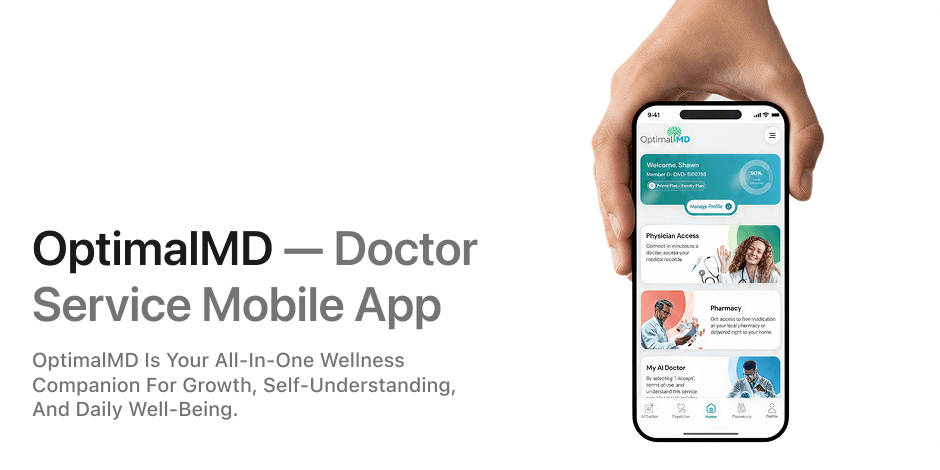
Our work rebuilding OptimalMD's accessibility and patient experience followed that path for this reason: too many downstream systems depend on the same content to leave an admin panel sitting in public view.
Getting the platform right is UI/UX work as much as a security decision. Ask every party touching patient data, host included, whether they'll sign a business associate agreement before the contract does, not after a breach forces the question.
Cover photo by https://kaboompics.com/ on Pexels
Sources
- State of WordPress Security in 2026 — Patchstack
- HIPAA Business Associate Agreement — HIPAA Journal