Databases & cloud
Docker experts for containerizing apps and dependable deploys
Octopi Digital's Web development team uses Docker to package web apps, APIs, background workers and self-hosted tools so they run consistently everywhere. We write Dockerfiles and Docker Compose setups for local development, spin up databases like PostgreSQL, MySQL, MongoDB and Redis in containers for testing, and ship production images to AWS, Google Cloud or a plain virtual server. Startups and small teams get faster developer onboarding and far fewer environment surprises. Where a managed platform makes Docker unnecessary, such as a Next.js site on Vercel, we leave it out rather than add complexity.
- Category
- Databases & cloud
- Handled by
- Our web development team
- Used in
- AI automation, Apps, SaaS
Overview
What is Docker?
Docker is a platform for packaging software into containers, standard units that bundle an application with everything it needs to run. A container built with Docker behaves the same on a developer's laptop, a server or a cloud service.
Official Docker website (opens in a new tab)Signs you need a Docker expert
- 01Setting up the project on a new developer's computer takes days and a long list of instructions.
- 02Your app works locally but breaks on the server because of mismatched versions.
- 03Your production server was configured by hand years ago and nobody dares touch it.
- 04You want to self-host n8n or another open-source tool but aren't sure how to keep it updated and backed up.
- 05Your container images are huge, slow to build and contain passwords or API keys.
What businesses hire us to do with Docker
- Local development setup for a growing SaaS team
- Self-hosted n8n with Postgres and Redis in Docker Compose
- Containerized Laravel app for a client portal
- Python AI service deployed to Cloud Run
- Moving a legacy PHP app off an old server
- Throwaway test databases for automated test runs
Want this working for your Docker setup?
Book a free strategy call and we'll show you where to start.
What we do
What we do with Docker
Package your app and its services into containers so it runs the same on every laptop, server and cloud.
- 01
Dockerfiles for your app
We write small, multi-stage Dockerfiles for Node.js, Next.js, Python, PHP and Laravel apps. Images build quickly and ship without development tools inside.
- 02
Docker Compose for local development
One command starts your app with its database, cache and queue workers. New developers stop losing their first days to setup instructions.
- 03
Self-hosted tools
We run tools such as n8n in containers with persistent volumes, HTTPS and backups. Your automations then live on infrastructure you control and can update safely.
- 04
Production deployments
Images are built in CI, tagged per release and deployed to Cloud Run, AWS ECS or a VPS. Rolling back means redeploying the previous image.
- 05
Security and image hygiene
We use official base images, run containers as non-root users, keep secrets out of images and scan for known vulnerabilities before release.
- 06
Containerizing legacy apps
Older PHP or Python apps that only run on one ageing server get packaged into containers so they can move to modern hosting without a rewrite.
When Docker is the right choice
Apps with several moving parts
An API, worker, database and cache defined in one file are far easier to run, test and reason about.
Portable hosting
Containers move between AWS, Google Cloud and other hosts without rewriting the app, which keeps your options open.
When Docker adds nothing
A WordPress site on managed hosting, a Shopify store or a Next.js site on Vercel usually gains nothing from Docker, so we skip it.
Does this sound like your business?
If Docker should be doing more for you, our web development team can set it up, fix what's broken or build on it. Tell us where you're stuck.
- Free strategy call
- No obligation
- Straight answers
Projects
Projects we build with Docker
The kinds of Docker projects our team takes on, and what each one includes.
- 01Businesses running their own automations
Self-hosted n8n automation server with Docker Compose
We set up n8n with Postgres and Redis in Docker Compose on your server, with backups and secure access. Your automations run on hardware you control without per-task fees.
- Docker Compose stack
- Postgres and Redis services
- HTTPS and access control
- Backup and update routine
- 02Companies with a custom PHP or Laravel app
Containerized Laravel client portal for easy hosting
We package your Laravel app, queue workers and scheduler into Docker containers that run the same on a laptop and in production. Moving hosts or adding a server stops being a weekend project.
- App and worker images
- Environment configuration
- Local development setup
- Deployment instructions
- 03SaaS teams onboarding new developers
Repeatable dev environment for a growing SaaS team
We set up Docker so a new developer runs the full app, database and services with one command. Onboarding takes less time and bugs that only happen on one machine show up less often.
- Dev Compose file
- Seeded test databases
- Service health checks
- Onboarding readme
How we work
How our web development team runs a Docker project
- 01
Inventory the stack
We list every service your app depends on, from the database to cron jobs, and how each is configured today.
- 02
Containerize
Dockerfiles and a Compose file are written and tested until the whole stack starts cleanly with one command.
- 03
Wire up CI and hosting
Images are built and scanned automatically, then deployed to the host that suits your budget and scale.
- 04
Document and hand over
Your team gets clear instructions for running locally, deploying, rolling back and updating base images.
Ready to start your Docker project?
Step one is a free strategy call. We map what you need, then tell you exactly what we'd build and what it would take.
- Free strategy call
- No obligation
- Straight answers
Our work
More work from our web development team
Platform
TreeROI

Platform
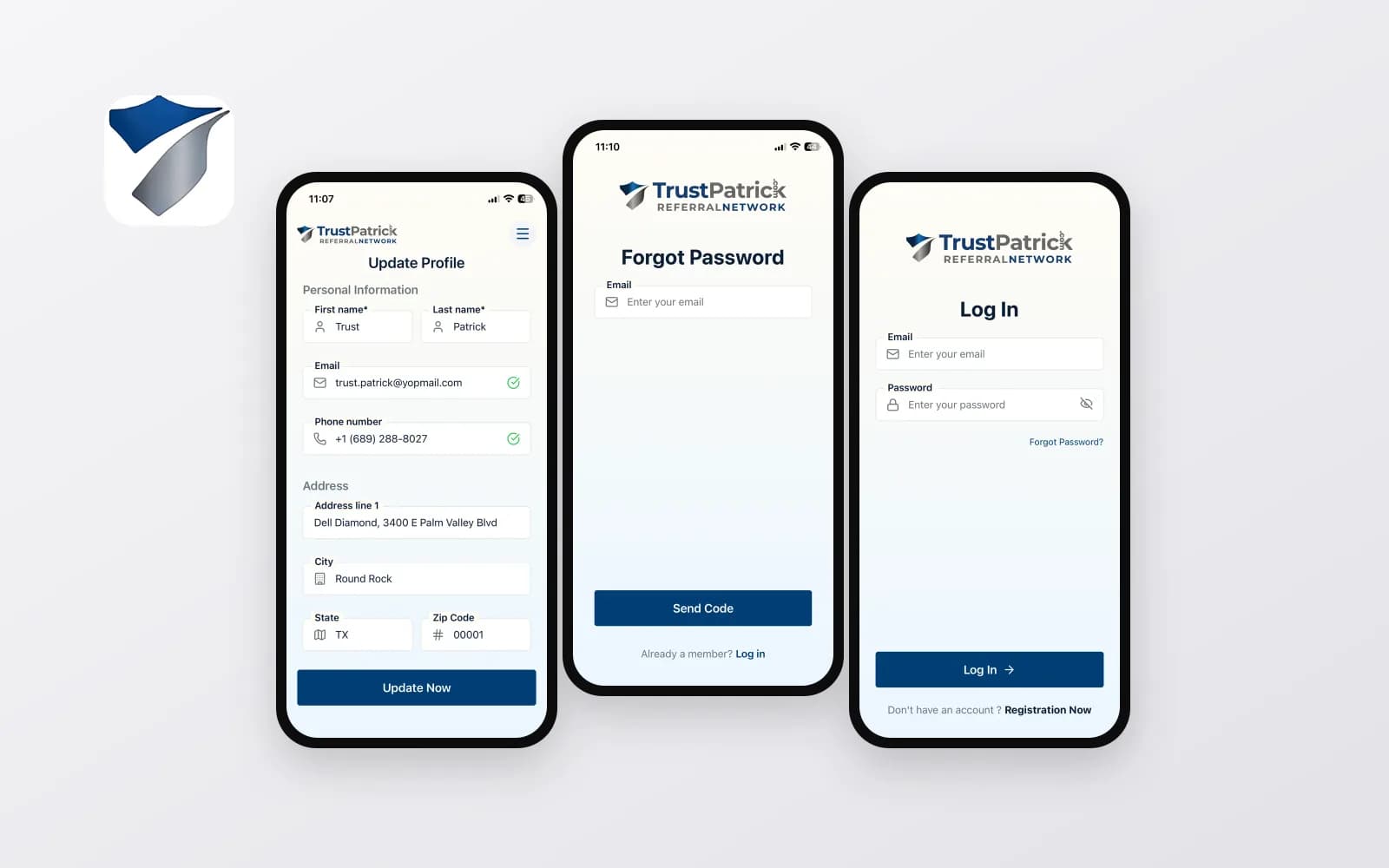
TrustPatrick
Website
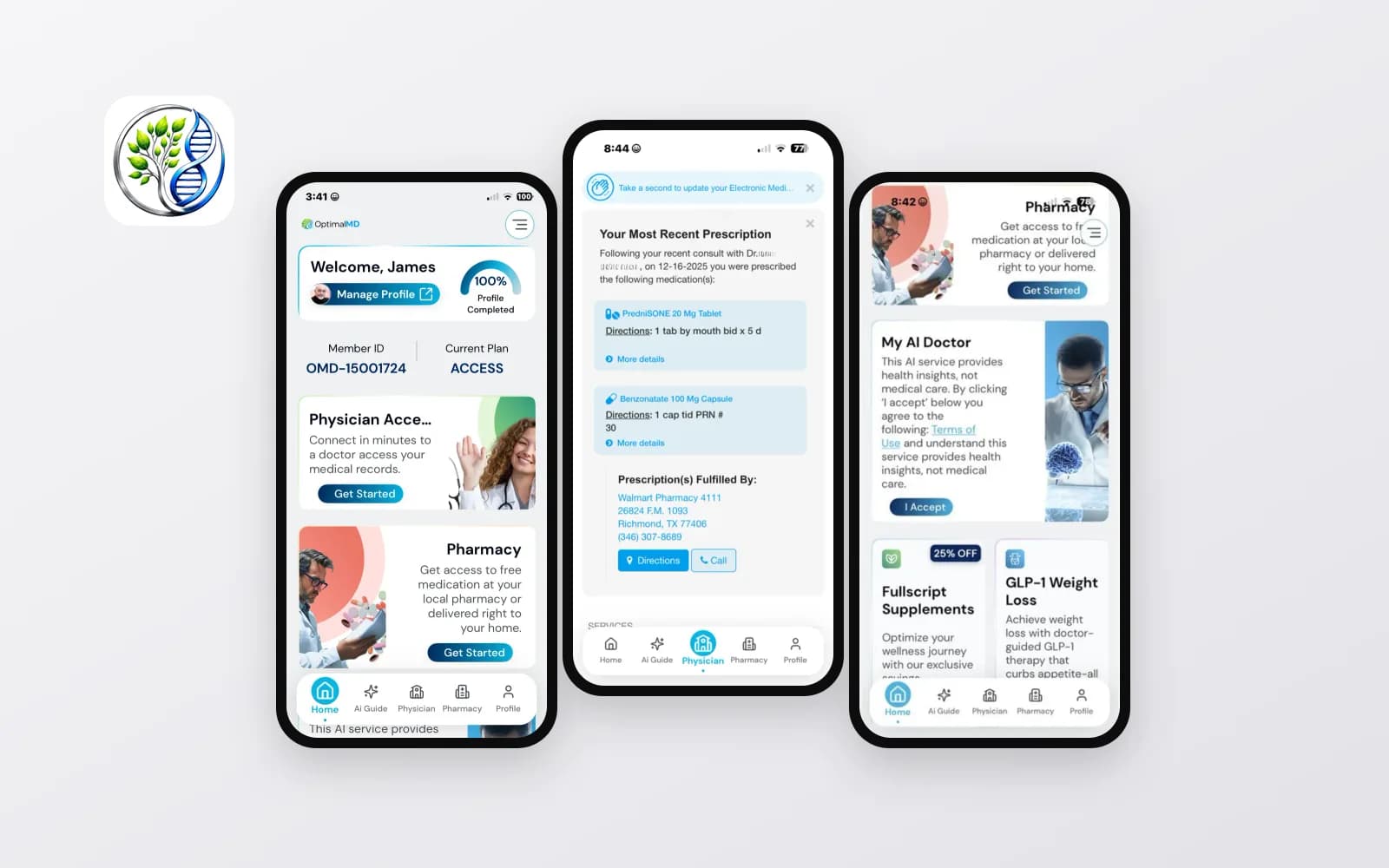
OptimalMD
Website
Monkeyman's Tree Service
Integrations
What we connect Docker with
Tools we often wire into Docker so data moves on its own. Each one has its own page.







Work like this, built for your business
Our web development team works across Docker and the tools around it, so your setup is connected from day one, not patched together later.
- Free strategy call
- No obligation
- Straight answers
Alternatives
Docker alternatives, and when to pick them
- vs
Docker vs Vercel
For a Next.js or React front end, Vercel handles builds and hosting without any containers to maintain.
About Vercel - vs
Docker vs Supabase
Supabase gives you a managed database, auth and storage, so there are fewer services to containerize and run yourself.
About Supabase


Services
Services we deliver with Docker
AI Automation & AI Agents
AI that answers your calls, replies to every lead and books the job, while you're busy running the business.
See the serviceApp Development
Apps for your customers and your crew, from first version to the app stores.
See the serviceSaaS & Web App Development
Customer portals, custom software and SaaS products, built to launch and to grow.
See the service
Not sure Docker is the right fit?
We work with the alternatives too, so you'll get a straight answer on which one suits your business, even if it's not Docker.
- Free strategy call
- No obligation
- Straight answers
FAQ
Docker questions
Straight answers about working with us on Docker.
8 questions answered

Still have a question?
Talk it through with our team on a free strategy call.
Databases & cloud
More Databases & cloud tools we use
MongoDB
SaaS · Apps
Hire MongoDB developers to design schemas, fix slow queries and move data safely, from a team that builds on SQL too.
How we use itPostgreSQL
SaaS · Apps
Relational databases built for accurate reporting and safe transactions, by a team that also uses MongoDB when that fits better.
How we use itMySQL
Websites · SaaS
Fix slow WordPress and WooCommerce databases, tune queries and migrate MySQL data, with a team fluent in SQL and NoSQL.
How we use itSupabase
SaaS · Apps
Postgres, sign-in, file storage and APIs set up properly, with row-level security that really protects your users' data.
How we use itRedis
SaaS · Apps
Cache repeat work, run background jobs reliably and keep sessions quick, set up by developers who know when Redis isn't needed.
How we use itAmazon Web Services
SaaS · Apps
Amazon Web Services set up so your app is secure, backed up and costs what it should, without a full-time DevOps hire.
How we use itGoogle Cloud
SaaS · Apps
Cloud Run, Cloud SQL, BigQuery and Firebase set up for small teams that want Google's cloud without the guesswork.
How we use itVercel
Websites · SaaS
Next.js and React projects deployed on Vercel with preview links, clean environments and settings that keep pages fast and bills sane.
How we use it

Want Docker set up properly?
Tell us what you're trying to get done. We'll tell you honestly whether Docker is the right tool for it, and what we'd build first.