




















Why Manufacturing Compete Online Matters Now
Today, manufacturing businesses face a landscape where competing online is no longer optional; it's an urgent requirement, driven by customer demands, shifting supply costs, and global competition that intensifies each year. That means product quality alone won't carry you. The digital experience counts just as much now.
Manufacturers who adapt their digital operations see both efficiency gains and increased customer trust. Competition in manufacturing today relies on speed, reliability, and data-driven service. Price is no longer the whole game.
Market Competition in Manufacturing: Beyond Price Wars
In the manufacturing market, winning takes more than just discounting, according to IoT Industries, non-price factors such as fast delivery, reliable quality, and rapid response times matter more than ever before. That's a shift from years past.
If your only edge is low prices without efficient processes backing them up, your margins suffer and so does product quality. Price cuts don't build resilience.
The best manufacturers rely on real-time data for decision-making; delayed reporting or manual tracking hides costly problems until it's too late to fix them easily. By providing live production visibility, you can react quickly and reduce guesswork. Suddenly, competition shifts: it moves from the products alone to how the entire business operates end-to-end.
Digital Transformation in Manufacturing Industry
For manufacturers in today's climate, digital transformation serves as practical leverage to stay competitive rather than just a tech upgrade or one-off project.
This shift goes further than acquiring new equipment, true digital transformation means connecting data from every possible source: shop-floor sensors, maintenance logs, ERP platforms. Managers gain visibility into every stage of production this way.
IoT Industries details how SCADA systems capture production metrics while MES software links planning; OEE tools track efficiency; CMMS oversees maintenance; EMS monitors energy use, and Business Intelligence tools bring it all together by spotting trends worth action. Each one is a key building block for continuous improvement.
The real payoff follows when that integrated data leads straight to action; for example, live monitoring makes it possible to catch downtime early and schedule predictive repairs instead of waiting for emergencies. That minimizes unexpected stoppages.
If you start small with pilot projects targeting your greatest loss points first, you can prove value before investing broadly elsewhere. That's how momentum builds.
How Manufacturers Compete Online: What Works in B2B E-Commerce
B2B buyers now expect e-commerce experiences that are just as seamless as retail shopping at home, this expectation pushes manufacturers to digitise sales channels without delay.
According to Digital Commerce 360 reports, about two-thirds of industrial firms now prefer digital interactions over traditional meetings or phone calls, a massive change from only five years ago. Times have changed fast.
Research from Master B2B finds manufacturers no longer worry about channel conflict between direct sales and distributors, instead, hybrid models thrive: direct-to-customer sites serve some segments while distributors handle others. That approach expands reach but keeps pricing and experience under control wherever necessary.
B2B ecommerce platforms built for manufacturers must manage complex realities: handling bulk orders; supporting customer-specific catalogs; importing contract pricing straight from ERP systems; managing checkout flows with purchase orders; allowing group approvals for teams who buy together, not just standard carts or coupon codes found elsewhere.
The case of Solberg Manufacturing demonstrates these benefits clearly, after unifying their global catalogue with self-service B2B ordering on an online portal, they saw web revenue rise more than 15%. The results show what's possible here.
Manufacturing B2B Ecommerce Strategy: From Complexity to Advantage
A strong B2B ecommerce strategy addresses actual daily working habits of industrial buyers; this requires providing live inventory updates across all channels so buyers always know what's really available right now. Buyers expect transparency.
You need workflows flexible enough for both routine reorders and complex configured purchases. Pricing must reflect negotiated contracts for every account, not default rates, and users at every organisational level need tailored access suited to their actual responsibilities. Customisation matters greatly.
A purpose-built B2B platform can handle huge product catalogues (tens of thousands of SKUs), let customers find parts by asset or warranty status, support regional launches with local pricing rules, and crucially integrate via API into backend systems like ERP or warehouse management software. Integration drives results everywhere.
When buyers view up-to-the-minute stock or get personalized recommendations based on buying history, or simply reorder from their phone while walking the plant, the process speeds up at every stage.
The move away from manual orders toward integrated B2B ecommerce allows sales teams to focus on relationships instead of repetitive admin tasks and boosts order accuracy as a welcome side effect.
Online Manufacturing Marketplace Optimisation
Online manufacturing marketplaces connect buyers with suppliers efficiently at scale, but growing pains around trust and transparency will hold things back if left unresolved.
A recent framework analysis highlights three central success factors: matching buyer needs efficiently to supplier capabilities comes first; next is presenting transparent transaction histories so new partners earn trust quickly; third is making collaboration easy by removing black-box interfaces that hide both counterparties' identities and reasoning behind decisions.
Curation algorithms, including buybox ranking, change which listings gain visibility first on these platforms; research finds such algorithms can increase conversions but also concentrate more sales among dominant sellers according to marketplace studies. Power grows at the top.
If you want your listing to stand out against algorithmic ranks, keep capability data current at all times. Reply quickly to messages from buyers. Ask for ratings when practical. Play to product strengths wherever algorithms reward something other than lowest price alone.
Sustaining an Edge in Market Competition in Manufacturing
Squeezing profit gets tougher as supply chains become more global and unstable all the time, ITIF's review of Chinese industrial policy describes international price pressure that strains domestic producers who cannot match foreign costs simply by automating more or boosting transparency overnight.
This reality means ongoing digital investment, not one-off upgrades, is vital insurance against shrinking margins or sudden competitive moves anywhere in the world.
Distributors are still critical for logistics because many manufacturers don't want or need their own full distribution networks, a lesson reinforced by Master B2B's interviews with industry players.
But sticking only with traditional models gives away not only margin but also insight into what your final customers will value most next year, or even next quarter.
The Path Forward: Practical Steps Toward Digital Advantage
No two manufacturers will digitise exactly alike since each business starts from its own situation.
But leaders share key patterns: treating digital transformation as targeted steps rather than one giant leap forward, prioritising fixes where lost time or faulty data are most painful before scaling out elsewhere; picking ecommerce platforms built for complex B2B requirements so volume pricing logic or approval flows don't become patchwork solutions later; and focusing not only on optimising plant operations using MES/OEE/SCADA but also actively managing seller activities across digital marketplaces outside your walls.
Treat digital transformation as targeted process improvements, start small where downtime or missing data hurt most before expanding broadly elsewhere.
Select commerce platforms designed specifically for manufacturing, not retrofitted consumer add-ons, to handle complex workflow and pricing requirements natively.
The race will not reward whoever lists products online fastest. Instead it favours those building smoother customer experiences tied closely to operational realities at every step. The manufacturers who set up these core capabilities today are best positioned for future market shifts regardless of direction next quarter, or next year.
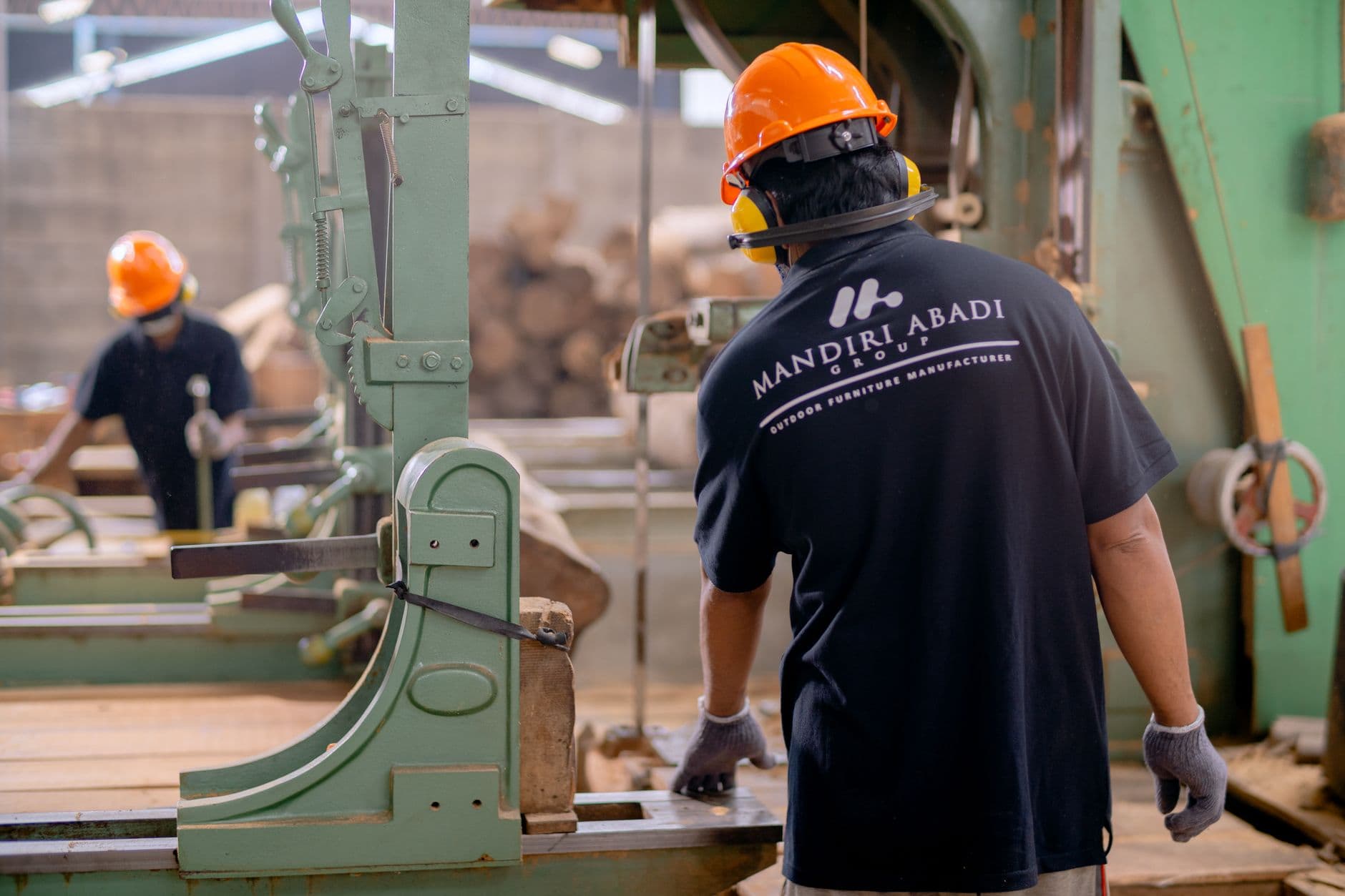
Cover photo by Mandiri Abadi on Pexels
Sources
Market Competition in Manufacturing | IoT Industries — iotindustries.sk
B2B Ecommerce Trends: How Manufacturers Can Adapt in 2026 — digit-software.com