







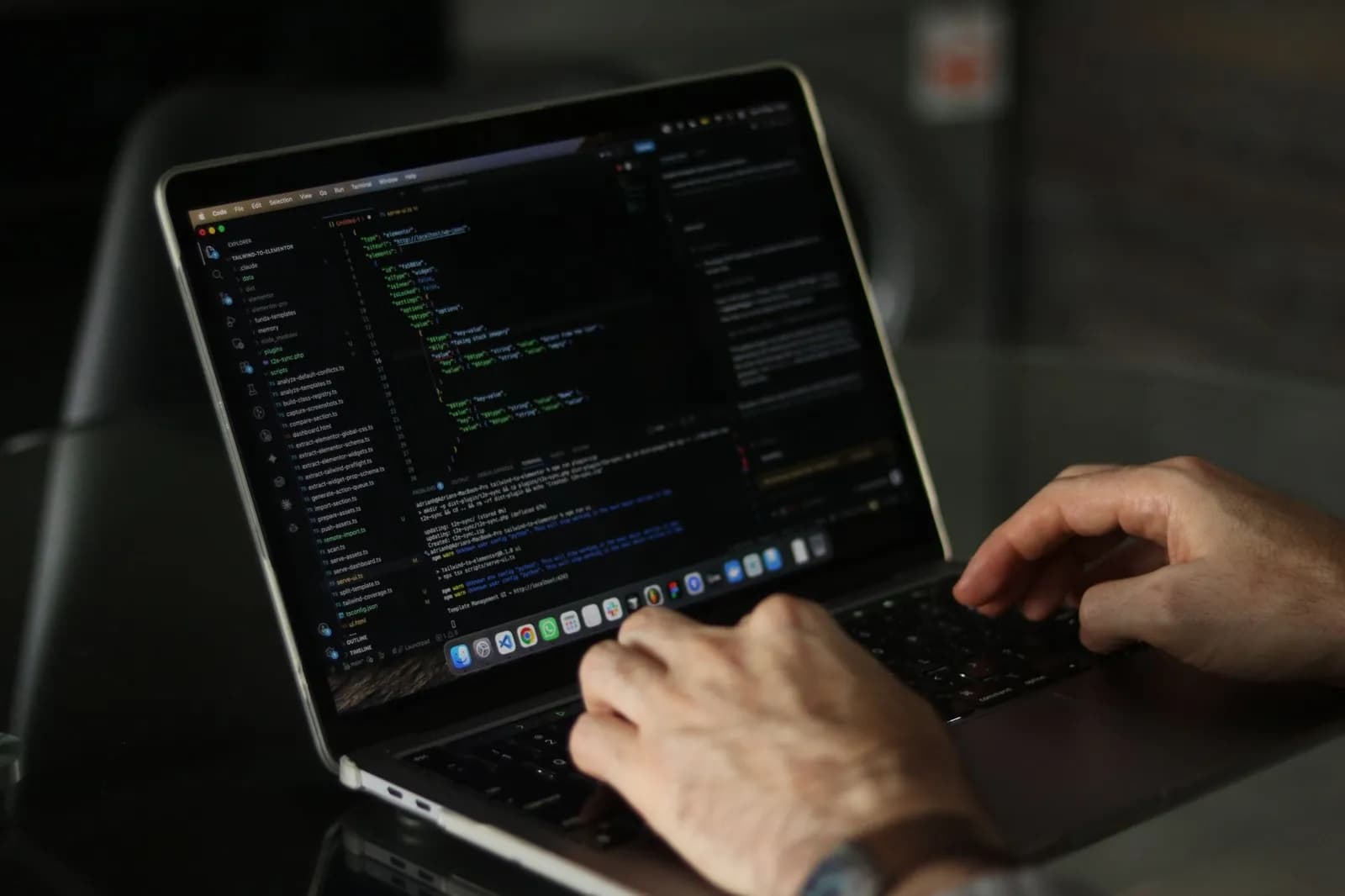
A founder who describes an app in plain English and gets working screens back within the hour has just done vibe coding MVP development, and the speed is real. What the demo doesn't show is how that code holds up once strangers start using it.
This guide covers what the approach is, where it genuinely helps a first version, what the research says about its weak points, and a workflow that keeps the risk contained.
What vibe coding actually is
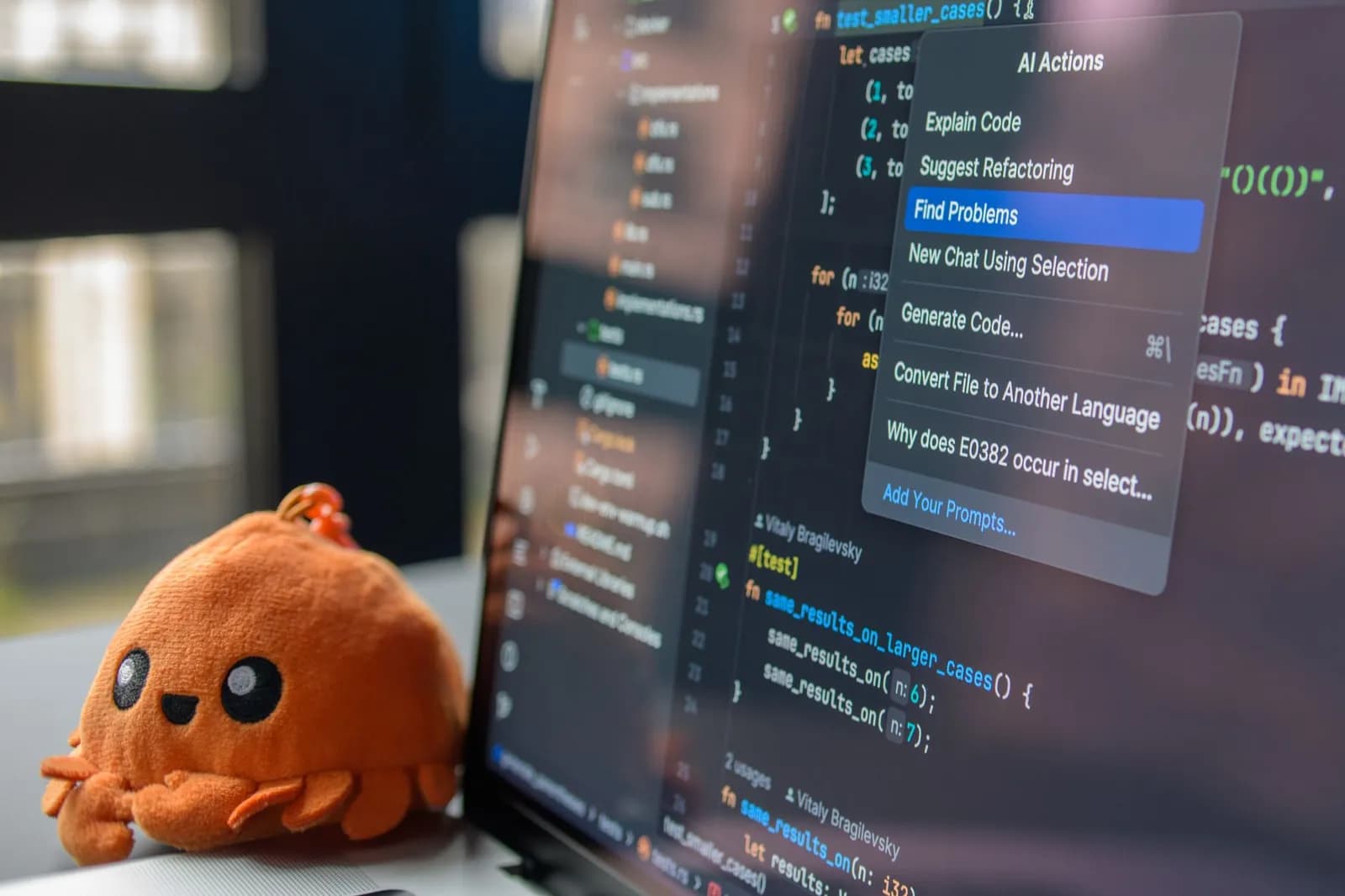
Vibe coding means describing software to an AI model in natural language and letting it write the code. Collins Dictionary defines it as the use of artificial intelligence prompted by natural language to assist with the writing of computer code, and it named the phrase its 2025 Word of the Year.
The term came from AI researcher Andrej Karpathy, who described building an app with AI help while being able to "forget that the code even exists." According to CNN's coverage of the Collins announcement on 6 November 2025, Collins managing director Alex Beecroft said the word signals a major shift in software development, with AI making coding more accessible.
That last part matters for founders. You describe, the model builds, you react to what appears on screen.
Why vibe coding MVP development suits a first version
An MVP exists to test one idea with real users, so its scope is narrow by design: one type of user, one core workflow, very little else. Prompt-driven building is at its best on exactly that kind of small, well-defined job, and a throwaway prototype costs little to abandon if the idea doesn't hold up.
Speed is the other draw. Researchers writing about their own internally built MVPs, in a December 2025 paper on sustainable vibe coding, agree that it speeds up prototyping. Their caution comes in the same sentence: seamless generation can quietly build up technical debt.
Be clear about what that paper is. It rests on the authors' own projects and a review of industry reports, not a controlled experiment, so treat it as informed experience rather than a measured rate.
Where vibe-coded MVPs break
Security is the weak point, and it's where the evidence is most consistent. Three sources, measuring different things, point the same way.
| Source | What was measured | Result |
|---|---|---|
| SUSVIBES benchmark, 200 feature-request tasks from open-source projects | Code written by SWE-Agent with Claude 4 Sonnet | 61% functionally correct, 10.5% secure |
| Veracode 2025 GenAI Code Security Report, as reported by TechTarget | AI-generated code samples | Security weaknesses in 45% |
| Red Access scan, as reported by TechTarget | Corporate apps among 380,000+ web assets on three vibe-coding platforms | About 40% of 5,000 apps held sensitive data with no authentication or access controls |
The first row needs its caveats. The SUSVIBES benchmark paper tested one agent and model pairing on tasks drawn from open-source projects, and a benchmark score isn't a measured failure rate on your product. Its authors still called the result disturbing: all the agents they tested performed poorly on security.
The Red Access finding is the one a founder should lose sleep over, because it describes a mistake rather than a flaw in the code itself. TechTarget's June 2026 report says roughly 2,000 corporate apps had real data sitting open to anyone.
Debugging is the quieter cost. The same report cites Harness's 2025 State of Software Delivery, in which 67% of developers said they spend more time debugging AI-generated code than they did before adopting AI coding tools.
Scale makes the pattern harder to dismiss. The report also describes Escape.tech scanning 1,400 production vibe-coded applications and finding more than 2,000 critical vulnerabilities, along with exposed secrets.
Rules to set before anyone starts prompting
If a company's staff are building apps with these tools, the first job is finding out what already exists. The report's security advisers suggest a workforce-wide inventory within 30 days, framed as a request rather than an audit, covering subscriptions and corporate accounts on hosting platforms.
For apps already live, they recommend requiring registration, adding authentication to anything public, and pulling sensitive data out of apps that can't be secured quickly. Longer term comes a written AI coding policy covering acceptable use, prohibited data types and approval workflows.
A founder running a three-person team can shrink that to a page. Decide which data never goes into a prototype, who signs off before a link is shared outside the team, and where approved apps live. Will Bengtson, CISO at ConductorOne, calls the goal "build the paved path": an approved route that's easier to follow than a workaround.
A workflow that keeps an AI-built MVP honest
Photo by Matheus Bertelli on Pexels
Treat the AI as a fast first-draft writer and keep yourself in charge of what ships. These steps follow from the research above, and they're our own recommendations rather than a published method.
- Write the one-sentence promise first. Name the single user, the single job and the single result. Anything beyond that is a feature request for version two.
- Prototype with fake data. Real customer records shouldn't touch a vibe-coded app until someone has reviewed how it handles login and access.
- Put authentication in before anything else. The open-data finding above is an authentication failure, so check it by hand: log out and try to reach every page.
- Keep the prompt history. The 2025 paper lists missing design rationale among the causes of technical debt, and a record of why each piece exists is the cheapest fix.
- Get a human review before real users arrive. Someone who reads code should look at input handling, secrets and permissions.
Once the idea has users, the budget conversation changes. Our breakdown of what drives MVP budgets in manufacturing SaaS shows how scope, integrations and compliance, not the first screens, push costs up. If your product touches patient data, the same logic is spelled out in how to build a healthcare MVP that gets funded, where a prototype that can't pass scrutiny won't get far.
When to bring engineers in
Bring them in the moment the prototype shows signs of life: real sign-ups, payments, or anyone else's personal information. At that point you've stopped testing an idea and started operating a product.
Dedicated app and SaaS development turns a validated prototype into something with an architecture you can extend. Our guide to building, launching and scaling a SaaS product affordably covers the stages that follow.
If the product is built around automation, AI and automation work is a separate discipline from prototyping, with its own testing needs.
Frequently asked questions
Who came up with the term vibe coding?
AI researcher Andrej Karpathy, a former AI director at Tesla and founding engineer at OpenAI, according to CNN's report. Collins Dictionary later made it Word of the Year for 2025.
Can I fix security problems by telling the AI to write secure code?
Not reliably. The SUSVIBES authors tested adding vulnerability hints to the feature request and found that these preliminary strategies did not resolve the security issues.
Does vibe coding create technical debt?
The authors of the December 2025 paper say it can. They name architectural inconsistencies, security vulnerabilities and higher maintenance overhead, and they link them partly to a habit of favouring fast generation over iterative human-led development.
Cover photo by Alicia Christin Gerald on Pexels