Airbnb's first version took under a month to build and left out maps, profiles, messaging and payments, according to Y Combinator's Michael Seibel. That's the bar for a founder who wants to build an MVP without coding experience: a small thing that gets real users, not a finished product.
Most of the work in the first weeks isn't technical at all. It's deciding what you need to find out, and finding it out as cheaply as you can.
What a minimum viable product has to prove
An MVP exists to answer a question about customers, not to ship features. Eric Ries defines it as the version of a new product that lets a team collect the maximum amount of validated learning about customers with the least effort, and he warns that despite the name it isn't about building minimal products.
Seibel's definition is more practical: the smallest possible product that lets you start offering your service to users. He advises resisting the urge to build the complete solution, because you have no idea yet whether it will work.
The term itself is older than the startup scene around it. Wikipedia's entry on the minimum viable product credits Frank Robinson with coining it in 2001, with Steve Blank and Eric Ries popularising it later. It describes an MVP as a version with just enough features for early customers to use and give feedback on.
Ries also notes that you don't always need one. If you only want to solve an obvious problem or make a quick sale, the overhead of learning from an MVP isn't worth paying.
How to build an MVP without coding experience, step by step
The order matters more than the tools. Each step below is cheaper than the one after it, so you stop as soon as you've learned what you came for.
Write down the one assumption that could sink you
Pick the belief your whole idea depends on. For most first-time founders it's something like "people will pay for this" or "people will change how they do this today."
Everything you build or fake afterwards should test that sentence and nothing else. A feature that doesn't bear on it waits.
Run a cheap test before building anything
Ries says he wishes his team had run a simple AdWords smoke test before spending two weeks on a feature nobody wanted. A smoke test means putting an offer in front of strangers and watching whether they respond, with nothing behind it yet.
A one-page site describing the product and asking for an email address or a deposit does the same job. If nobody clicks, you've saved yourself a build.
Deliver the service by hand
Before software exists, you can be the software. Seibel is explicit that manual, non-scalable work behind the scenes is acceptable at this stage.
The next section covers the two main ways to do it, because they teach different things.
Build the thinnest real version
Once people have shown they want the outcome, build only the path that delivers it. One user type, one core action, one way to pay or sign up.
This is where a designer earns their fee even on a tiny build. A clear flow for that one action matters more than a dozen screens, and our UI/UX work usually starts with exactly that single journey.
Get it to real users and keep talking to them
Seibel's milestone is simple: once you have your first users of any kind, you have a startup. They don't need to be many, and they don't need to be happy yet.
Ries is blunt that this isn't free. Learning from an MVP takes effort, usually in customer conversations and in watching analytics, and the customers' reactions tell you what the minimum version really needs.
Doing the work by hand: concierge and Wizard of Oz tests
Both approaches put a human where the software will eventually be, and they differ in whether the customer knows.
In a concierge test, you help each customer reach their goal in person and they see you doing it. Food on the Table, a personalised shopping-list service, started this way: its founder, Manuel Rosso, built lists while walking shoppers around the store, with no website or app.
In a Wizard of Oz test, customers believe they're using an automated product while a person works behind the curtain. Aardvark, a question-and-answer service, began by having its team post customers' questions to other users and relay the answers back by hand, with no algorithm involved.
The distinction decides what you learn. A concierge test is good for finding out whether a market exists and what the customer's problem really looks like. A Wizard of Oz test is better once you know the problem and want to see how people would use the finished thing.
Each has a known weakness. Concierge results can be skewed because customers may like you, which isn't the same as liking the offer. Wizard of Oz depends on whoever runs the back end being consistent, and a human mistake can look like a product flaw.
When tools stop being enough

Photo by James Frid on Pexels
Hand-run tests and drag-and-drop builders can carry you a long way, but they have a ceiling. Once real users depend on the product, you'll need logins, payments, data you can export and a codebase someone can extend, and that's the point at which most founders bring in a development team.
It isn't a failure of the MVP. It's the evidence you were collecting: people want it enough to need something sturdier.
AI-assisted building is the newer option, and we've written about it separately. Our explainer on what vibe coding is covers how it works, the vibe coding tools aimed at non-technical founders lists what's on offer, and the comparison with traditional development sets out what changes when you leave a prototype behind.
If you do hand the build to a team, take your validated assumption with you. A brief that says "fifteen customers paid us by hand for this one outcome" gets a better first version than a feature list, and it's the kind of scope our apps and SaaS team prefers to start from. Our guide to building, launching and scaling SaaS affordably picks up from there.
Mistakes that stall a first version
Building the full product first is the usual one. Seibel's warning applies directly: you don't know yet whether the complete solution will work, so every feature beyond the test is a guess you've paid for.
Skipping the learning is the second. An MVP that nobody talks to produces a launch, not an answer.
The third is treating "minimum" as "bad." Ries's point that an MVP isn't about creating minimal products means the first version still has to deliver the core outcome well enough that a user's reaction is meaningful.
Frequently asked questions
How long should it take to build an MVP?
Seibel points to Airbnb's first version, which the team built in under a month. Treat that as a sign of how small the first version should be, not as a deadline.
Can I run the first version manually?
Yes. Seibel says manual, non-scalable backend work is fine at this stage, and concierge and Wizard of Oz tests are built on exactly that idea.
When do I officially have a startup?
By Seibel's definition, once you have your first users of any kind. That makes getting a few people to use the product the goal of the MVP.
Do I always need an MVP?
No. Ries says that if you only want to solve an obvious problem or make a quick sale, you don't need one, because learning from an MVP carries real overhead.
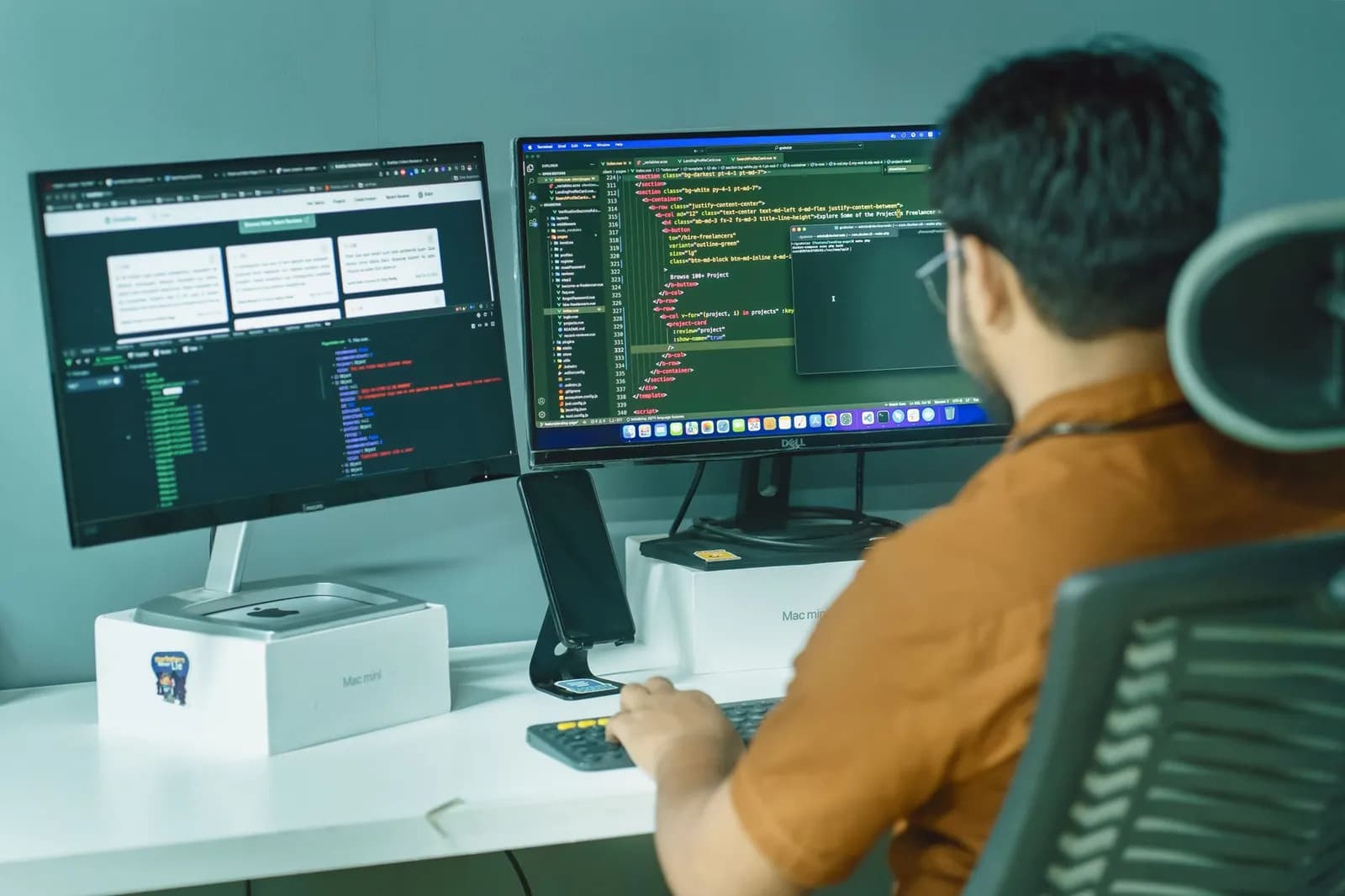
Cover photo by Ofspace LLC, Culture on Pexels
Sources
- One Order of Operations for Starting a Startup — Y Combinator
- What is an MVP? — The Lean Startup