








Almost every vibe coding tool bills in credits or tokens rather than by the project, so the price you see on the plan card is only the start of what a busy week of prompting will cost. For a non-technical founder, the useful question about vibe coding tools for startups is which one gets a clickable product in front of customers fastest, and what happens after.
We went through the pricing pages of four of the best-known options and one security write-up, so the figures below come from those pages, not from memory. Prices change often, so check the vendor page before you subscribe.
What do vibe coding tools cost a founder?
Expect to pay somewhere between $20 and $30 a month per person to start, with usage allowances doing the real limiting. The plans differ less on the sticker price than on what the allowance is measured in, and what happens when you run out.
| Tool | Entry paid plan | What the allowance buys |
|---|---|---|
| Bolt | Pro, $25 a month | Starts at 10M tokens a month, no daily limit, custom domains, no Bolt branding |
| Replit | Core, $20 a month ($18 billed annually) | $20 toward the more powerful models, up to 60 projects on Free Mode |
| v0 | Plus, $30 per user a month | $30 of monthly credits per user, plus $2 of free credits each daily login |
| Lovable | Pro (price on its pricing page) | Monthly credits on top of a daily build-credit grant |
All of this comes from each vendor's own pricing page: Bolt's plans, Replit's plans, v0's plans and Lovable's plans.
The credit rules matter as much as the price. Lovable's monthly plan credits expire two months after they're issued, while Bolt's paid tokens roll over for one extra month. If you pay for a plan and then go quiet for a quarter, some of what you bought is gone.
Which vibe coding tools for startups are worth a look?
Lovable, Bolt, Replit and v0 are the four that non-technical founders hear about first, and each is built around a slightly different starting point. None of them removes the need to decide what your product should do.
Lovable
Lovable's free plan gives you a daily grant of five build credits, capped at 30 a month. That is enough to test whether the tool understands your idea, and not much more.
Paid plans add monthly credits. Plans aren't priced per seat, and a workspace can have unlimited members who share its credits, which suits a founding team of two or three better than a per-user model would.
Bolt
Bolt's free tier has a 300K daily token limit and 1M tokens a month, and sites built on it carry Bolt branding. Pro removes the branding, lifts the daily limit and adds custom domains.
It includes hosting and unlimited databases even on the free plan. For a founder who wants a landing page and a basic data-backed prototype under one login, that's the main appeal.
Replit
Replit's Core plan starts at $20 a month, and the Pro plan at $100 a month is aimed at groups: up to 15 collaborators, ten parallel agents and database rollback of up to 28 days. That rollback is worth noticing, because an AI agent changing your database is exactly the situation where you want an undo button.
v0
v0 gives you seven free messages a day, deploys to Vercel and syncs with GitHub even on the free plan. Its Business tier at $100 per user a month turns off training on your data by default, and Enterprise guarantees it.
Because v0 charges per user rather than per workspace, a four-person team on Plus pays $120 a month before any extra credits. Compare that with a shared-credit model before you add seats.
If you handle customer data from day one, the training setting is a pricing question as much as a privacy one. Check the plan before you paste anything sensitive into a prompt.
What breaks when a prototype meets real users?
Security and maintainability are where vibe-coded products tend to fail first, because the code works on your laptop long before it's safe on the public internet. This isn't a reason to avoid the tools. It's a reason to know what you're skipping.
In an interview on the security risks of vibe coding, Invicti's chief architect Dan Murphy described an app that runs over plain HTTP, a flaw static code scanners won't flag because it only shows up once the app is deployed. Invicti sells application security testing, so weigh its emphasis on runtime testing accordingly, but the underlying point holds for any product you ship.
Murphy also called AI hallucination of package names a confirmed problem: an assistant can suggest a dependency that doesn't exist, and an attacker can register that name. Someone who can't read the code won't notice the import.
Then there's the quieter cost. Code you didn't write and can't read is hard to debug, so the first serious bug after launch is also the first time you find out how little you understand about the product you own.
Where vibe coding stops and engineering starts

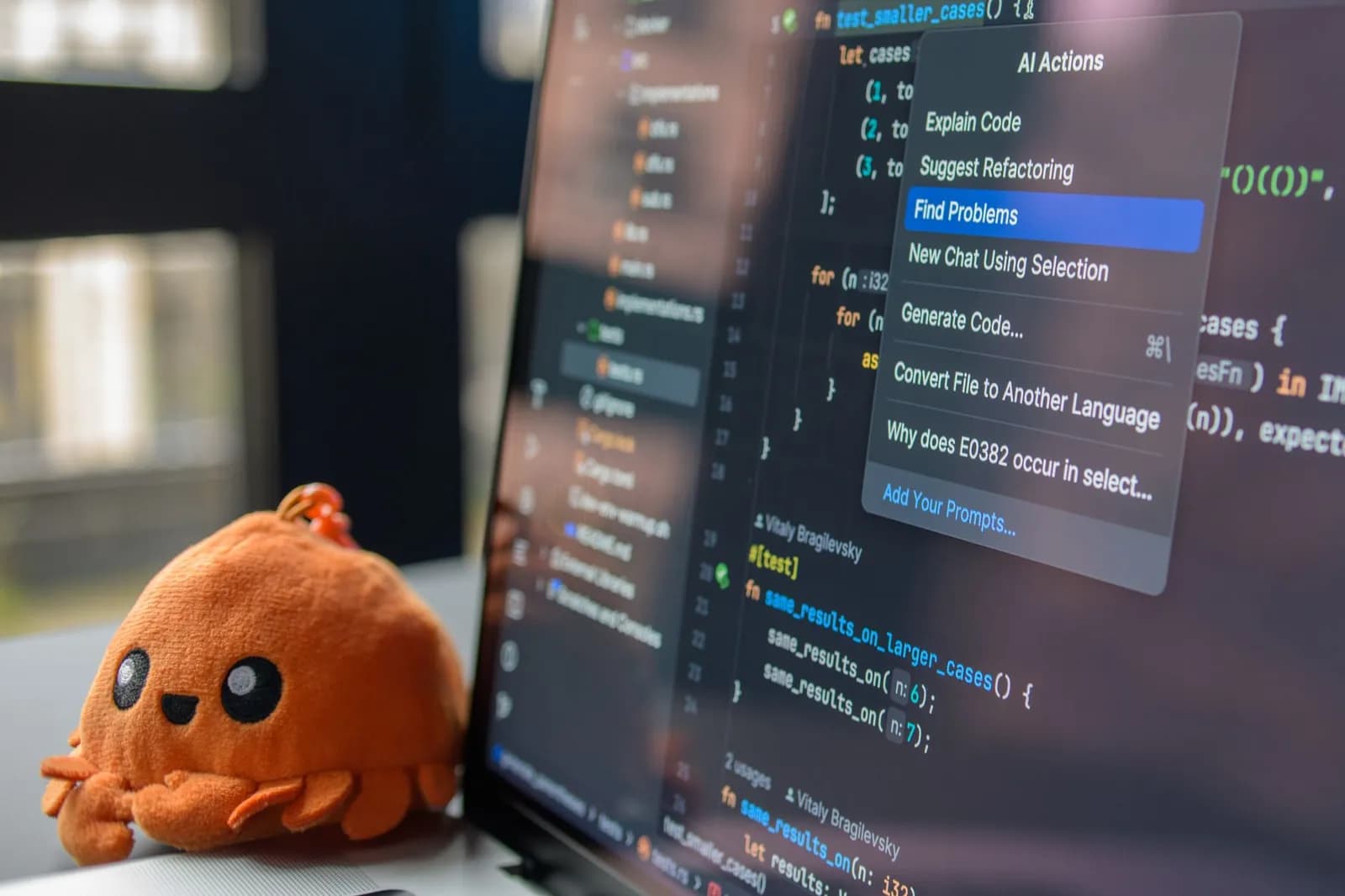
Photo by Daniil Komov on Pexels
Treat these tools as a way to test an idea and to give a developer a working reference, not as the finished product. A prototype that proves people want it is worth the subscription fee many times over.
The handover point is usually the moment real accounts, payments or customer records enter the picture. At that stage, the work looks like building and hardening the app itself: reviewing the generated code, replacing what's brittle and setting up deployment properly.
The interface is another place a prototype shows its limits. Generated screens work but rarely feel designed, and that's where UI/UX design work turns a demo into something customers trust. If you want a deeper explanation of the approach first, our guide on vibe coding and building an MVP faster covers the method behind these tools.
And if the product will lean on AI behind the scenes, whether that's a support assistant or an internal workflow, AI and automation work is a separate piece of engineering from the app builder.
How to run a cheap trial before you commit
Pick one screen of your product and one action a customer must take on it, then build only that in a free plan. If the tool can't get you that far in a few days, a paid plan won't change the answer.
Write the prompt as if you were briefing a freelancer: who the user is, what they see, what happens when they click. Vague prompts burn credits on guesses.
Keep a note of every credit you spend and what it bought. After a week you'll know your real monthly cost, which is the number the pricing page can't tell you, and you'll have a short list of things the tool couldn't do that you'd need a developer for.
Frequently asked questions
Do these tools have a free plan?
Lovable, Bolt and v0 all list one. Lovable's gives a daily grant of build credits, Bolt's has a daily and monthly token limit, and v0's allows seven messages a day.
What does a team pay compared with a solo founder?
It depends on how the vendor counts people. Bolt Teams is $30 per member a month and v0 Plus is $30 per user, while Lovable doesn't price per seat and lets a workspace share one pool of credits.
Do unused credits carry over?
Only partly. Lovable's monthly plan credits expire two months after issue and its top-up credits last twelve months, and Bolt's paid tokens roll over for one additional month.
Can I stop my prompts being used for training?
On v0, the Business plan opts you out of training by default and Enterprise guarantees no training on your data. Check the other vendors' data terms before you paste in customer information.
Cover photo by Daniil Komov on Pexels
Sources
- Lovable pricing — Lovable
- Bolt pricing — Bolt