




















Getting dental practice website migration seo right takes more than swapping templates and hoping the rankings hold. Google's own site-move documentation warns that site owners "may experience ranking fluctuations while Google recrawls and reindexes" a moved site.
For a practice that lives on new-patient searches every week, that fluctuation can mean empty chairs. Not just a lower number in Search Console.
Most of the damage isn't random. It traces back to a handful of decisions made before launch day, and each one is preventable.
What dental practice website migration SEO gets wrong
The most common failure is redirecting every old URL to the new homepage instead of to its closest equivalent. Google's own guidance calls this out directly.
It treats a homepage-only redirect as a soft 404 that loses the ranking signal the old page had earned. A practice with separate pages for cleanings, implants and emergency visits needs each one redirected to its own new page.
Collapsing them into one homepage tells Google those topics no longer exist on the site.
Staging environments cause a quieter version of the same problem. A noindex tag or a stray robots.txt rule left over from testing can keep the new rebuilt website out of Google's index entirely.
That can go unnoticed for weeks before anyone realizes traffic has stopped.
Building the redirect map before anything goes live
Every indexed URL on the old site needs a permanent redirect, a 301 or 308, to its topically closest match on the new one. Chains matter here.
Googlebot will follow up to ten redirect hops, but Google's site-move guidance recommends keeping chains to three or fewer to avoid slowing crawlers down.
The stakes are real. GreenGeeks points to a 2025 Ahrefs study finding that roughly 60% of migrations result in measurable organic traffic loss.
The same GreenGeeks piece cites a Search Engine Journal analysis of 892 migrations that put average recovery time at 523 days. A meaningful share of sites still hadn't fully recovered nearly three years on.
Google's John Mueller has said ranking stabilization typically runs four to twelve weeks on a well-executed move, and that redirects should stay in place for at least a year.
Planning the calendar around that reality, not around launch day, is what a migration handled as ongoing SEO work looks like rather than a one-off task.
| Phase | Typical duration |
|---|---|
| Pre-migration prep: URL audit, redirect map, staging build | 4 to 10 weeks |
| Cutover: DNS switch, redirects go live | 1 day to 1 week |
| Post-migration monitoring | 3 to 6 months |
Keeping your Google Business Profile and local rankings intact

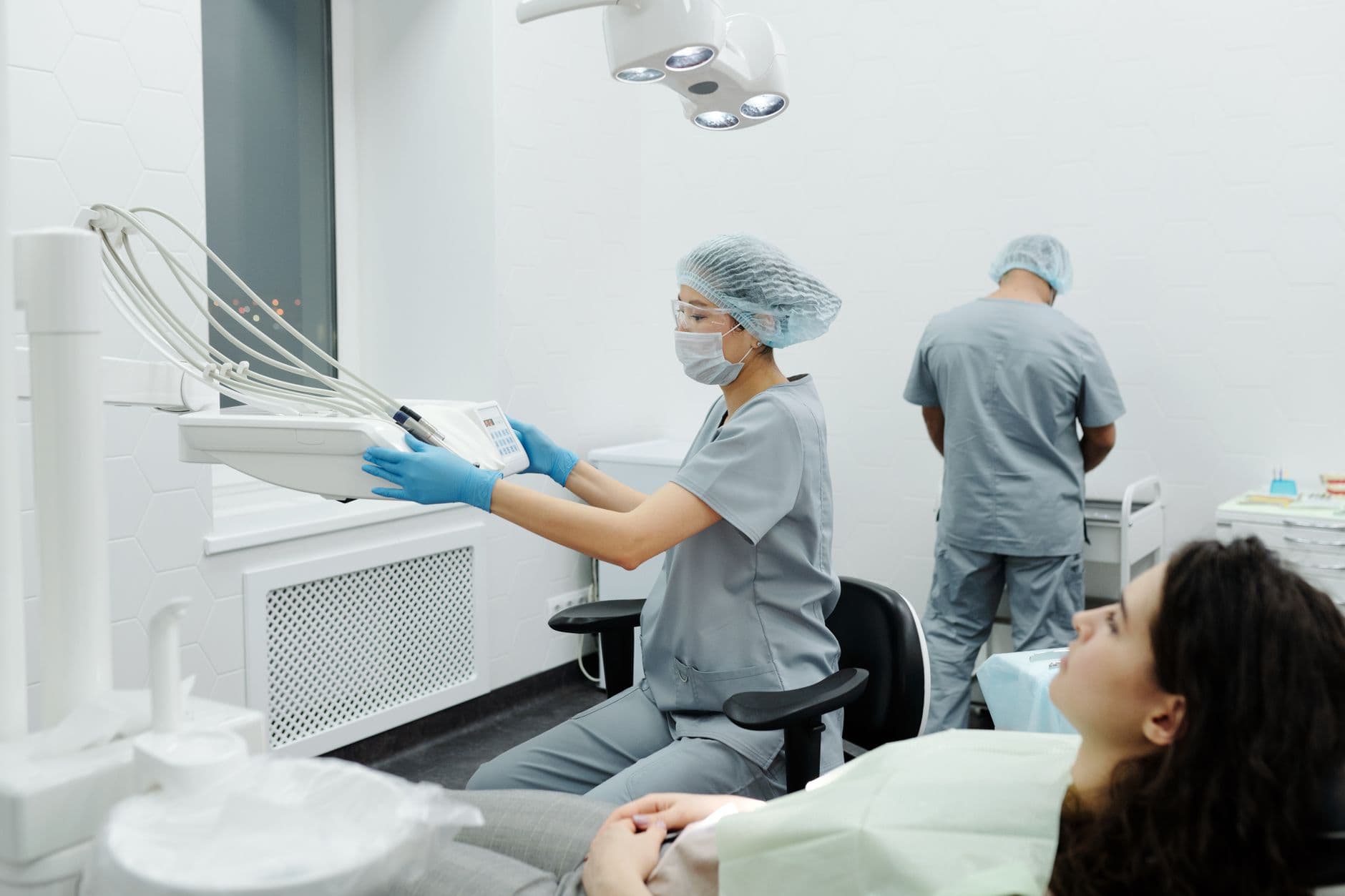
Photo by Tobias Dziuba on Pexels
A dental practice doesn't just rank on its own website. Most new patients find one through the local map pack, which pulls from a Google Business Profile rather than the site itself.
Google's Business Profile guidelines require that a listed website represent that specific location, not a page that redirects or refers visitors somewhere else.
If the domain changes as part of the migration, the profile's website field needs updating the same day the new site goes live. Not whenever someone remembers.
An address change carries its own requirement too. Google's guidelines state that a business must verify its profile again after moving locations, worth checking even when a migration is purely digital.
None of this replaces the groundwork of building a dental practice's online presence in the first place.
A migration just has to protect what that work already earned, one redirect and one profile update at a time. The practices that get this right treat it the way they'd treat patient records during an office move: nothing gets left behind because nobody checked the list twice.
Cover photo by Cedric Fauntleroy on Pexels
Sources
- Site moves with URL changes — Google Search Central
- Website Migration SEO Checklist for a Safe Transfer — GreenGeeks