









A clinical decision support system takes what's already in a patient's record and puts a relevant recommendation in front of a clinician at the moment they order, prescribe or diagnose. The software doesn't decide anything. It prompts, and a person accepts, edits or ignores the prompt.
That last part matters more than the technology, as the evidence and the regulation below both show.
How a clinical decision support system works inside the EHR
A decision support system watches for specific moments in a clinician's workflow, such as opening a chart or signing an order, and responds with a suggestion. The suggestion appears inside the electronic health record, so the clinician never has to leave the screen they're already using.
The open CDS Hooks specification, published by HL7 International and Boston Children's Hospital, shows the pattern clearly. It defines "hooks" as the workflow triggers, with names like patient-view and order-sign. The system answers with "cards" that carry information, a suggested action or a link, and the clinician can accept, reject or ignore each one.
Speed is built into the design. A service is expected to respond in roughly 500 milliseconds, because a recommendation that arrives after the order is signed is useless. When a card needs more interaction, the specification lets it launch a SMART app, a small user-facing application, inside the same workflow.
For anyone building one, that's the first design question: which two or three moments in the day are worth interrupting, and what data does the system need at that instant?
Where AI fits, and where the FDA draws the line
AI is the engine that decides what to suggest, and the FDA's treatment of that engine is still unsettled. The agency's revised guidance, summarised by the law firm Covington after its January 6, 2026 release, sets four tests a software function must pass to stay outside the definition of a medical device:
- It doesn't acquire, process or analyze medical images or device signals.
- It displays or analyzes medical information.
- It supports a healthcare professional's recommendations.
- It lets that professional review the basis for the recommendation independently, so they don't have to rely primarily on the software.
The January revision reversed a 2022 position by extending enforcement discretion to tools that give a single clinically appropriate recommendation. Covington also notes that the guidance contains no explicit mention of artificial intelligence, which leaves developers guessing how AI-driven tools fit.
The College of American Pathologists reads the same guidance in a January 13, 2026 advocacy update and expects most predictive AI in pathology to stay under FDA oversight, because those tools analyze images. Generative AI that analyzes no images and gives single recommendations may face lighter enforcement.
The revision also leans on usability. Per Covington's summary, the FDA wants tools to present decision-relevant details while avoiding information overload, and expects recommendations to come from established clinical guidelines and peer-reviewed literature. A design team should treat both as requirements for the interface, not afterthoughts.
The practical reading: a text-and-record tool that shows its reasoning sits in the easier regulatory lane, and anything touching images or signals does not. Decide which lane you're in before you design, not after.
What the evidence says about outcomes and savings
The best-documented gains come from narrow, well-defined prompts rather than broad diagnostic intelligence. Two published examples show the shape of it, and both carry limits worth stating.
| Source | What was measured | Result | Limit |
|---|---|---|---|
| Cedars-Sinai study, American Journal of Managed Care, August 2018 | 26,424 inpatient visits with Choosing Wisely alerts | Complications were 29% higher when physicians ignored alerts; costs ran $944 higher | Association only; causation not established |
| MultiCare, reported by HFMA, April 2025 | Alerts on lab and medication orders across five hospitals during 2023 | $179.14 saved per accepted recommendation | Savings came with a shared-savings incentive for engaging |
The Cedars-Sinai result, reported by Healthcare Dive, is easy to over-read. The researchers used a strict definition of compliance and didn't measure individual alerts, so it shows that ignored alerts travel with worse outcomes, not that every alert helps.
MultiCare's story, told in HFMA's account, adds a lesson about people. The system paid physicians through a shared-savings mechanism for engaging with alerts, and its leaders reported no statistically significant drops in readmissions or patient experience. The wasted spending it found ran to about $2.5 million across the five hospitals in 2023.
Both results depend on clinicians acting on the prompt, which the software alone can't make happen.
Why alert fatigue sinks good systems

Photo by Vitaly Gariev on Pexels
Alert fatigue, where clinicians dismiss prompts because too many are trivial, is the usual way a decision support rollout fails. Healthcare Dive's coverage notes that hospitals report it as their chief patient safety concern, and the Cedars-Sinai finding above is the cost when alerts get waved through.
Every new rule you add makes every existing rule slightly less likely to be read. That's why the first version should ship with fewer alerts than the clinical team asks for.
AI can help here, but only if it's pointed at the right problem. Used to rank which alerts deserve a clinician's attention, it reduces noise. Used to generate more suggestions, it adds to it.
If you're deciding between a conversational assistant and a rules-and-triggers system for this job, our comparison of AI agents versus chatbots covers how the two behave differently once real workflows are involved.
Building decision support that connects to existing records
Plan the integration before the intelligence. A recommendation engine that can't read the chart or write back into the clinician's screen is a demo, however good the model behind it is.
Standards help. Because CDS Hooks is built on FHIR R4 and authenticates with OAuth 2.0 and JWT tokens, a service can be written once against the specification instead of custom-wired into each system. Treat that as a starting point, not a guarantee: each EHR vendor decides what it exposes.
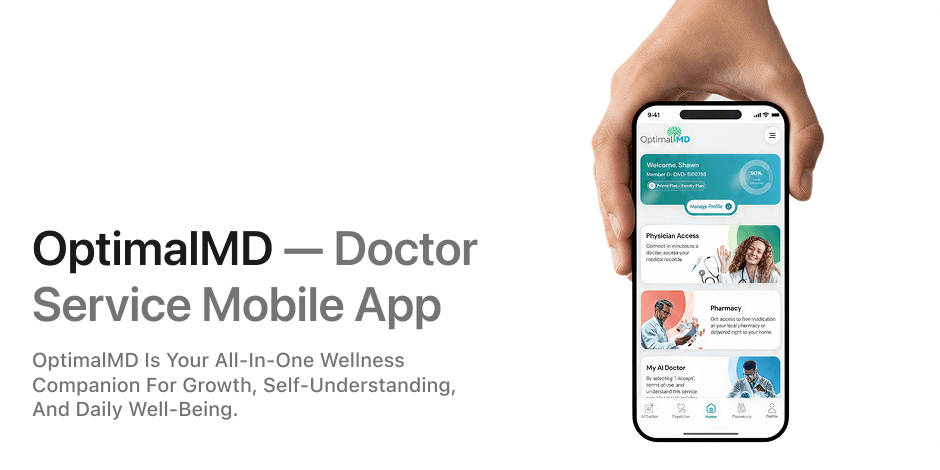
Our work on healthcare products is on the product side of this problem. We designed and built OptimalMD's digital product end to end, from design through development to launch, covering the website, the members portal and the mobile app, as shown in the OptimalMD case study. It's a different product from decision support, but the same discipline of designing for the person using the screen applies.
If you're scoping a tool like this, our apps and SaaS team builds the software around the clinical logic, and our AI and automation work covers the model layer. For ideas on where else AI saves clinical time, see these healthcare AI automation ideas.
Frequently asked questions
Does the FDA regulate clinical decision support software?
Only some of it. Software that meets all four criteria in the FDA's guidance stays outside the device definition. Anything that analyzes medical images or signals does not.
Can a decision support tool give a single recommendation?
Yes, in the FDA's January 2026 revision. The agency extended enforcement discretion to tools that give one clinically appropriate recommendation, reversing the 2022 requirement for multiple options.
Does it replace the doctor's judgement?
The regulatory criteria assume it doesn't. A non-device tool must let the clinician independently review the basis for its recommendation, so they need not rely primarily on the software.
How fast does the system need to respond?
Under the CDS Hooks specification, services respond in about 500 milliseconds, so the recommendation appears while the clinician is still working on the order.
Cover photo by Atlantic Ambience on Pexels
Sources
- CDS Hooks specification — HL7 International
- 5 key takeaways from FDA's revised clinical decision support software guidance — Covington