Web development
React developers for web apps, dashboards and interactive features
Octopi Digital's Web development team builds React interfaces for startups, SaaS founders and local businesses that need more than static pages. We create customer dashboards, booking and quote flows, admin tools and interactive calculators, usually inside a Next.js project so public pages still work for search. We also repair React apps that have grown slow or tangled over time. You end up with screens that respond instantly, components shared across the whole product, and code that any capable React developer can extend later.

- Category
- Web development
- Handled by
- Our web development team
Overview
What is React?
React is an open-source JavaScript library from Meta for building user interfaces out of reusable components. It handles what people see and click, and is usually paired with a framework such as Next.js for routing and server rendering.
Official React website (opens in a new tab)Signs you need a React expert
- 01Your web app slows down or freezes whenever a table or list gets long.
- 02Each new feature breaks something else because components were copied rather than shared.
- 03Your designer has finished a Figma file but nobody is available to turn it into working, accessible screens.
- 04You built a prototype on a no-code tool and customers now need logins, roles and real data.
- 05Your React app renders entirely in the browser, so search engines see an almost empty page.
What businesses hire us to do with React
- Customer dashboards for SaaS products
- Online quote and estimate calculators
- Appointment booking flows for service businesses
- Staff admin panels for jobs and records
- Interactive pricing and plan comparison pages
- Converting a no-code prototype into a real app
Want this working for your React setup?
Book a free strategy call and we'll show you where to start.
What we do
What we do with React
Customer dashboards, booking flows and admin tools built in React, with components your next developer can understand.
- 01
Component libraries from your designs
We turn Figma designs into a set of buttons, inputs, cards and layouts that every screen reuses. A change to one component updates it everywhere.
- 02
Dashboards and admin screens
Tables with sorting and filters, charts, record detail views and role-based menus for staff or customers. We keep large lists fast with pagination and virtualization.
- 03
Booking, quote and checkout flows
Multi-step forms that save progress, validate as people type and send clean data to your CRM. These are often the screens that decide whether a lead converts.
- 04
Performance clean-up
We profile slow screens, remove unnecessary re-renders and split large bundles. The app starts faster and stops freezing when data grows.
- 05
Rescue and refactor
When a React codebase has become copy-paste heavy, we consolidate components and add types and tests. New features stop breaking old ones.
- 06
API and data connections
We connect React screens to your back end, Firebase, Supabase or third-party APIs with proper loading and error states. Users always know what is happening.
When React is the right choice
Heavy interaction
Products where users filter, drag, edit and see live updates benefit most from React's component model.
A mobile app is on the roadmap
React skills and patterns carry over to React Native, so web and mobile teams can share knowledge and sometimes code.
When something simpler fits
A content site with little interaction does not need a custom React build; WordPress or a website builder will cost less to run.
Does this sound like your business?
If React should be doing more for you, our web development team can set it up, fix what's broken or build on it. Tell us where you're stuck.
- Free strategy call
- No obligation
- Straight answers
Projects
Projects we build with React
The kinds of React projects our team takes on, and what each one includes.
- 01Fence, deck and concrete contractors
Online estimate calculator for a fence installation company
We build a React calculator where homeowners enter length, material and gate count to see a price range before they call. The contractor gets leads who already know roughly what the job costs.
- Step-by-step input form
- Price range logic
- Lead capture on result
- Website embed code
- 02SaaS companies building their main product screens
Customer dashboard for a subscription analytics product
We build the React front end of your product: charts, tables, filters and settings, wired to your API. Customers find what they need faster and your team gets reusable components for the next feature.
- Charts and data tables
- Filters and saved views
- Account settings screens
- Shared component library
- 03Service companies running jobs from spreadsheets
Staff admin panel for managing jobs and crews
We build a React admin panel where office staff create jobs, assign crews and track progress in one screen. It replaces the shared spreadsheet that everyone edits and nobody trusts.
- Job create and edit forms
- Crew assignment board
- Search and filters
- User roles and permissions
How we work
How our web development team runs a React project
- 01
Review the designs or the code
For new work we walk through the designs and user roles; for existing apps we audit structure, dependencies and the slowest screens.
- 02
Build the component system
Shared components and styles come first, so every later screen is assembled from tested parts.
- 03
Ship features in short cycles
We deliver working screens on a staging link every week or two so you can click through and give feedback early.
- 04
Test and hand over
Key flows get automated tests, and you receive documentation on how components and data fit together.
Ready to start your React project?
Step one is a free strategy call. We map what you need, then tell you exactly what we'd build and what it would take.
- Free strategy call
- No obligation
- Straight answers
Our work
More work from our web development team
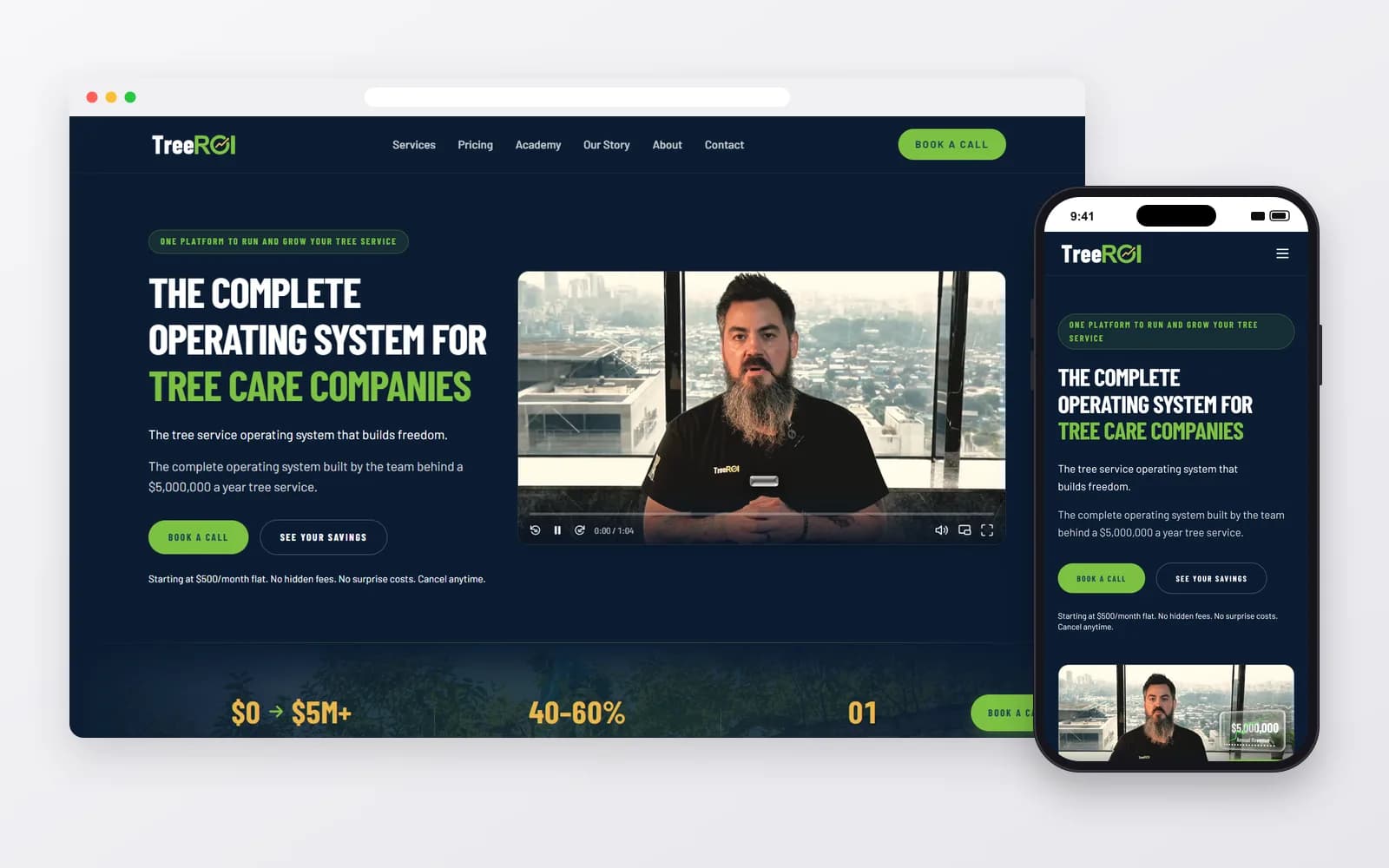
Platform
TreeROI

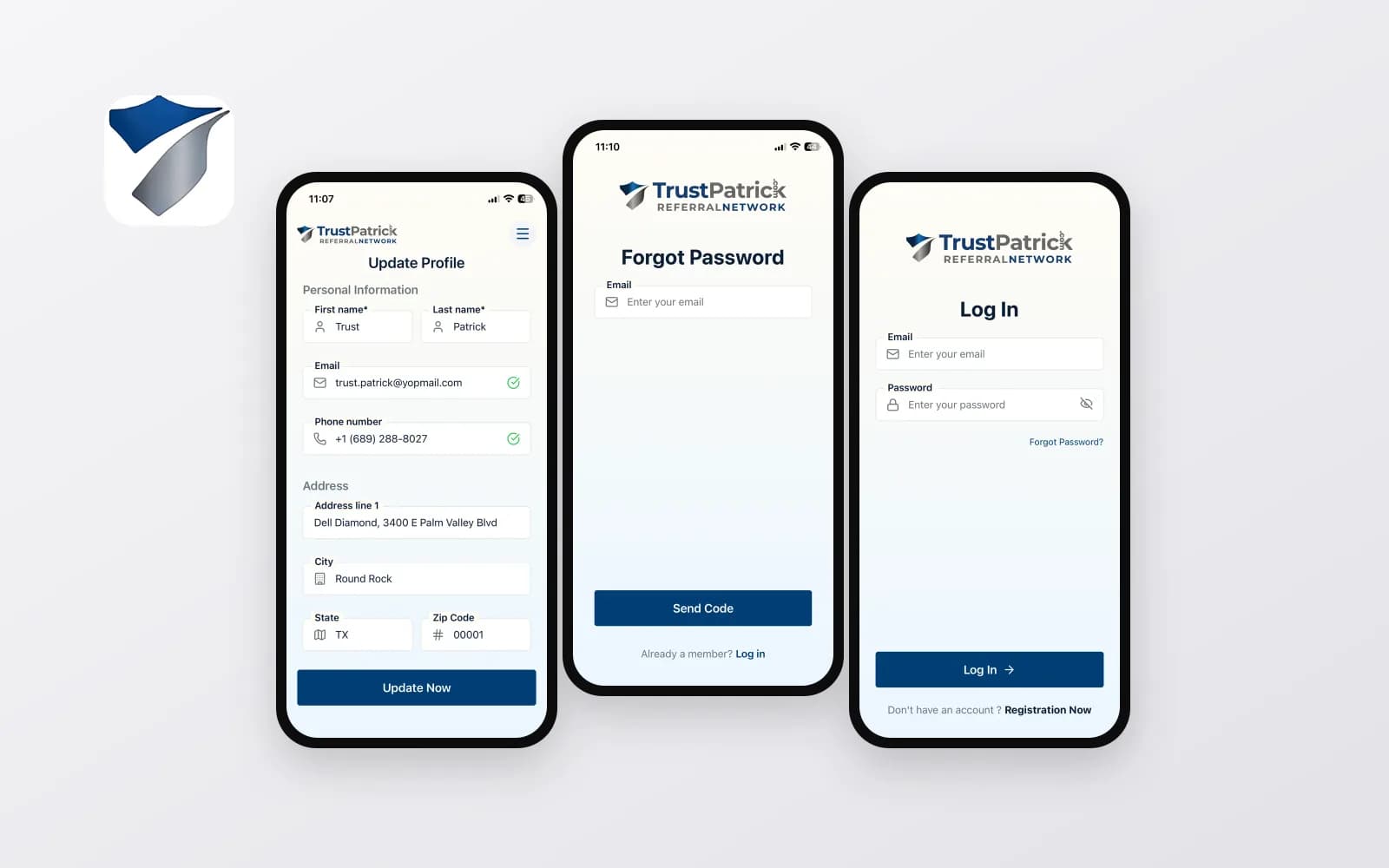
Platform
TrustPatrick
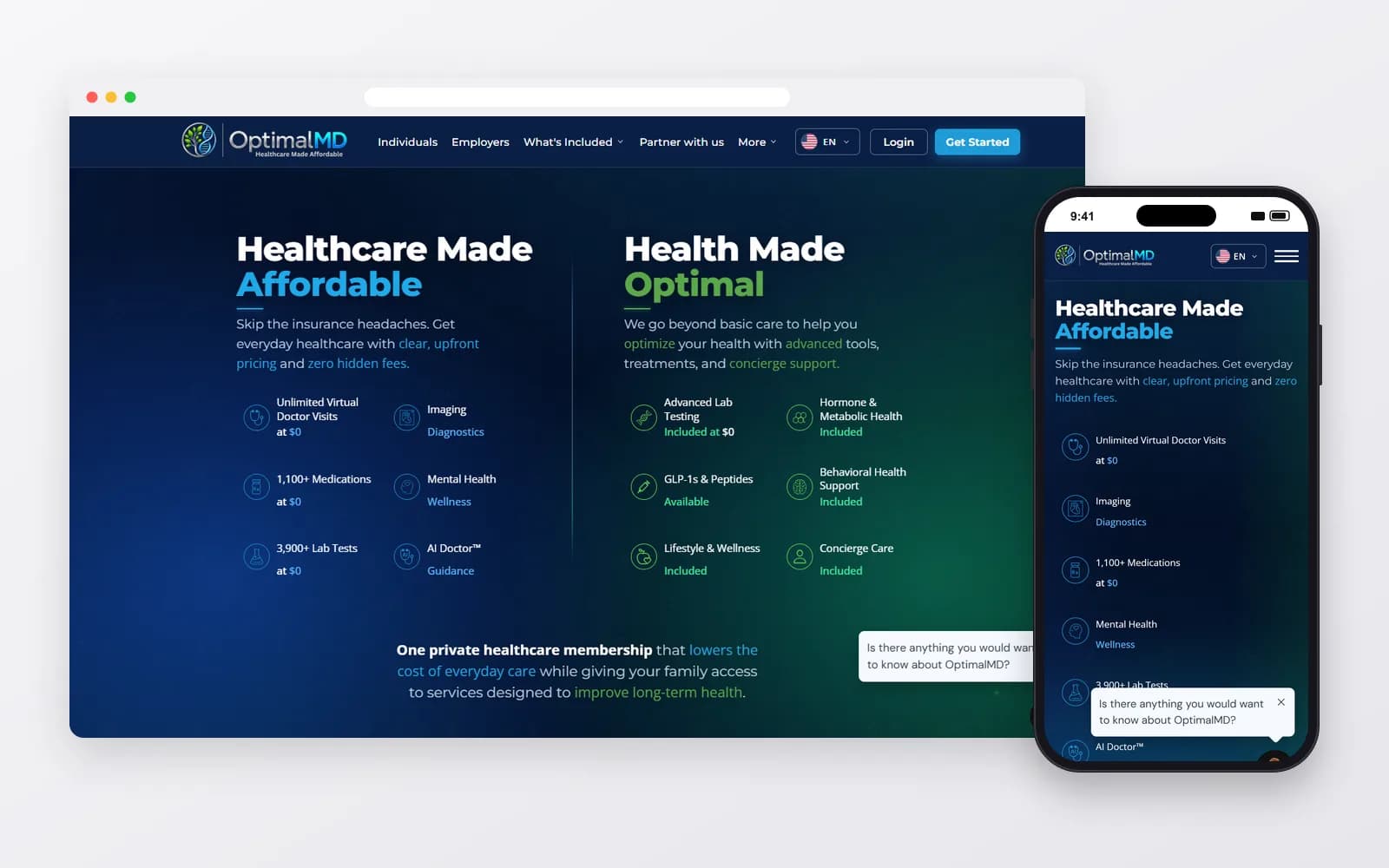
Website
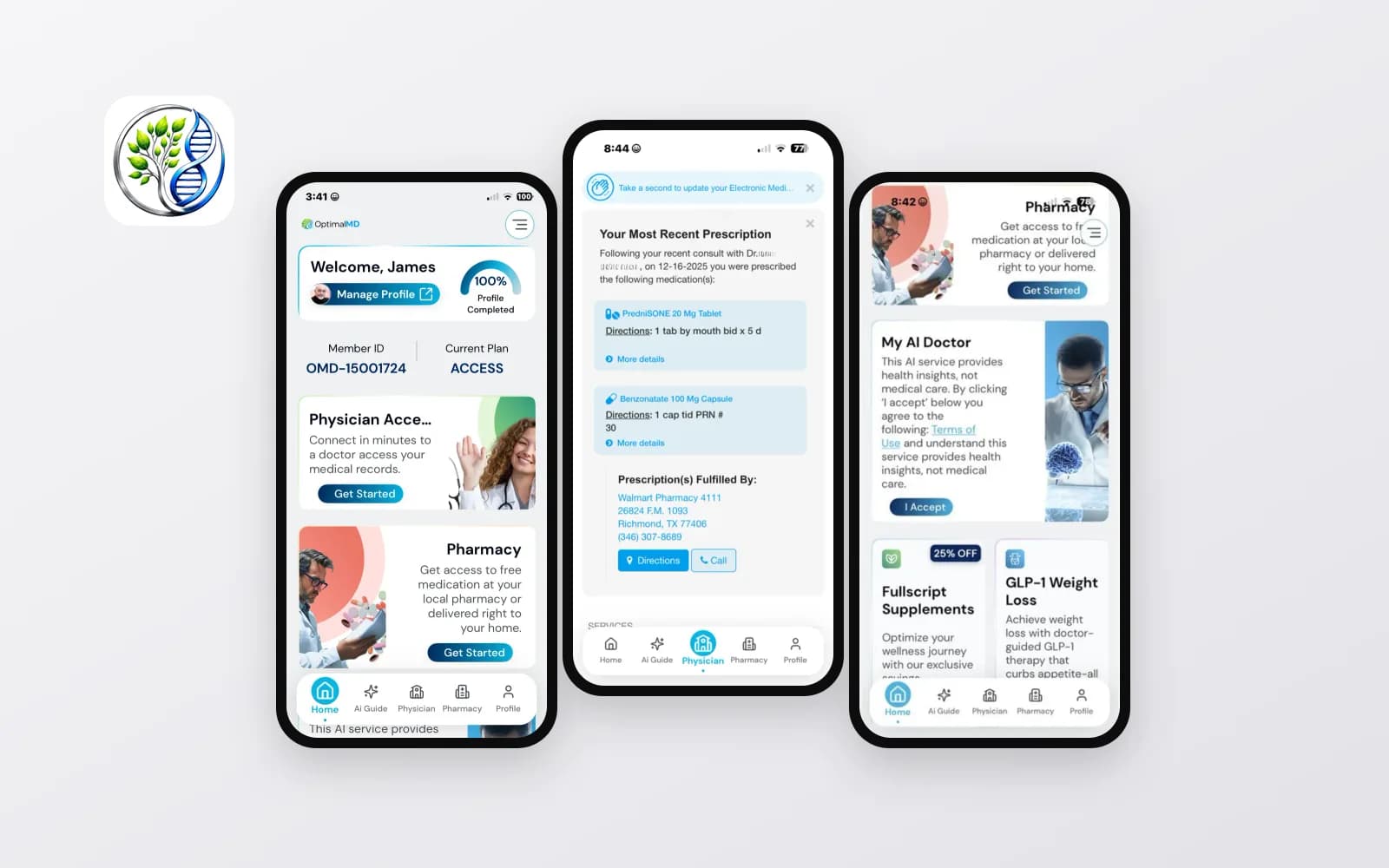
OptimalMD
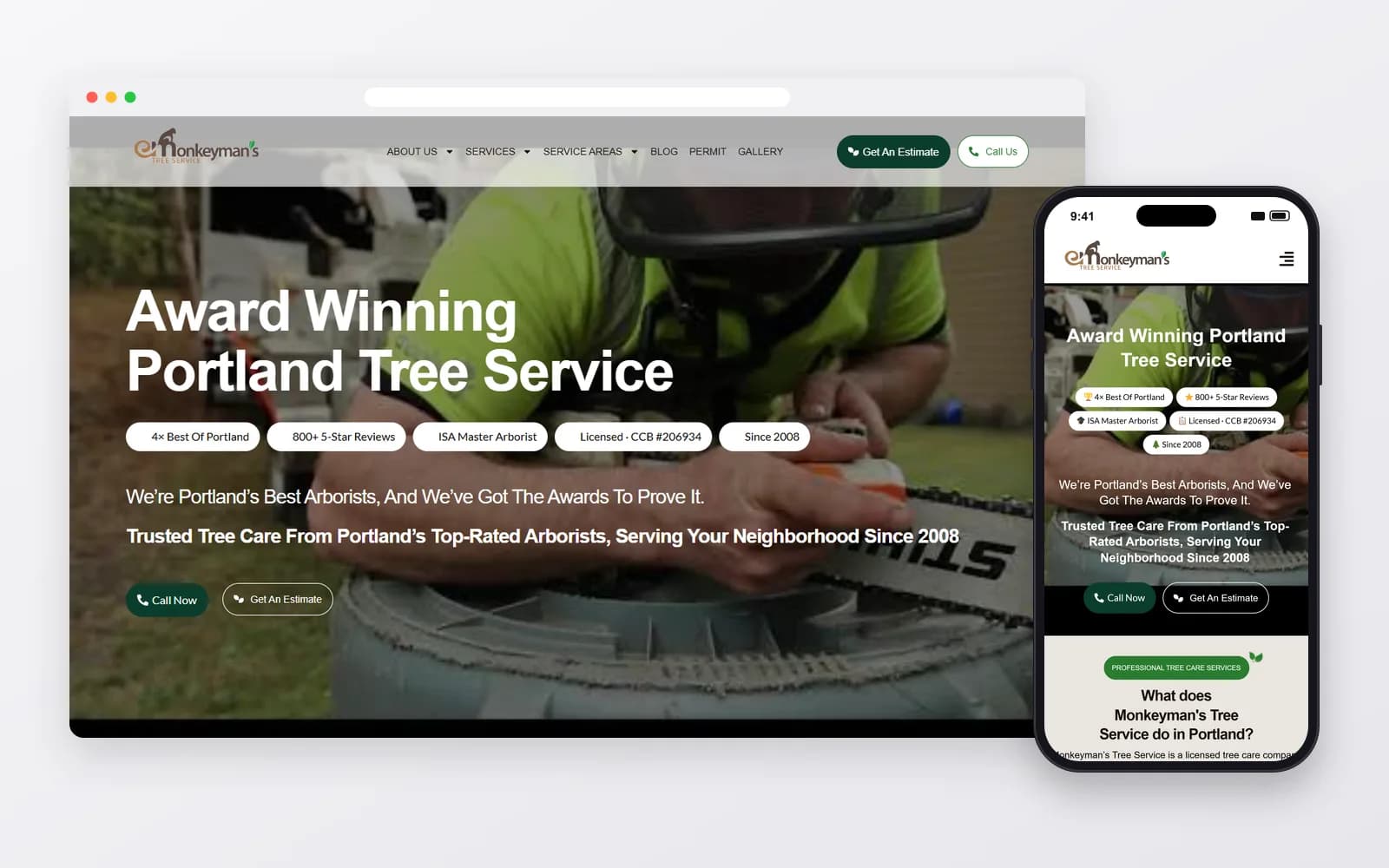
Website
Monkeyman's Tree Service
Integrations
What we connect React with
Tools we often wire into React so data moves on its own. Each one has its own page.








Work like this, built for your business
Our web development team works across React and the tools around it, so your setup is connected from day one, not patched together later.
- Free strategy call
- No obligation
- Straight answers
Alternatives
React alternatives, and when to pick them
- vs
React vs Vue.js
Vue.js is a good pick when you are adding interactivity to an existing server-rendered site or your team already writes Vue.
About Vue.js - vs
React vs Angular
Choose Angular when a large in-house team wants one opinionated framework with routing, forms and testing included.
About Angular


Services
Services we deliver with React
Web Design & Development
A fast website that makes your phone ring, built for local customers searching on their phones.
See the serviceUI/UX Design
Booking flows, portals and apps your customers find easy to use.
See the serviceApp Development
Apps for your customers and your crew, from first version to the app stores.
See the serviceSaaS & Web App Development
Customer portals, custom software and SaaS products, built to launch and to grow.
See the service
Not sure React is the right fit?
We work with the alternatives too, so you'll get a straight answer on which one suits your business, even if it's not React.
- Free strategy call
- No obligation
- Straight answers
FAQ
React questions
Straight answers about working with us on React.
8 questions answered

Still have a question?
Talk it through with our team on a free strategy call.
Web development
More Web development tools we use
Next.js
Websites · SaaS
We build Next.js marketing sites and logged-in web platforms that load quickly and hand search engines complete pages.
How we use itVue.js
Websites · SaaS
New features, upgrades and steady maintenance for Vue.js apps, plus Vue widgets that drop into the site you already have.
How we use itAngular
SaaS · Websites
We extend, upgrade and steady Angular applications, from AngularJS migrations to form-heavy portals and dashboards.
How we use itNode.js
SaaS · AI automation
APIs, webhooks and background jobs in Node.js that connect your apps, CRM, payments and AI models reliably.
How we use itPHP
Websites · SaaS
PHP upgrades, error fixes, custom WordPress code and care for older custom portals that still run your business.
How we use itLaravel
SaaS · Websites
Custom Laravel applications with logins, billing, queues and admin tools, built on a structure any PHP developer recognizes.
How we use itPython
AI automation · SaaS
Python scripts, data pipelines and AI features that take repetitive work off your staff and run on a schedule you can see.
How we use itDjango
SaaS · Websites
Django portals, back offices and APIs, with Python data and AI work living in the same codebase.
How we use it




Want React set up properly?
Tell us what you're trying to get done. We'll tell you honestly whether React is the right tool for it, and what we'd build first.