Web development
Tailwind CSS developers for consistent, responsive interfaces
Octopi Digital's Web development team uses Tailwind CSS to turn designs into responsive pages and app screens that stay consistent from one page to the next. We set up your brand colors, fonts and spacing as design tokens, build reusable components on top, and check every layout on phone, tablet and desktop. We also tidy projects where Tailwind classes have sprawled out of control. The outcome is an interface that matches the Figma file, ships only the CSS it actually uses and stays consistent as pages are added.

- Category
- Web development
- Handled by
- Our web development team
Overview
What is Tailwind CSS?
Tailwind CSS is an open-source, utility-first CSS framework. Developers style elements with small classes in the markup, drawn from a shared scale of spacing, colors and type, instead of writing separate stylesheets.
Official Tailwind CSS website (opens in a new tab)Signs you need a Tailwind CSS expert
- 01Buttons, headings and spacing look slightly different on every page of your site.
- 02Your stylesheet has grown so large that nobody dares delete a rule.
- 03Pages look right on desktop but break on phones and tablets.
- 04Your designer's Figma file and the live site no longer match.
- 05Developers keep copying long strings of classes instead of reusing shared components.
What businesses hire us to do with Tailwind CSS
- Service business websites built from a Figma design
- SaaS dashboards with a shared component library
- Landing pages for ad campaigns that match the brand
- Moving a Bootstrap site to a custom design
- Dark mode for an existing web app
- Fixing mobile layout problems across a site
Want this working for your Tailwind CSS setup?
Book a free strategy call and we'll show you where to start.
What we do
What we do with Tailwind CSS
Figma designs turned into Tailwind CSS components that look the same on every page and every screen size.
- 01
Brand tokens set up once
Your colors, fonts, spacing and radius values go into the Tailwind theme. Every component draws from them, so off-brand values stop creeping in.
- 02
Figma to working pages
We translate designs into responsive layouts at the breakpoints your designer intended. Spacing and type match the file instead of approximating it.
- 03
Component libraries
Buttons, forms, cards and navigation are built once as React or Vue components styled with Tailwind. Pages are assembled from those parts.
- 04
Responsive and dark mode
Layouts are tested on real phone and tablet widths, and dark mode uses the same tokens. Nothing collapses on smaller screens.
- 05
Cleaning up class sprawl
Long repeated class strings get pulled into components and the theme. The markup gets shorter and changes happen in one place.
- 06
Migrating from older CSS
Sites built on Bootstrap or large custom stylesheets move to Tailwind section by section. Old CSS is removed as each part is replaced.
When Tailwind CSS is the right choice
Custom designs in code
When your site or app is built in Next.js, React, Vue or Laravel, Tailwind keeps a custom design consistent without a sprawling stylesheet.
Growing products with many screens
A shared token scale means new screens match old ones even when different developers build them.
When a visual builder suits you better
If your team wants to change layouts without touching code, a visual builder like Webflow is a better match than any CSS framework.
Does this sound like your business?
If Tailwind CSS should be doing more for you, our web development team can set it up, fix what's broken or build on it. Tell us where you're stuck.
- Free strategy call
- No obligation
- Straight answers
Projects
Projects we build with Tailwind CSS
The kinds of Tailwind CSS projects our team takes on, and what each one includes.
- 01Service businesses with a custom website design
Figma-to-code build of a landscaping company website
We turn a Figma design into a Tailwind CSS front end that matches the spacing, colors and type closely on every screen size. Future pages reuse the same design tokens so the site stays consistent.
- Design token setup
- Responsive page builds
- Reusable components
- Cross-browser checks
- 02SaaS teams that want a consistent product UI
Component library and theme for a SaaS dashboard
We build a set of Tailwind components for buttons, forms, tables and modals with light and dark themes. Engineers build new screens from the library instead of styling each one from scratch.
- Core UI components
- Light and dark themes
- Accessible form styles
- Usage documentation
- 03Companies with a dated Bootstrap interface
Bootstrap to Tailwind redesign for an older web app
We restyle an existing Bootstrap app with Tailwind CSS page by page, removing old overrides along the way. The app gets a fresher look and lighter CSS without rewriting how it works.
- Style audit
- Page-by-page restyle
- Old CSS removal
- Mobile layout fixes
How we work
How our web development team runs a Tailwind CSS project
- 01
Extract the design system
We pull colors, type, spacing and component states from your designs or current site into a Tailwind theme.
- 02
Build core components
Buttons, inputs, cards and layout pieces are built and reviewed before any full page.
- 03
Assemble and test pages
Pages come together from components and get checked on phone, tablet and desktop, plus keyboard navigation.
- 04
Document for your team
We list the tokens and components with usage notes, so future pages stay consistent.
Ready to start your Tailwind CSS project?
Step one is a free strategy call. We map what you need, then tell you exactly what we'd build and what it would take.
- Free strategy call
- No obligation
- Straight answers
Our work
More work from our web development team
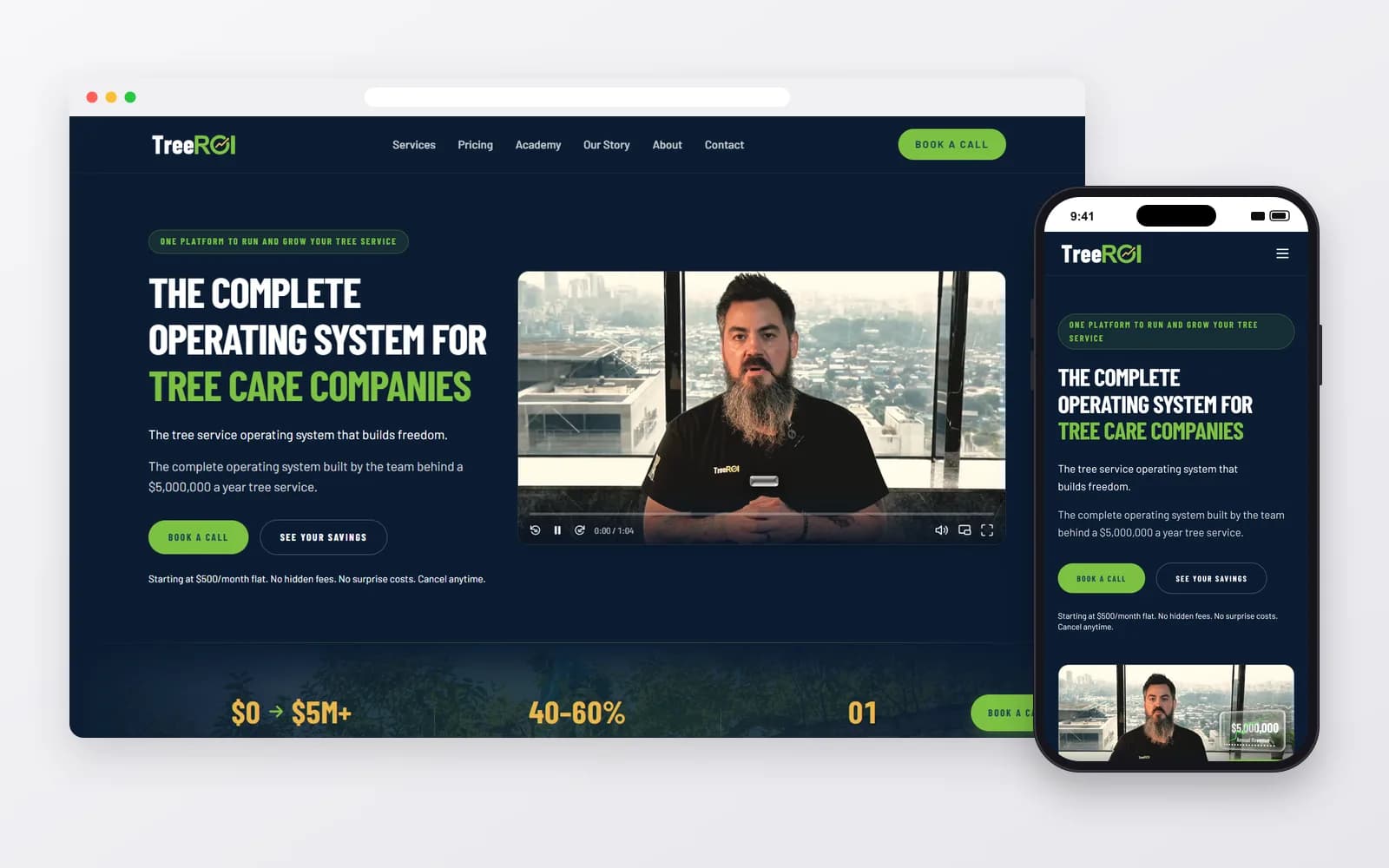
Platform
TreeROI

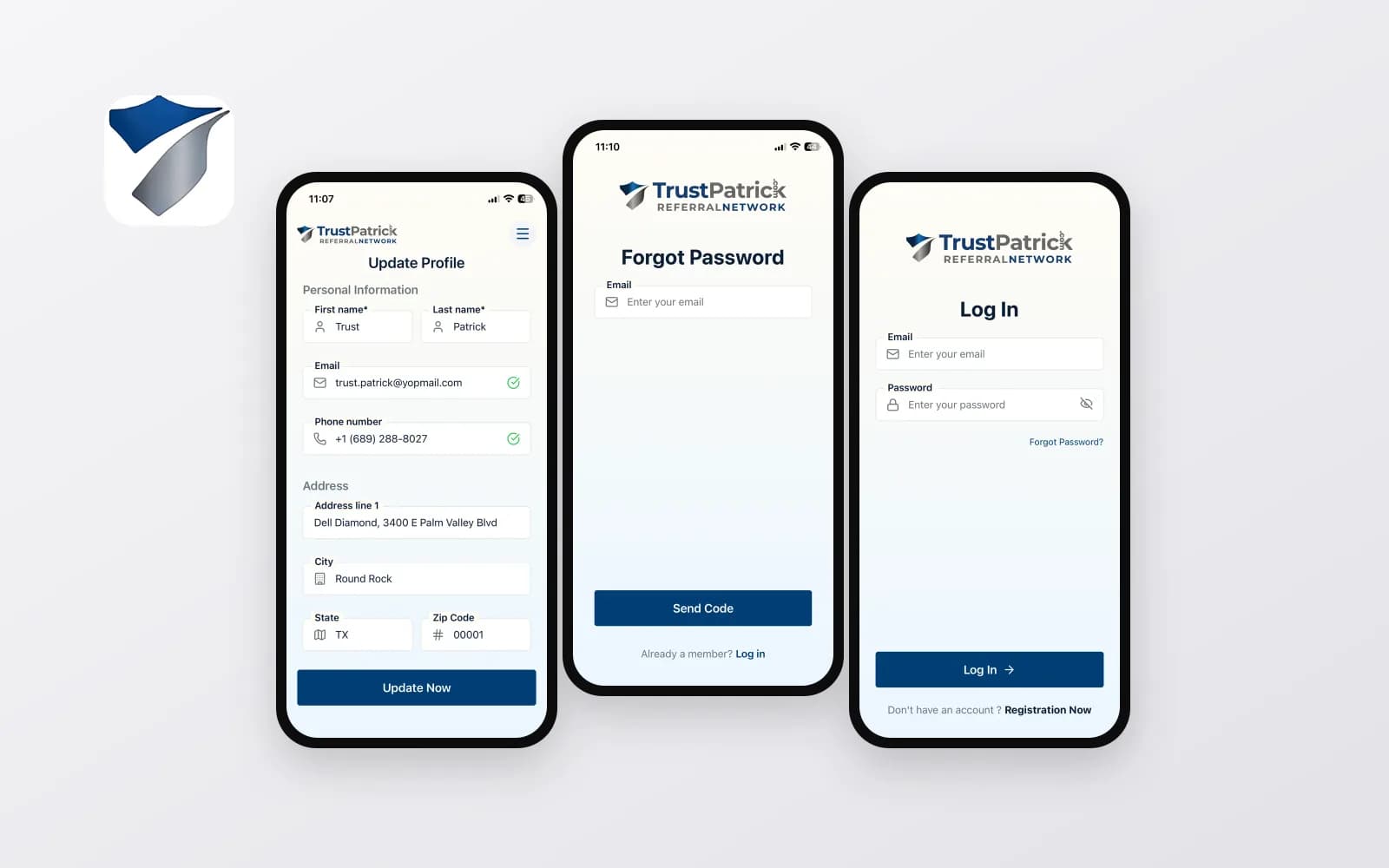
Platform
TrustPatrick
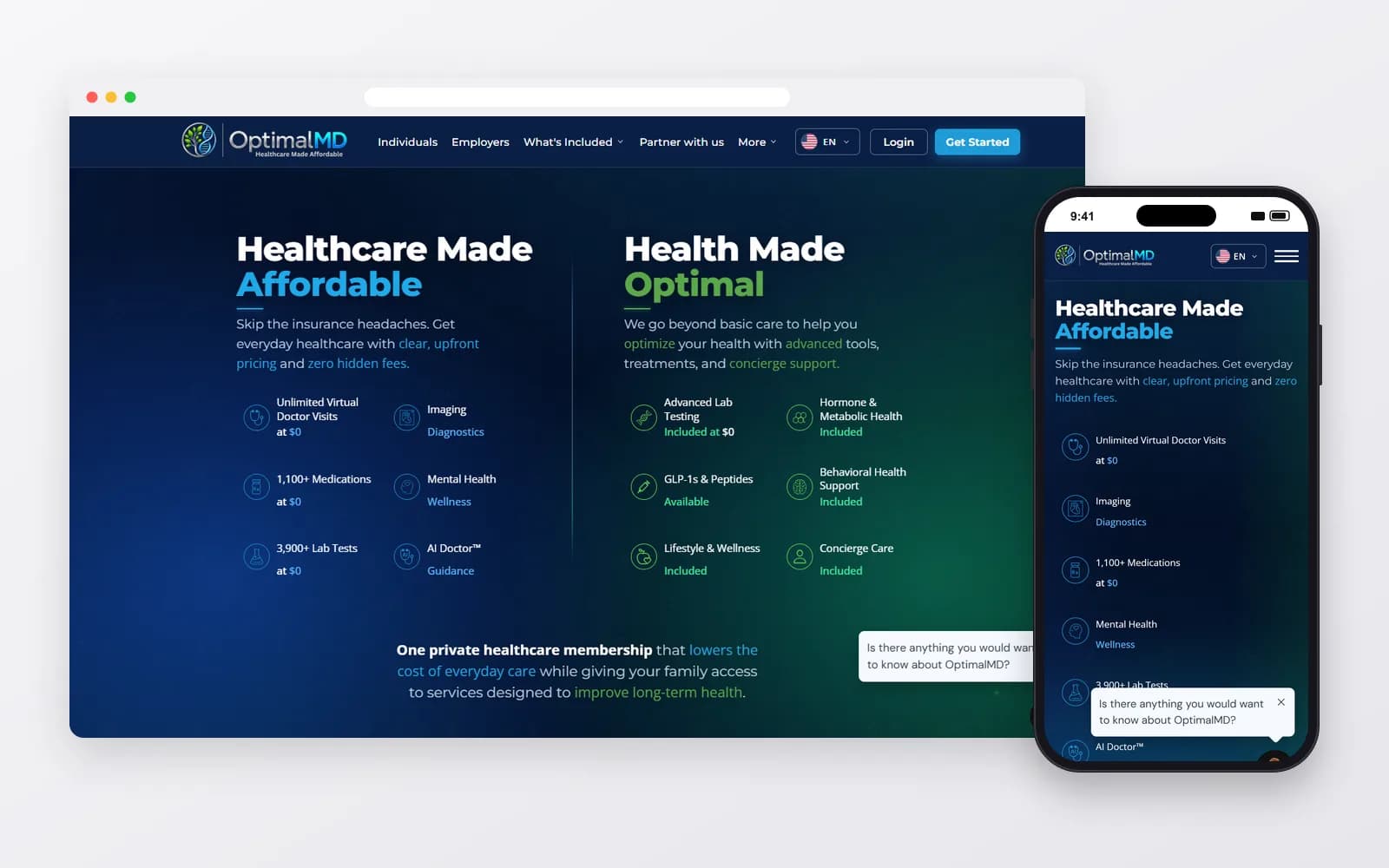
Website
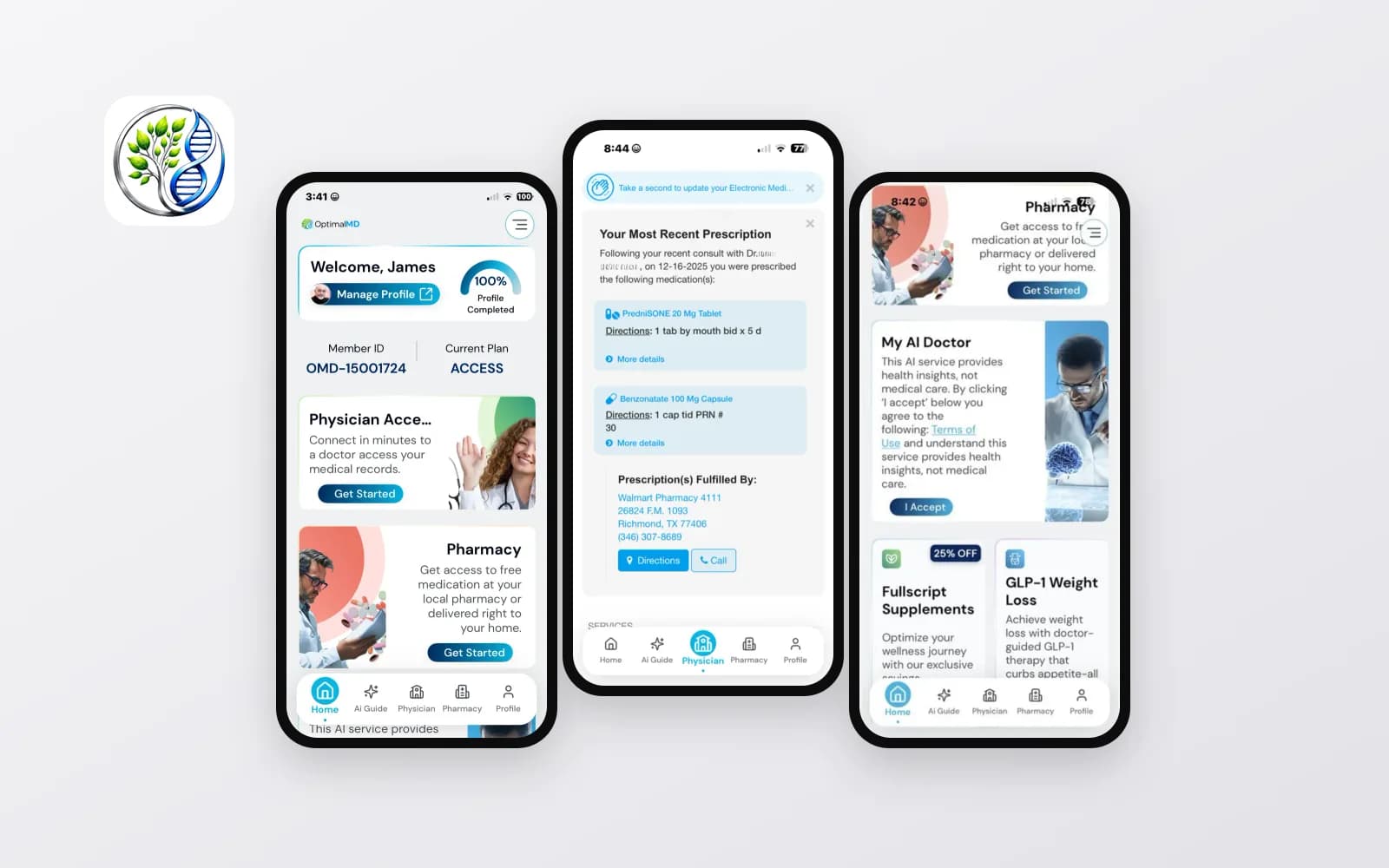
OptimalMD
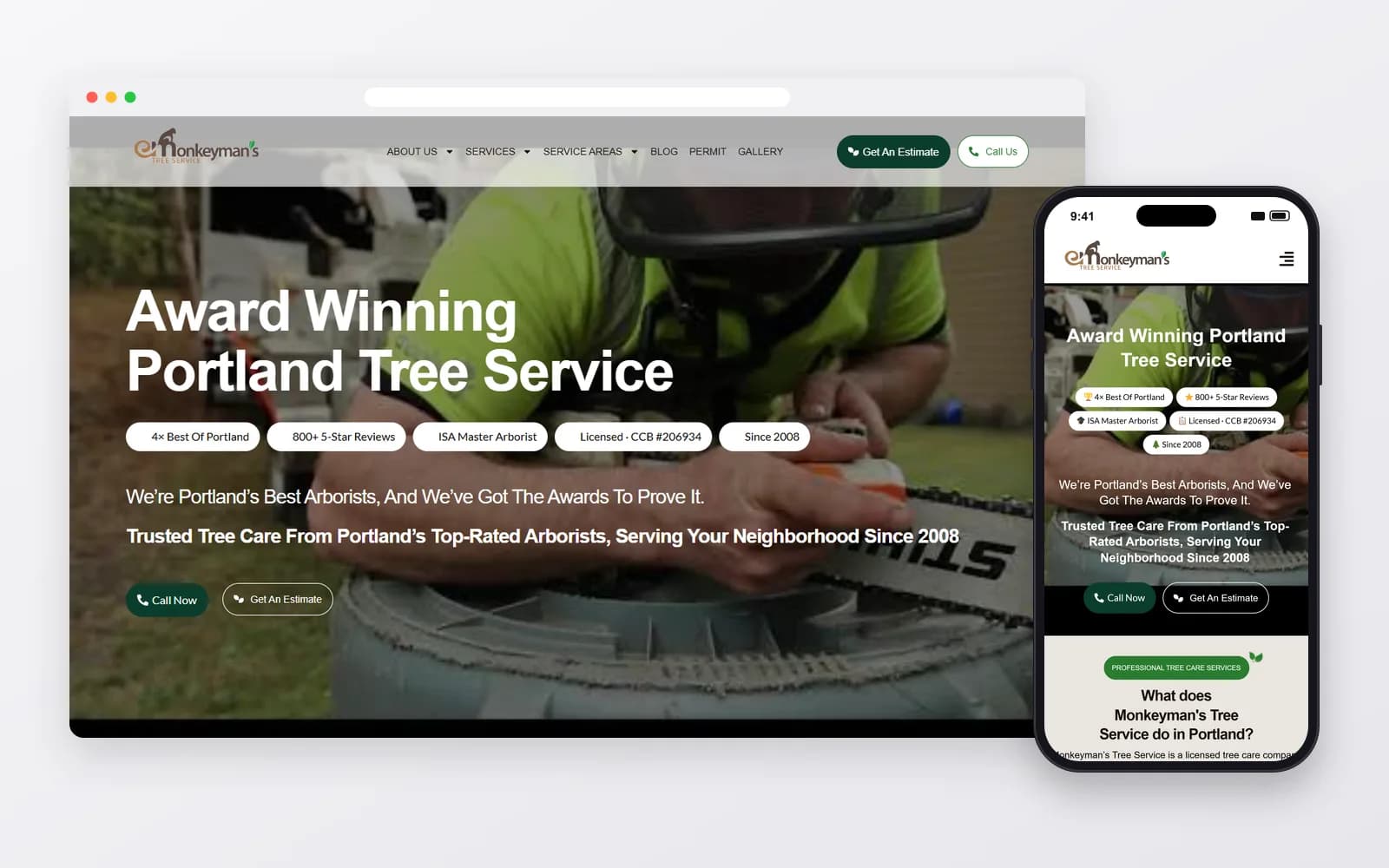
Website
Monkeyman's Tree Service






Work like this, built for your business
Our web development team works across Tailwind CSS and the tools around it, so your setup is connected from day one, not patched together later.
- Free strategy call
- No obligation
- Straight answers
Alternatives
Tailwind CSS alternatives, and when to pick them
- vs
Tailwind CSS vs Webflow
Webflow lets designers build and edit layouts visually, which suits marketing sites with no custom application code.
About Webflow - vs
Tailwind CSS vs Elementor
Elementor gives WordPress users drag-and-drop page design when the team wants to edit pages without a developer.
About Elementor


Services
Services we deliver with Tailwind CSS
Web Design & Development
A fast website that makes your phone ring, built for local customers searching on their phones.
See the serviceUI/UX Design
Booking flows, portals and apps your customers find easy to use.
See the serviceSaaS & Web App Development
Customer portals, custom software and SaaS products, built to launch and to grow.
See the service
Not sure Tailwind CSS is the right fit?
We work with the alternatives too, so you'll get a straight answer on which one suits your business, even if it's not Tailwind CSS.
- Free strategy call
- No obligation
- Straight answers
FAQ
Tailwind CSS questions
Straight answers about working with us on Tailwind CSS.
8 questions answered

Still have a question?
Talk it through with our team on a free strategy call.
Web development
More Web development tools we use
Next.js
Websites · SaaS
We build Next.js marketing sites and logged-in web platforms that load quickly and hand search engines complete pages.
How we use itReact
Websites · SaaS
Customer dashboards, booking flows and admin tools built in React, with components your next developer can understand.
How we use itVue.js
Websites · SaaS
New features, upgrades and steady maintenance for Vue.js apps, plus Vue widgets that drop into the site you already have.
How we use itAngular
SaaS · Websites
We extend, upgrade and steady Angular applications, from AngularJS migrations to form-heavy portals and dashboards.
How we use itNode.js
SaaS · AI automation
APIs, webhooks and background jobs in Node.js that connect your apps, CRM, payments and AI models reliably.
How we use itPHP
Websites · SaaS
PHP upgrades, error fixes, custom WordPress code and care for older custom portals that still run your business.
How we use itLaravel
SaaS · Websites
Custom Laravel applications with logins, billing, queues and admin tools, built on a structure any PHP developer recognizes.
How we use itPython
AI automation · SaaS
Python scripts, data pipelines and AI features that take repetitive work off your staff and run on a schedule you can see.
How we use it




Want Tailwind CSS set up properly?
Tell us what you're trying to get done. We'll tell you honestly whether Tailwind CSS is the right tool for it, and what we'd build first.