













Deloitte surveyed more than a thousand supply chain executives and about five hundred of their customers. It found a wide gap. Eighty-nine percent of executives who called themselves leading suppliers said customers trust their operations.
Just sixty-eight percent of customers agreed. That gap is the real problem most logistics brand identity work is trying to solve, whether the people commissioning it say so or not.
A new logo doesn't close a trust gap. Proof does.
That gap isn't spread evenly. The survey broke it down by what actually earns trust, and the pattern holds across every dimension it measured.
| What builds trust | Executives who think customers see them this way | Customers who actually agree |
|---|---|---|
| Reliability | 90% | 65% |
| Acting humane, not just efficient | 91% | 67% |
| Transparency | 85% | 63% |
| Capability | 91% | 75% |
Tusk Logistics's 2026 Alternative Carrier Benchmark Report, published in August through Gooding Supply Chain Advisors, found something sharper. Every one of the seventeen alternative carriers it measured showed higher usage than trust among the shipping professionals surveyed.
Shippers were routing freight to companies they wouldn't vouch for. Usage ran nearly double the trust score, on average, across the board.
Freight brokers feel the same pressure from the other direction. In a 2025 survey of freight brokers, Truckstop found that finding a carrier they could trust was brokers' biggest obstacle to moving freight.
Two-thirds cited fraud, including double brokering, as a top concern.
Building a logistics brand identity that survives scrutiny
Two 2026 rebrands show what companies are doing about it. ICAT Logistics relaunched its identity in January, unifying vertical divisions spanning live events, luxury, technology, defense and aerospace, and financial institutions under one platform.
CEO Brad Stogner said the new brand "reflects how our business operates every day: focused, disciplined, and engineered for results."
Air Logistics Group went further. In June, the air cargo specialist, founded in 1994 and running offices across more than 60 countries, unveiled a brand built around "People-Powered Excellence."
CEO Stephen Dawkins put the trust question directly in the announcement: "it is our knowledge, experience and dedication of people that create addition value, build trust and unlock opportunity."
Neither rebrand touched pricing or routes. Both spent the announcement on people and structure, the two things closest to what the survey above calls acting humane rather than just efficient.
Where the identity actually has to show up

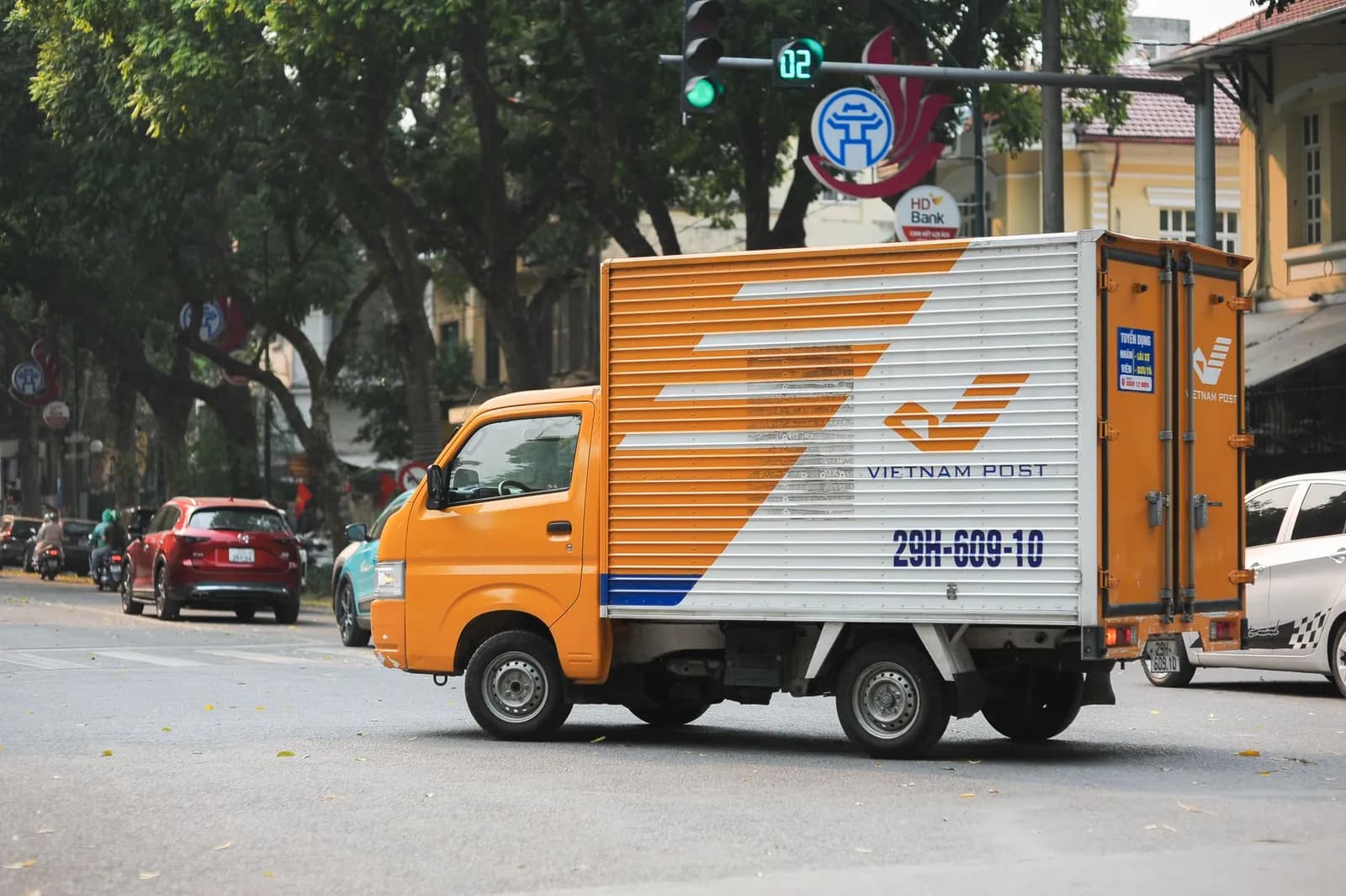
Photo by Hòa Lê Đình on Pexels
A new mark matters most where customers actually watch it. That means the driver-facing app, the shipment tracking portal, and the paperwork moving with the freight, not just the truck livery.
Getting the tracking and booking interfaces to feel as disciplined as the pitch deck is where a lot of logistics brands lose the thread. The new logo ships and the customer portal still looks like it was built a decade ago.
The rollout matters just as much as the identity itself. A rebrand that lands quietly, on the website and nowhere else, doesn't reach the brokers and shippers actually deciding whether to route freight to you.
That takes a deliberate launch plan, not a press release alone.
None of this works if the identity underneath it, the name, the mark, the color and type system, isn't built to hold up under that kind of scrutiny.
That's what brand identity work is actually for: making a promise specific enough that a shipper can check it against what happens when their freight moves.
The fastest way to close a trust gap isn't a bigger claim. It's picking the one thing your operation genuinely does well, the fill rate, the on-time percentage, the claims-free record.
Put that on every surface a customer touches until it's the thing people say about you before you say it about yourself.
Cover photo by Brett Jordan on Pexels