







A carrier that lists itself under "Freight Forwarding Service" instead of the generic "Transportation Service" category ranks in Google's top 10 local results more often.
Whitespark founder Darren Shaw measured that gap at 36% in a study of Google Business Profiles across thousands of categories, published on Search Engine Land in August 2026.
That single choice does more for visibility than most of what gets pitched as local marketing. A logistics local SEO case study built on real numbers has to start there, not with a story about a carrier's traffic doubling overnight.
What a logistics local SEO case study needs to prove first
Shaw scored profiles across five factors: website, business description, hours, photos and claimed status. The category a business picks for itself mattered just as much as any of those.
| Profile factor | What it buys in the top 10 |
|---|---|
| Complete profile (5/5 on Shaw's completeness index) | Appears in the top 10 results 13% of the time |
| Incomplete profile | Appears in the top 10 only 4% of the time |
| Specific primary category (e.g. "Freight Forwarding Service") | 12.5% top-10 presence |
| Generic primary category (e.g. "Transportation Service") | 9.2% top-10 presence |
None of that needs a redesign or a new website, just someone filling in the profile a carrier already has and picking the category that actually names the service.
Why shippers are already checking before they call
Small carriers chasing direct freight get vetted online before a broker or shipper ever dials the phone, as FreightWaves detailed in a piece on why small carriers need a web presence. A missing website now reads as a warning sign.
Even a basic site puts a carrier ahead of most small fleets that still don't have one, in what FreightWaves called the survival lane for direct freight as spot rates stay volatile and brokers lean toward carriers they already trust.
A Google Business Profile is the cheapest version of that trust signal: a real category, a service area, current hours, and reviews that show the business is active.
This work usually sits inside digital marketing and growth rather than a one-time project, since a profile needs ongoing checking, not a single setup.
Where a near-me search turns into a call

Photo by RDNE Stock project on Pexels
Local search converts fast once someone finds the right result. Search Engine Land's guide to near-me search puts the number at 76%.
That's the share of people who visit or contact a business within a day of running a "near me" search on their phone.
Customers searching "freight broker near me" instead of browsing a directory care about that speed more than a polished homepage. Most of them, 60%, contact the business straight from the search result, without ever loading a website.
A shipper calling from a map result never sees a site that's out of date because they never open it. Keeping the profile itself accurate carries more weight than keeping the website current.
What to fix first
Start with whatever's already wrong on the profile: a phone number going to voicemail, a category that hasn't changed since the business added a new lane, reviews sitting unanswered for months. None of it costs anything to fix, and a shipper sees it first.
Keeping reviews and messages answered quickly gets easier with the kind of AI and automation already handling other front-office work, so a profile doesn't go quiet outside business hours.
If the website behind that profile still needs work, the platform choice matters too. We've written about the technical trade-offs behind a logistics company's own site, and Shaw's data points at the same principle: specific beats generic, on a category picker and everywhere else.
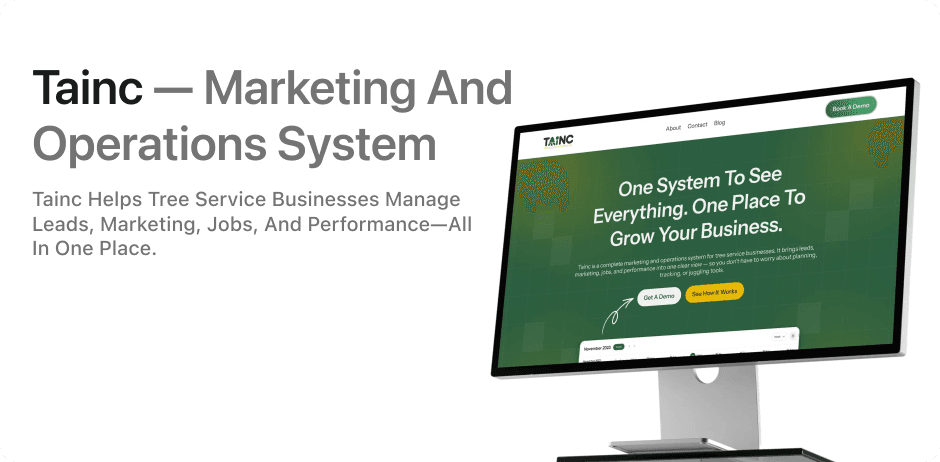
None of this is unique to freight. We mapped a similar local-lead approach for home service businesses, and built a comparable system for a tree service company's growth platform. What changes between industries is which category actually describes the work.
Cover photo by RDNE Stock project on Pexels
Sources
- What 1.8 million Google Business Profiles tell us about local SEO success — Search Engine Land
- "Near me" SEO: Optimize for local searches that convert — Search Engine Land