












A HubSpot seat for your front desk starts at $20 a month; a Salesforce seat built for a hospital system's case managers starts at $350. Both get sold as healthcare CRM software.
That gap in price is exactly why so many practices end up with the wrong one. The real question isn't which brand is "best." It's whether you need to run outreach, scheduling and billing follow-up, or whether you're managing structured clinical relationships across a whole system.
What a healthcare CRM actually does that your EHR doesn't
Your EHR is the system of record for clinical care: diagnoses, medications and lab results. A CRM sits next to it and handles everything that happens around a visit rather than during one.
That means reminding patients about appointments, chasing down the ones who no-show, and tracking referrals between providers. None of that belongs in a clinical chart, but all of it affects whether a patient actually comes back.
Confusing the two is the most common mistake in this buying decision. A practice that tries to force its EHR to do CRM work usually ends up building clunky workarounds in a system that was never designed for marketing or sales pipelines.
Buy a general CRM without checking its healthcare safeguards instead, and the problem shifts from clunky workarounds to a compliance gap.
What it takes to make a CRM HIPAA compliant
A CRM only counts as HIPAA compliant if the vendor will sign a business associate agreement, and that document has to do real work. HIPAA Journal lays out what it must require.
The vendor can't use or disclose patient data beyond what the contract permits. It has to put safeguards in place against unauthorized access, report any breach back to you, and destroy or return the data once the relationship ends.
Skip that step and the exposure is yours, not the vendor's. Penalties can run from $31,000 to $2.7 million even when no breach actually happens, and a covered entity can't point to a vendor's verbal assurance as a defense once regulators get involved.
That's why "does it have a CRM" is the wrong first question for a medical practice. Whether the vendor will sign a BAA, and what it actually covers, is the one that matters.
What healthcare CRM software costs
Pricing across this category spans more than a 30x range, and most of that gap tracks to how much clinical complexity the platform is built to handle.
Platform | Starting price | HIPAA compliance | Best fit |
|---|---|---|---|
HubSpot Sales Hub | Free for 2 seats, up to $150 per seat a month on Enterprise plus a $3,500 onboarding fee | Not listed as a standalone add-on; confirm with sales | Multi-location practices running marketing and sales together |
Salesforce Life Sciences Cloud | $350 per user a month (Core) up to $725 (Sales & Service Max), billed annually | Built around structured clinical and case-management workflows | Hospital systems and payers managing large caseloads |
Zoho CRM | Free for up to 3 users | Included starting at the Standard tier | Solo practices and small clinics on a tight budget |
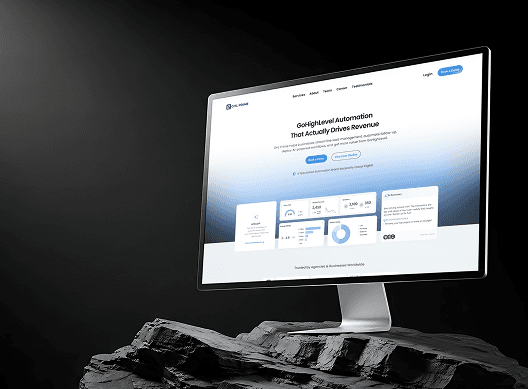
GoHighLevel | $97 a month flat, unlimited users | $297/month add-on, or bundled into custom Enterprise plans | Practices wanting texting, scheduling and a white-labeled CRM in one tool |
HubSpot's Sales Hub pricing page lists its plan starting free for two seats and climbing to $150 a seat a month on Enterprise, with a $3,500 onboarding fee at that tier. Nothing on that page mentions a BAA, so a practice that wants one needs to raise it directly with sales rather than assume it's included.
Salesforce prices its healthcare-focused offering, now sold as Life Sciences Cloud, from $350 a user a month at the Core tier up to $725 for the combined Sales & Service Max edition, all billed annually. That buys structured workflows for case management rather than a general sales pipeline.
Zoho undercuts both of them. Its CRM runs free for up to three users, and HIPAA-safe handling of patient data is folded into the Standard tier rather than reserved for an enterprise plan.
GoHighLevel sits in between on price and treats compliance as a line item. $97 a month gets you the Starter plan with unlimited users, and HIPAA compliance costs an extra $297 a month unless you're on a custom Enterprise contract, where it comes bundled in.
Which option actually fits your practice
For most independent and multi-location practices, the real choice is between GoHighLevel and Zoho, not between either of them and Salesforce.
Salesforce's price only makes sense once you're coordinating case managers across a hospital system or a payer network, where the clinical workflow tooling earns its $350-to-$725 range. Below that scale, you're paying enterprise prices for features your front desk will never touch.
GoHighLevel earns its place if texting patients, running recall campaigns and white-labeling the whole thing under your own brand matters more than deep clinical case tracking. Our own write-up on what each GoHighLevel plan includes goes through what that white-labeling actually looks like, plan by plan.
Zoho wins on pure cost. If the main need is a HIPAA-safe place to log patient contacts without spending more than a few hundred dollars a month, it's the one to start with.
HubSpot makes sense only when marketing is the bigger problem than patient management: paid campaigns and nurture sequences that happen to touch patient contacts, rather than a CRM built around clinical relationships first.
Making it talk to your EHR and patient portal

Photo by erwinbosman on Pixabay
Photo by Cedric Fauntleroy on Pexels
None of these platforms replace your EHR, and the harder part of adoption usually isn't picking one. It's getting it to talk to whatever your patients already use.
If patients book through a portal, that system needs to feed appointment data into the CRM so reminders and recall campaigns stay accurate.
A mobile app in the patient experience adds the same requirement again. The CRM has to sync with it too, or the data splits across three places nobody fully trusts.
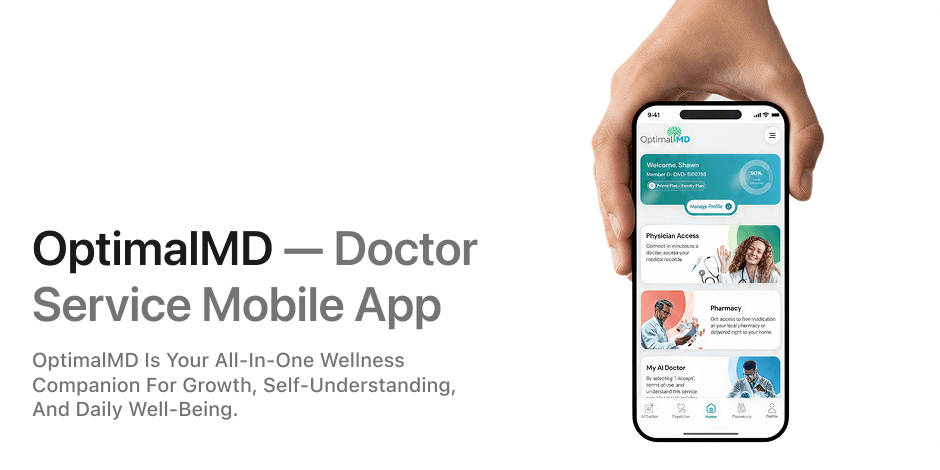
When we built OptimalMD's platform, we designed and built the website, the members portal and the mobile app end to end, from design through development to launch. That kind of project is where off-the-shelf CRM pricing stops being the real cost. The integration work connecting it to a portal and an app is what the sticker price never includes.
If you're weighing whether to buy a CRM outright or build the connecting layer yourself, what CRM software development services actually cover walks through where that line usually sits. The same build-versus-buy question comes up around remote patient monitoring software and patient portal development, and it's worth reading before committing to either side of it.
Rolling it out without wrecking your front desk
Migrating patient contact data into a new CRM is the part that goes wrong first. Spreadsheets and an old CRM rarely map cleanly onto a new one's fields, and nobody notices the gaps until a patient doesn't get a reminder they were supposed to get.
Run both systems in parallel for the first full appointment cycle rather than cutting over on day one. That gives the front desk time to catch what didn't migrate before a patient does.
Training matters more than the software here. A CRM with a signed BAA is only as compliant as the staff using it, and a receptionist who exports a patient list to a personal spreadsheet undoes the agreement in one click. Whoever handles the integration work from custom apps and SaaS should also be the one setting up the access controls your staff will actually use.
Frequently asked questions
Is GoHighLevel actually HIPAA compliant?
It can be, but it isn't automatic. GoHighLevel's pricing page lists HIPAA compliance as a $297-a-month add-on on its standard plans, or as something bundled into a custom Enterprise contract. Check which one applies before signing up.
Does a healthcare CRM replace an EHR?
No. An EHR stays the system of record for clinical data. A CRM handles the outreach, scheduling and follow-up around a visit, and the two typically need to be integrated rather than treated as substitutes for each other.
What happens if you use a CRM vendor without a signed BAA?
The liability lands on your practice, not the vendor. Penalties can run from $31,000 to $2.7 million even without an actual data breach, and a verbal assurance from the vendor won't hold up as a defense.
Can you start on a free plan and upgrade later?
Yes. Both HubSpot and Zoho offer free tiers, two seats and three users respectively, which makes either a reasonable way to test a workflow before committing to a paid plan with HIPAA-safe data handling.
Cover photo by Santhosh Kanthala on Pexels
Cover photo by Pavel Danilyuk on Pexels
Sources
Sales Hub Pricing — HubSpot
Life Sciences Cloud Editions and Pricing — Salesforce