






A small number of creators just got a badge from Google that bundles their articles, videos and social posts into one panel next to their name in search results. Google Search profile badges let a website point straight at that hub, and the timing says more than the feature does.
Roger Montti made the case, in a breakdown of the badge's four features for Search Engine Journal, that Google wouldn't need a profile hub for creators if AI Search were sending publishers more traffic instead of less.
It's a pointed read of a feature Google frames as helping creators build a following.
What Google Search profile badges actually bundle
The badge upgrades a creator's existing Knowledge Panel, pulls together everything they've published across YouTube, Facebook, Instagram, TikTok and X, plugs into Google Discover, and lets someone manage more than one brand from a single profile.
None of that reaches most publishers. Getting a Knowledge Panel at all means Google already recognizes you as a known entity, which puts this tool out of reach for most small and mid-sized sites.
The traffic decline behind the badge
Digital Content Next, a trade group representing roughly 40 publishers including the New York Times and Conde Nast, surveyed 19 of its members in mid-2025. The results, reported by Digiday, showed referral traffic from Google falling at every publisher size, just not evenly.
| Publisher segment | Median YoY referral change |
|---|---|
| News brands | -7% |
| Non-news brands | -14% |
| All DCN members | -10% |
"Traffic is down double digits with some publishers, so that harm is happening in real time," DCN chief executive Jason Kint said. Non-news members saw the decline hold steady for the whole eight-week survey, without a single week of recovery.
Clicks that Google itself doesn't dispute

Photo by Siarhei Nester on Pexels
Search Engine Journal reported, in a separate look at how publishers are adapting, that Pew Research Center measured click-through dropping from 15% to 8% on searches where an AI summary appears.
Google disputes that this is a loss for the platform. Its defense is that AI Overviews are driving "over 10% increase in usage of Google for the types of queries that show AI Overviews," a claim about how often people open Google, not clicks to a publisher.
One number cuts the other way. Branded searches, the kind where someone already knows your name and types it in, saw click-through rise 18%, per research the same piece cited from Amsive. That's the gap a profile badge is built to widen.
Building a following Google can't summarize away
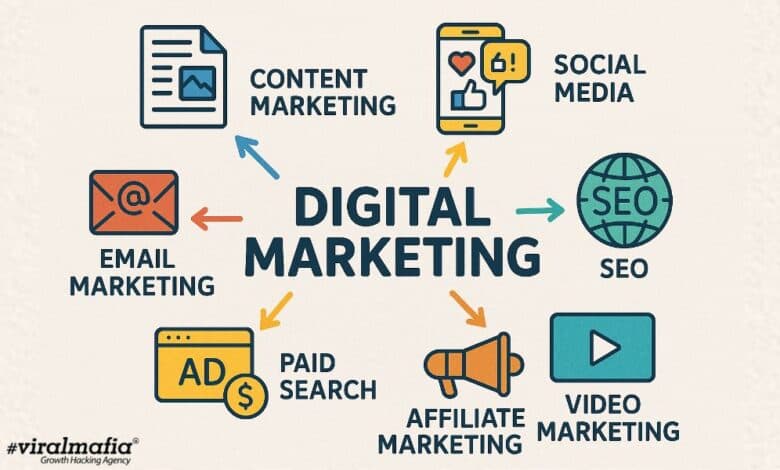
Publisher David Higgerson put the practical response plainly: go find audiences elsewhere and build a real relationship with them, rather than waiting on search rankings to hold. Email lists, apps and podcasts don't vanish when an algorithm changes. Our digital marketing and growth work increasingly starts here.
There's a second decision tangled up in this one. Some publishers want to keep AI systems from training on their work without losing their Google ranking, and it's possible to block AI training while staying fully indexed by Google search, since the two crawlers aren't the same thing.
Whether AI companies owe publishers anything for the content that trained them is still being argued in court, and the OpenAI copyright case is setting early terms for that fight. Until it resolves, branded search and a badge Google controls are the levers publishers actually have.