


















reSET, authorised in 2017 as the first prescription treatment of its kind for substance use disorders, set the template that digital therapeutics software still follows: a clinician prescribes it, the FDA regulates it, and it has to prove it works. According to a Frontiers in Digital Health review of FDA regulation of prescription digital therapeutics, these products are software-based treatments delivered on smartphones or tablets that address the behavioural side of diseases and conditions.
That definition decides almost everything about how you plan, build and sell one.
What counts as digital therapeutics software
A product is a digital therapeutic when software itself delivers the treatment for a disease or disorder, and a licensed clinician starts the patient on it. The same Frontiers review says this separates prescription digital therapeutics from wellness apps, which are only meant to help people maintain general fitness, health or wellness and so don't meet the definition of a medical device.
The examples are concrete. reSET-O supports treatment of opioid use disorder alongside buprenorphine, Somryst delivers computerised behavioural therapy for insomnia, and EndeavorRx is a game-based treatment for ADHD in children.
Intent is the line. A meditation timer that promises relaxation is a wellness app. A module sequence that claims to treat a diagnosed condition is a medical device, whatever it looks like on screen.
Why the FDA treats it as software as a medical device
The FDA uses the International Medical Device Regulators Forum definition: software as a medical device is software intended for one or more medical purposes that performs them without being part of a hardware device. Digital therapeutics fit that wording exactly, because the app is the whole product.
The same international guidance covers risk categorisation, quality management system requirements and clinical evaluation. So a team building DTx works inside a quality system from the first sprint.
Prescription digital therapeutics are Class II devices, the moderate-risk tier. The Frontiers review notes that the rules are fit for purpose by disease area, with psychiatric disorder products falling under 21 CFR 882.5801.
Two FDA pathways, 510(k) and De Novo, and when each applies
Most prescription digital therapeutics reach the market by one of two routes, and which one applies depends on whether a similar product already exists.
- 510(k) clearance requires showing substantial equivalence in safety and effectiveness to a predicate product that was itself authorised through De Novo or another 510(k).
- De Novo requires clinical data showing the device is safe and effective, and the resulting authorisation can serve as the predicate for the products that follow.
The practical consequence is that a first-of-its-kind product carries the heavier evidence burden. If your condition already has a cleared product, a predicate gives you a shorter route, though the Frontiers authors point out that some existing authorisations require follow-on products to include clinical data too.
The review also describes the FDA's Software Precertification programme, launched in 2017, which looked at the developer's quality culture rather than only at the product. Treat it as background, not as a route you can plan a launch around.
What clinical evidence the product has to show
Class II devices typically need clinical data, often from randomised controlled trials. Software teams tend to underestimate this part, because a trial can't be sprinted. Myoung Cha, chief strategy officer at Carbon Health, told MedTech Dive in April 2022 that the process is, from a medical standpoint, often years.
That timeline should shape the build. Freeze the clinical protocol and the product's intended use early, because changing what the software claims to treat changes what you have to prove.
Who pays for it: Medicare codes and their limits

Photo by Shantanu Kumar on Pexels
Clearance doesn't create revenue. Medicare's payment route is narrow and has only recently started to widen.
In its final CY 2026 physician fee schedule, effective January 1, 2026, CMS expanded three existing HCPCS G-codes so they also cover digital mental health treatment devices for ADHD, according to Sidley's November 2025 summary of the rule. The devices are paid for as an adjunct to ongoing behavioural health care, not as a standalone prescription.
CMS declined to extend the policy to devices for gastrointestinal conditions or fibromyalgia, while saying it may consider them in future rulemaking. If your product treats anything outside behavioural health, you can't assume a Medicare code exists for it.
Why early DTx companies struggled to sell
Regulatory success and commercial success turned out to be separate problems. In an April 2022 MedTech Dive report on commercialisation, Pear Therapeutics' revenue had fallen from $32 million in 2019 to $4.2 million in 2021, and the company reported a net loss of $65 million for 2021.
Reimbursement was the first obstacle. Akili's vice president of commercial strategy, Ashleigh Chung, told the outlet that many digital therapeutics had gone through the regulatory process and were prescribed like a drug, but weren't reimbursed.
Engagement was the second. In Pear's opioid use disorder product, 64% of patients completed all core modules after 24 weeks, and the article raises the concern that educational apps lose users once they've learned the skills.
Christina Farr of Omers Ventures put the sales problem bluntly in the same piece: pharma companies know how to sell drugs, but not software.
Those are 2022 figures, and CMS has moved since. Still, the pattern they show hasn't gone away. A cleared product nobody prescribes, or that patients abandon in week three, fails even with a perfect submission.
What to build, and what to decide first
Before any code, settle three things: the condition the software claims to treat, the predicate or De Novo route that follows from it, and who will pay. Those answers fix your scope, your evidence plan and your price. Our guide to how to build a healthcare MVP that gets funded covers how to scope a first release around that kind of evidence.
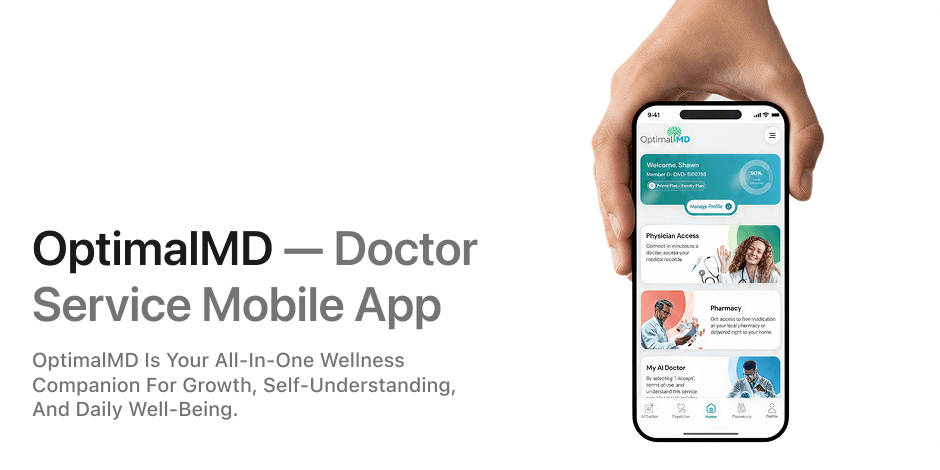
Patients will judge the product on usability long before a regulator reads a trial report. When we built OptimalMD's digital product end to end, from design through development to launch, that covered the website, the members portal and the mobile app we delivered for OptimalMD. Treatment software needs the same discipline across all three surfaces, plus a quality system around it.
Security belongs in the first design review, not the last. Patient data in a treatment app is health data, and our piece on healthcare app security and HIPAA compliance sets out what to build in from the start.
If your product also reads from connected hardware, the architecture questions multiply, and connecting devices for better care is the place to start. Our apps and SaaS development service is where we take this kind of product from design to launch.
Write the intended-use statement before the first wireframe, and have your regulatory adviser sign it off.
Frequently asked questions
Is every digital health app regulated by the FDA?
No. Apps that are only intended to help people maintain general fitness, health or wellness don't meet the definition of a medical device. Software that treats a disease or disorder does, and prescription digital therapeutics are regulated as Class II devices.
Does Medicare pay for digital therapeutics?
Only for a narrow set. From January 1, 2026, CMS pays through three HCPCS G-codes for FDA-authorised digital mental health treatment devices, now including ADHD devices, when used as an adjunct to ongoing behavioural health care.
What's the difference between 510(k) and De Novo for a DTx product?
A 510(k) shows substantial equivalence to an existing authorised predicate. De Novo is for products without one and requires clinical data showing the device is safe and effective.
Cover photo by Daniil Komov on Pexels
Sources
- FDA regulation of prescription digital therapeutics — Frontiers in Digital Health
- Software as a Medical Device (SaMD) — U.S. Food and Drug Administration