












Seventy-one percent of small businesses already run on some kind of CRM, and the case for CRM automation for small business teams shows up in what happens after that software gets switched on.
In an April 2024 survey of 600 U.S. business owners and professionals, Freshworks found that automating repetitive tasks was the biggest driver of the gains those businesses reported: shorter sales cycles, better close rates, and revenue that moved in the right direction once the busywork stopped falling on a person.
Why CRM Automation for Small Business Teams Pays Off
None of that comes from buying the software. It comes from what the software is set up to do on its own: log the call, assign the lead, flag the deal that's gone quiet for two weeks.
A CRM sitting there waiting to be updated by hand does none of that.
Most small teams don't have the headcount to do it manually at the pace leads actually arrive.
Freshworks put a number on that gap: automation freed up 5 to 10 hours a week at 43% of the organizations it surveyed, time that had been going into data entry and chasing leads by hand.
What Slows Small Teams Down Without It
Every hour a rep spends logging a call or reassigning a lead by hand is an hour not spent talking to the next one.
That adds up fastest at exactly the size of team least able to absorb it: five or six people covering sales, service and marketing between them, with nobody whose job is CRM admin.
Closing that gap is the kind of work our AI & Automation team gets called in for most often. Not replacing the CRM, but wiring up the parts of it that were still running on someone's memory.
What to Automate First

Photo by Keegan Checks on Pexels
Order matters more than most small businesses expect. A guide from Home Business Magazine lays out the dependency plainly: skip a link in the chain and the ones built on top of it won't hold.
- Log activity automatically. Capture emails, calls and calendar events before building a single workflow on top of them.
- Route leads with basic rules. Round robin or geography is enough at this stage.
- Automate the pipeline stages. Move deals forward on real triggers and flag the ones going stale.
- Build email sequences last, once the first three are solid.
Jump straight to sequences and you get the failure the guide warns about directly: an email firing to a contact nobody actually assigned, because the routing rules underneath it were never set.
Clean data in the fields that matter comes first. Team agreement on what each pipeline stage means comes second. Everything else compounds on top of those two, for better or worse.
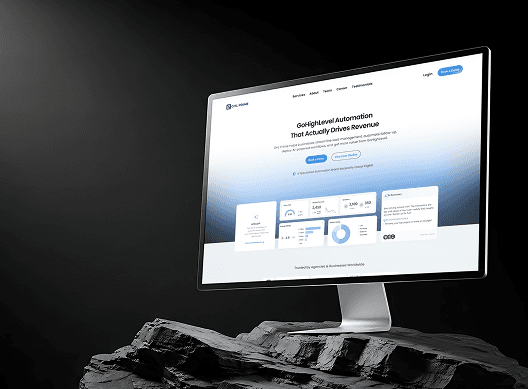
Once that foundation holds, the workflows a platform like GoHighLevel can run on top of it stop being a wish list and start being routine.
What It Costs to Get Moving
Pricing varies by platform, but HubSpot's Starter Customer Platform is a fair benchmark. It lists at $20 a month per seat on HubSpot's own starter pricing page, bundling starter-level marketing, sales, service, CMS and data tools into one place.
Other platforms price differently. GoHighLevel bundles CRM and automation together under one plan rather than charging per module, which starts to matter once a team runs lead routing, sequences and pipeline automation together instead of picking one at a time.
The software is rarely the hard part. Getting the routing rules right, agreeing on what each pipeline stage means, and cleaning the data before automation touches it takes longer than installing anything does.
It's the same work whether a five-person team does it themselves over a slow quarter or hires it out to move faster.
Cover photo by Tima Miroshnichenko on Pexels
Sources
- 50+ CRM Statistics & Trends You Should Know — Freshworks
- CRM Automation: What to Automate First in a New CRM — Home Business Magazine