









Patient engagement strategies usually get judged by the technology behind them, yet the best-documented gains come from small operational habits: who invites the patient to use the portal, when a reminder lands, and how it's worded. Below are five that have published data behind them, with the limits of that data stated plainly.
Where do most clinics lose patients today?
Between offering a portal and getting it used. The same federal data brief puts the share of people who were offered and accessed their online record at 65% in 2024, up from 25% in 2014, while 13% were offered access and never opened it.
Access is mostly solved, then, and use is the open problem. That shapes which patient engagement strategies are worth paying for: the ones that turn an existing offer into a habit, before anything that adds another channel.
Does a nudge from the clinic really change portal use?
Yes, and by a wide margin. In the 2024 Health Information National Trends Survey, reported in a federal health IT data brief on portals and health apps, 87% of people whose provider had encouraged portal use had logged in during the past year. Among those who weren't encouraged, it was 57%.
Nearly nine in ten people who were offered a portal said their provider had encouraged them, so the habit is already common. The gap also showed up inside the portal: encouraged patients were more likely to have viewed test results and clinical notes.
It's a survey, so it shows an association rather than proof of cause. Patients who already care about their health may simply be encouraged more often. Even so, an invitation costs nothing, and the sensible place for it is the check-in and discharge script, so it doesn't depend on which clinician remembers.
Of all the patient engagement strategies here, this is the one a clinic can start on Monday morning, with a laminated card at the front desk and a line added to the discharge checklist.
How much do appointment reminders cut no-shows?
Text reminders took no-shows from 21% to 15% in a pooled analysis of randomised trials. That figure comes from a 2016 BMJ Open systematic review and meta-analysis of digital appointment notifications, which covered 21 comparisons against patients who received no reminder at all.
Treat it as an average across very different clinics. The studies varied a lot from one to the next, the authors saw signs of publication bias in the attendance results, and the three mental health studies found no significant effect.
Reminders are also easy to automate, since the trigger is simply a booked slot.
A reminder program is cheap to run and easy to measure, which makes it a sound first test for any clinic building its patient engagement strategies from scratch. Compare no-show rates for a month before and after, by appointment type, and you'll know whether it's working.
Does the wording of a reminder matter?
It does, and in one large trial it mattered more than having a reminder in the first place. At Clalit Health Services in Israel, researchers randomly assigned 161,587 appointments to one of nine text framings, all sent five days ahead, and published the results in a 2020 PLoS One study of systematic message testing.
The control message produced a 21.1% no-show rate. A guilt-framed message brought it to 14.2%, and a message stating the cost of a missed appointment reached 15.3%. Three other framings, including a plain standard reminder and a personal request, made no significant difference.
Guilt came with a side effect. Advance cancellations rose from 17.2% to 26.3% under that message. A cancelled slot can be rebooked and a no-show can't, so that may be a fair trade, but a clinic that values its tone with patients might still prefer the cost framing, which performed nearly as well.
The authors also note that every message went out five days ahead, so a later second nudge wasn't tested. Rotating wordings and logging which one wins is a job for a scheduling workflow, the kind of thing covered under AI and automation services.
Why do some patients never register for the portal?

Photo by Cedric Fauntleroy on Pexels
Health literacy is a large part of it. In a Northwestern University study of 534 adults aged 55 and over, 72.7% of patients with adequate health literacy registered for the portal, against 21.7% of those with limited literacy. The findings were reported by AJMC from the JAMIA paper.
Access codes had been generated for almost everyone, so the drop happened at sign-up. The researchers couldn't control for internet connectivity, which means they couldn't say whether those patients lacked access or lacked interest.
Either way, the practical answer is to move the hard step. Help the patient register at the visit, with a staff member beside them, rather than handing over a code to use later at home.
The registration screens deserve the same scrutiny. A flow that assumes confidence with passwords and email verification loses exactly the patients who need the portal most, which is why UI/UX work on those first screens pays back sooner than new portal features do.
Is mobile access worth designing for?
For most clinics, yes. The same federal data brief found that 57% of people accessed their health records through an app in 2024, with web-only access down to 42%.
One caution: only 7% used an app that pulls records from several providers into one place. Most patients are using their own provider's app or portal, so the experience you build is the one they judge you by.
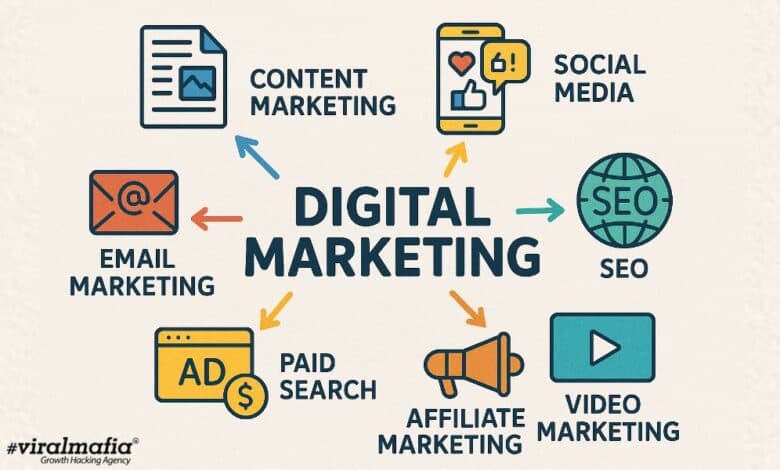
If you're weighing a custom build, app and SaaS development covers the product side, and our guide to building a healthcare SaaS platform covers the planning questions. Reminders, portal prompts and app notifications should be planned as one sequence rather than three separate systems, which is the subject of our omnichannel marketing guide for healthcare.
Which patient engagement strategies should come first?
Start with the free one. Provider encouragement needs no software, reminders need a scheduling tool you probably have, and message testing builds on reminders. Registration support and mobile design take real effort, so they come after you've measured what the first three did.
| Strategy | What the evidence measured | What it buys |
|---|---|---|
| Provider encouragement | Portal use in the past year, encouraged vs not (survey) | 87% vs 57% |
| Text reminders | No-shows with vs without a reminder (meta-analysis) | 15% vs 21% |
| Tested message wording | No-shows, guilt framing vs control (randomised) | 14.2% vs 21.1% |
| Assisted registration | Portal registration, adequate vs limited literacy (older adults) | 72.7% vs 21.7% |
| Mobile access | Share of people using an app for records (survey) | 57% in 2024 |
The first four rows measure different things, so don't add them together. Each tells you where a clinic is likely to be leaking engagement.
Pick the leak you can measure today, because patient engagement strategies only improve when someone is counting. If you don't know your no-show rate or your portal registration rate, that's the first piece of work.
Frequently asked questions
Which patient engagement strategies cost the least to start?
Provider encouragement and reminder wording changes need no new software, only a script and a scheduling tool the clinic already has. Registration help costs staff time, and app work costs the most.
Do voice reminders work better than text?
Slightly, according to the BMJ Open review. Voice and text both reached 74% attendance in its secondary analysis, and the pooled difference favoured voice by 8%, but the confidence interval just crossed zero and only six studies were compared.
Do several reminders beat one?
For attendance, yes: the same review estimated about a 19% gain over a single notification. Multiple notifications did not significantly reduce no-shows, and most included studies sent only one reminder, so the evidence is limited.
Is guilt-framed messaging safe to use?
It cut no-shows in the Clalit trial, but it also raised advance cancellations. Test it against a neutral cost message first, and watch how patients respond before rolling it out widely.
Cover photo by ovariancancer1 on Pixabay