












What Does "SEO Worth It" Actually Mean? (Setting the Right Expectation)
Let’s clarify something upfront.
When you ask, "Is SEO worth it?" You're really asking the following:
Will SEO generate more revenue than it costs?
That’s the only metric that matters.
SEO is not about rankings.
It’s not about impressions.
It’s not even about traffic alone.
SEO ROI = Traffic → Leads → Customers → Revenue → Profit
If your SEO strategy doesn’t directly connect to revenue, it’s broken — no matter how high you rank.
Defining the ROI Framework
When you ask, "Is SEO worth it?" you’re really asking a financial question: Will the lifetime value (LTV) of the customers acquired through organic search exceed the total cost of acquisition (CAC) and maintenance?
In 2026, we calculate SEO worth through a four-pillar framework:
Revenue Attribution: Moving beyond "rankings" to track how organic touchpoints contribute to the final sale.
Asset Equity: Unlike ads, SEO builds a digital asset. If you stop paying for ads, your traffic drops to zero. If you stop "doing" SEO, your existing content continues to harvest leads for months or years.
Cost Defence: As PPC costs (CPC) continue to rise due to increased competition in auction-based environments, SEO acts as a hedge against inflating ad budgets.
Brand Trust: In an era of AI-generated noise, appearing in the organic results provides a "trust signal" that paid placements cannot replicate.
The "Sunk Cost" Fallacy in SEO
Many businesses view SEO as a failure because they treat it like a light switch. SEO is a flywheel. The first 5,000 rotations are the hardest and most expensive. But once the momentum is established, the cost per lead drops significantly.
Why Businesses Think SEO “Didn’t Work”
Most failed SEO campaigns aren’t failures of SEO — they’re failures of execution.
Here’s what usually goes wrong:
Tracking vanity metrics instead of conversions
Expecting results in 3 months
Hiring low-cost providers using outdated tactics
Publishing content without clear intent
SEO is a system. Every part must align: technical foundation, content, authority, and user experience.
Callout Box
SEO is not a cost - it’s a compounding asset.
Every optimised page becomes a long-term traffic and lead generator that continues working even when you stop actively investing.
Once you understand this, SEO shifts from “expense” to long-term growth infrastructure.
Now let’s talk about what that actually looks like in numbers.
The Real Numbers: SEO ROI Data That Actually Matters in 2026
Organic Search Is Still the #1 Traffic Driver
Despite AI and social media growth, organic search dominates digital traffic.
According to industry data, organic search drives over 53% of all website traffic. By comparison:
Paid search: ~15%
Social media: ~5–10%
Why such a gap?
Because search captures intent.
Someone searching “best CRM for small business” is actively evaluating a solution - not casually browsing. That intent translates into higher conversion rates and stronger ROI.
What Is the Average ROI of SEO?
SEO consistently delivers strong returns over time.
Average SEO ROI: 200%–300%+ over 2–3 years
PPC ROI: typically ~200% but requires ongoing spend
Social ads: highly variable, often less predictable
But ROI varies by industry:
Legal & finance: Extremely high ROI due to high client value
Ecommerce: Scalable ROI through organic product discovery
SaaS: Long-term ROI driven by content pipelines
The higher your customer lifetime value, the more SEO pays off.
Detailed Industry ROI Deep-Dives
Sector-Specific SEO Value: Is It Worth It for Your Niche?
B2B SaaS & Professional Services
For B2B, the sales cycle is long and research-heavy. SEO is worth it because it captures the lead at the "Awareness" stage. By providing a guide on "How to Scale an Engineering Team", a SaaS company builds trust 6 months before the prospect is ready to buy.
2026 ROI Factor: High. The average lead-to-close value is high enough to justify 12 months of "top-of-funnel" content.
Real Estate & Construction
In industries like high-end residential remodelling or commercial leasing, SEO is a local game of dominance.
The Local Multiplier: Ranking for "Kitchen Remodel Permits in [City]" doesn't just drive traffic; it drives qualified intent. Users searching for permits are already in the "Action" phase. In 2026, localised "Expertise" (E-E-A-T) is the #1 ranking factor for these businesses.
E-commerce & Retail
For e-commerce, SEO is worth it for category page dominance. While individual products come and go, category terms (e.g., "Sustainable Office Furniture") provide stable, high-volume traffic that fuels the retargeting pixel for your paid social ads.
The Compounding Value of Organic Traffic
This is where SEO becomes unbeatable.
Paid ads stop the moment your budget stops. SEO doesn’t.
Think of it like this:
PPC = renting traffic
SEO = owning traffic
Example:
Keyword volume: 1,000 searches/month.
CTR at #1: ~25%
Traffic: 250 visitors/month
If CPC = $2 →
Equivalent value = $500/month
Over 12 months: $6,000 from one page
Now scale that across dozens of pages.
That’s how SEO builds exponential growth.
Understanding cost-per-click benchmarks across industries helps highlight why SEO becomes more cost-effective over time compared to paid ads.
SEO vs. Paid Ads: Which Has Better ROI?
Factor | SEO | Google Ads (PPC) | Social Ads |
Upfront Cost | Medium–High | Low–Medium | Low–Medium |
Time to Results | 3–6 months | Immediate | Immediate |
Longevity | Long-term | Stops instantly | Short-term |
Trust Factor | High | Medium | Low |
Cost per Lead | Decreases over time | Stable or rising | Often rising |
Scalability | High | Budget-limited | Algorithm-dependent |
Best For | Long-term growth | Fast leads | Awareness |
Honest takeaway:
PPC wins on speed
SEO wins on efficiency and scale
The smartest strategy combines both – using SEO to reduce long-term acquisition costs.
The New Logic of SEO ROI in 2026
Organic Search vs. The "Fragmentation" of Traffic
While TikTok, Reddit, and ChatGPT have taken bites out of Google’s market share, the commercial intent remains on search engines.
Social Media: Users are in "discovery" mode (passive).
AI Chatbots: Users are in "information" mode (learning).
Search Engines: Users are in "solution" mode (buying).
Industry-Specific ROI Benchmarks
To understand if it’s worth it for you, look at these 2026 industry benchmarks for Organic ROI:
Industry | Average ROI (3-Year) | Why it’s Worth It |
SaaS/B2B | 400% - 700% | High LTV makes expensive keywords profitable over time. |
Healthcare | 300% - 500% | Patients seek "Authority" and "Trust" (E-E-A-T). |
Legal | 500% - 1,000% | High-value cases justify the intense competition. |
Ecommerce | 200% - 400% | Compounding product pages create a "long-tail" sales machine. |
Local Services | 300% - 600% | Google Maps remains the #1 way people find urgent help. |
The "Cost of Inaction" (COI) Framework
The Hidden Math: The Cost of Inaction (COI) in 2026
Most CFOs look at SEO as a line-item expense. However, in 2026, the more accurate metric is the Cost of Inaction.
When you choose not to invest in SEO, you aren't simply "saving money." You are actively subsidizing your competitors’ growth in three ways:
1.The PPC Inflation Trap: As more brands abandon organic search, the competition for paid keywords increases. If you rely solely on Google Ads, your Cost Per Acquisition (CPA) will inevitably rise by 10–15% annually. SEO acts as a hedge against this inflation.
2. Market Share Erosion: Search is a zero-sum game. Every day your competitor holds the #1 spot, they are gathering data on your target audience, refining their conversion funnels, and building brand equity that becomes harder to displace every month.
3. The Trust Gap: Modern users are "ad-blind." In 2026, data suggests that 70% of B2B researchers skip sponsored results entirely to find organic "authority" sources. By not appearing there, you are effectively signaling that your brand lacks the industry "proof" required to rank.
The Calculation: If your top competitor generates 5,000 organic visits monthly at a $4.00 CPC equivalent, you are effectively handing them $20,000 of free advertising value every single month.
The Reality of SEO Costs in 2026: Pricing Tiers & Budget Allocation
SEO Pricing Tiers Explained
SEO pricing reflects complexity and competition.
Typical ranges:
Freelancer: $500–$1,500/month
Small agency: $1,500–$5,000/month
Mid-size agency: $5,000–$15,000/month
Enterprise: $15,000+/month
One-time audits: $500–$5,000
If you see SEO priced at $200/month, you’re not buying SEO — you’re buying risk.
What’s Included at Each Price Point?
Higher-quality SEO includes:
Technical optimization (site speed, indexing, structure)
Keyword strategy aligned with intent
Content creation (blogs, landing pages)
Link building and authority growth
Conversion tracking and reporting
Lower-cost services typically skip or automate these, which kills ROI.
How to Calculate Your SEO Budget
Use this formula:
SEO Budget = (Target Traffic × Conversion Rate × AOV) ÷ ROI Multiplier
Example:
Target traffic: 4,000/month
Conversion rate: 2%
Average order value: $100
Revenue potential = 4,000 × 2% × $100 = $8,000/month
Expected ROI = 3x
Suggested SEO budget ≈ $2,500–$3,000/month
Is "Cheap SEO" Worth It?
No - and it’s more dangerous than ever.
Modern Google systems detect the following:
Low-quality AI content
Spammy backlinks
Manipulative tactics
Cheap SEO can result in:
Ranking losses
Manual penalties
Brand damage
Callout Box
Bad SEO doesn’t just fail — it sets you back 6–12 months.
Why "Cheap SEO" Is a Business Liability
In 2026, Google’s "SpamBrain" and AI-detection filters are lethal. Hiring a $500/month agency that uses AI to churn out 50 low-quality articles is no longer just "ineffective"—it’s a risk to your entire domain.
Modern SEO Pricing Models
1. The Specialist Boutique ($3,000 - $7,000/mo): Focuses on high-intent content and technical precision. Best for mid-sized B2B and local powerhouses.
2. The Enterprise Powerhouse ($10,000 - $30,000+/mo): Involves digital PR, complex data-driven content, and heavy technical engineering.
3. The Performance Model: Some agencies now work on a "pay per lead" or "equity" basis, though this is rare and requires a highly optimised sales funnel on the client side.
Breaking Down the Budget: Where Does the Money Go?
Content Engineering (40%): Not just writing, but subject matter expert (SME) interviews, original data visualisation, and video integration.
Technical & UX (25%): Core Web Vitals, schema markup, and ensuring the "AI crawler" can easily parse your site.
Authority Building (25%): High-end link earning through digital PR and brand mentions.
Strategy & Analytics (10%): Interpreting the data to pivot as algorithms shift.
How Long Does SEO Take to Work?
The 2026 Timeline - Managing Expectations
The "First 100 Days" of SEO
Most businesses quit SEO in the "Valley of Disappointment"—the period between months 2 and 5 where work is being done but revenue hasn't spiked.
Months 1-2: The Foundation. Technical audits, fixing "zombie pages", and mapping out topical clusters.
Months 3-4: The Indexing Phase. Google begins to associate your brand with specific "entities". You’ll see "Impressions" climb in Search Console, even if clicks are still low.
Months 6-9: The Breakthrough. This is where keywords move from page 3 to the top of page 1. ROI usually turns positive here.
Month 12+: The Dominance Phase. You are now the "authority". Maintaining rankings is cheaper than earning them.
Factors That Affect Your SEO Timeline
Domain age and authority
Competition level
Content quality and frequency
Technical site health
Budget and resources
When Will You See ROI?
Most businesses see meaningful ROI between the following:
6 to 18 months
Think of SEO like planting a tree:
It takes time to grow
But once it does, it produces consistently
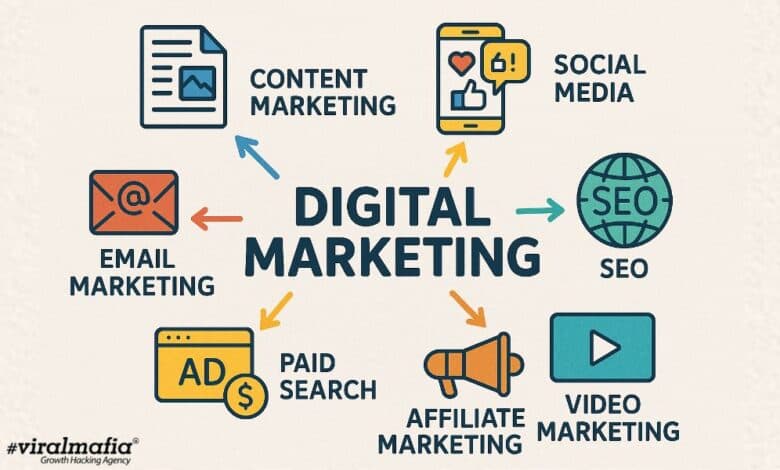
SEO works best when combined with full-service digital marketing solutions that align content, paid ads, and automation into one growth system.
Is SEO Worth It For YOUR Business?
Is SEO Worth It for Small Businesses?
Yes - especially for local SEO.
Ranking for location-based keywords drives high-intent traffic.
A local service business can generate consistent leads without relying on ads once it ranks for key terms.
Is SEO Worth It for Ecommerce Businesses?
Absolutely.
SEO lowers customer acquisition cost over time and builds sustainable traffic.
Product pages, category pages, and informational content all contribute to long-term growth.
Is SEO Worth It for B2B and SaaS Companies?
Yes - and often essential.
B2B buyers research extensively before purchasing.
SEO positions your brand during that research phase, building trust before your sales team gets involved.
Is SEO Worth It for New Websites?
Harder - but critical.
New sites should focus on:
Long-tail keywords
Low-competition topics
Consistent publishing
Building SEO early prevents major growth bottlenecks later.
The Elephant in the Room: AI Search, Google AIO & What It Means for SEO in 2026
What Is Google's AI Overview (AIO) and How Does It Affect Organic Traffic?
Google’s AI Overviews (AIO) generate summarized answers directly in search results.
This changes behavior:
Users get faster answers
Fewer clicks for basic queries
More visibility for authoritative sources
With the introduction of Google’s AI Overviews (AIO), search results now include AI-generated summaries that change how users interact with content.
Some studies show click-through rates dropping for informational queries.
But here’s what matters:
Visibility hasn’t disappeared — it’s shifted.
AI Overviews (AIO) & The "Zero-Click" Era
Is Google Killing SEO?
The introduction of Google’s AI Overviews (formerly SGE) caused a panic. "If Google answers the question, why will they click my site?"
The 2026 Reality: AI overviews handle "simple intent".
Query: "What is the capital of France?" → Zero click.
Query: "Best enterprise SEO strategy for a multi-location dental practice in 2026." → AI provides a summary but cites the experts.
To be "worth it" in 2026, your SEO must focus on complex intent. You want the clicks from people who need deep expertise, not just a dictionary definition.
Winning the "Citation" Game
SEO in 2026 is about becoming a "source". When Google’s Gemini or OpenAI’s SearchGPT answers a prompt, they cite sources. SEO now involves optimising for these citations, which drives highly qualified, high-intent traffic.
Generative Engine Optimization (GEO) Strategy
Beyond SEO: Transitioning to Generative Engine Optimization (GEO)
In 2026, we no longer just optimise for "blue links". We optimise for LLM (Large Language Model) inclusion. This is the art of ensuring your brand is cited by Google Gemini, OpenAI Search, and Perplexity.
The GEO Strategy involves four specific pillars:
The "Citation" Hook: Structure your definitions and "how-to" steps in clear, punchy snippets (40–60 words) that AI models can easily "scrape" and credit.
Digital PR & Entity Association: AI models learn by association. If your brand is frequently mentioned alongside terms like "Top-rated Construction Massachusetts" on high-authority news sites, the AI begins to treat your brand as a "trusted entity".
Structured Data 3.0: Moving beyond basic schema, we now use linked data to connect your expert authors to their verified credentials, social proofs, and published works. This feeds Google’s Knowledge Graph directly.
Sentiment Control: AI search isn't just looking for keywords; it’s looking for sentiment. We monitor and optimise the "brand mood" across the web—reviews, forums, and mentions - to ensure AI search results recommend you with a positive bias.
Does AI Search Make SEO Obsolete?
No - it raises the bar.
AI pulls information from trusted sources.
If your content is cited:
You gain authority
You gain brand recognition
You still earn traffic
SEO now focuses on being the source AI trusts.
How SEO Strategy Adapts to AI Search in 2026
Winning strategies include:
Targeting high-intent keywords (commercial & transactional)
Publishing original insights and research
Building topical authority
Using structured data
Also critical:
Expert authorship
Brand signals
Consistency
The Opportunity: AI Search Levels the Playing Field
AI doesn’t just reward big brands.
It rewards:
Accuracy
Expertise
Clarity
That means smaller businesses can compete — if they invest in quality SEO.
5 Signs SEO Is (and Isn't) Worth It For You
SEO IS worth it if:
You have a long sales cycle
You operate in a local market
Your business benefits from content
You can commit long-term
Your competitors are investing
SEO may NOT be your priority if:
You need leads within 30 days
Search demand is extremely low
You lack budget
Your website is technically broken
You’re pivoting soon
What Good SEO Looks Like in 2026: The Modern SEO Checklist
Technical SEO Foundations
Fast page speed
Mobile-first design
Secure (HTTPS)
Clean architecture
Content That Wins in 2026
Demonstrates expertise and authority
Matches user intent
Provides real value
Link Building That Still Works
Digital PR
Authority backlinks
Data-driven content
Avoid outdated tactics - they no longer work.
Local SEO in 2026
Optimize Google Business Profile
Build consistent reviews
Publish localized content
The 2026 "Information Gain" Audit
To rank #1, Google’s latest "Helpful Content" updates require that your page offers something the top 10 results don’t. Before publishing, ensure you have added at least three of the following:
Original Data or Survey Results: "We surveyed 500 business owners and found that..."
Contrarian Viewpoints: Why the "standard" advice in your industry might be wrong in 2026.
Proprietary Calculators or Tools: Interactive elements that increase "dwell time" (a key 2026 ranking signal).
Internal Expert Interviews: Transcribed insights from your company’s actual technicians or strategists to provide "Human-in-the-loop" authenticity that AI cannot fake.
Negative Constraints: Clearly defining who your service is not for, which builds massive trust with Google’s quality raters.
The 2026 SEO Checklist for Success
To ensure your investment is "worth it," your strategy must include:
Topical Authority: Don't just write a blog; own a topic. Cover every question a user could ask.
E-E-A-T (Experience, Expertise, Authoritativeness, Trust): Include author bios, links to social profiles of experts, and real-world case studies.
Video & Multi-Modal Content: Google 2026 prioritizes pages that offer video summaries alongside text.
Schema Markup 2.0: Using advanced structured data to tell the AI exactly what your data means.
Real SEO Results: What You Can Realistically Expect
Scenario 1: Local Service Business
A local service provider invests in SEO:
Grows from 0 → 300+ monthly visits in 9 months
Generates consistent inbound leads
Reduces reliance on paid ads
Scenario 2: Ecommerce Brand
An online store:
Ranks for key product terms
Reduces paid ad spend by 40%
Improves margins through organic sales
Scenario 3: B2B SaaS Company
A SaaS company:
Publishes strategic content
Generates 15–25 qualified leads/month
Builds a long-term inbound pipeline
So, Is SEO Worth It in 2026? The Honest Answer
Yes - SEO is absolutely worth it in 2026.
But only if:
You invest consistently
You focus on quality
You adapt to AI-driven search
SEO is not a shortcut. It’s a long-term growth system. If you need immediate leads, start with PPC.
If you want sustainable growth, lower acquisition costs, and long-term visibility, SEO is one of the best investments you can make.
The real cost isn’t doing SEO. It’s losing traffic to competitors who are.
The Shift from "Search Engine" to "Answer Engine": Future-Proofing Your Investment
To truly understand why SEO is worth it in 2026, we must look at the psychological shift in how users find information. We are moving away from "keyword hunting" and toward "dialogue-based discovery". In the past, a user might search for "SEO ROI". Today, they ask their device, "Is it actually worth spending $5,000 a month on SEO if AI is answering most questions?"
This shift means that "topic authority" has replaced "keyword density". Google’s 2026 algorithms are designed to identify the "original source" of an idea. If your website is the first to publish a unique insight, a new set of data, or a specific "brand-first" perspective, you become an entity in Google’s Knowledge Graph.
Once you are recognised as an entity, your "worth" skyrockets. You are no longer fighting for a single keyword; you are appearing in "Recommended for you" feeds, AI summaries, and voice search results across the entire ecosystem. This level of brand omnipresence is the ultimate goal of modern SEO. It’s not just about being found; it’s about being the only logical choice in a sea of AI-generated noise. By investing now, you aren't just buying traffic—you are securing your brand's digital identity for the next decade of search evolution.
Conclusion
Is SEO worth it in 2026? Yes, but the "entry fee" has changed.
You can no longer "hack" your way to the top. SEO has evolved into a sophisticated branch of brand building. Those who invest in becoming the most helpful, most authoritative voice in their niche will find that organic search remains their most profitable channel. Those looking for "cheap shortcuts" will find it to be a black hole for their budget.
The real cost of SEO in 2026 isn't the agency fee - it's the cost of being invisible while your competitors capture the market.
Ready to Find Out If SEO Is Right for Your Business?
At Octopi Digital, we don’t believe in one-size-fits-all SEO. We analyse your market, your competition, and your growth potential – then give you an honest answer.
If you want a long-term growth strategy, explore our AI-powered SEO services: https://octopi-digital.com/seo-services
Or book a free consultation and get a clear roadmap: https://octopi-digital.com/appointment
No pressure. Just clarity.
FAQs
Q1: Is SEO worth it for small businesses?
Ans: Yes. SEO helps small businesses attract high-intent customers without ongoing ad spend. Local SEO, in particular, can generate consistent leads by targeting geographic keywords.
Q2: How long does SEO take to show results?
Ans: Most businesses see early improvements within 3–6 months and meaningful ROI within 6–18 months, depending on competition and strategy.
Q3: How does video SEO factor into "is it worth it"?
Ans: Immensely. In 2026, Google’s search results are multi-modal. A blog post that includes an embedded, optimised YouTube video has a 53% higher chance of ranking on page 1 than a text-only page.
Q4: Is SEO better than Google Ads?
Ans: SEO is better for long-term ROI, while Google Ads provides immediate results. The best strategy combines both.
Q5. Will AI replace SEO consultants in 2026?
Ans: AI will replace SEO "executors" (people who just write meta tags and basic blogs). It will not replace SEO strategists. In 2026, the value is in knowing what to tell the AI to do, how to interpret multi-channel data, and how to align search strategy with actual business revenue.
Q6: What is the biggest mistake businesses make with SEO in 2026?
Ans: Treating SEO and AI as enemies. The most successful brands in 2026 use AI to scale their research and technical tasks while using human experts to provide the "soul" and unique insights that Google's algorithms are trained to reward