





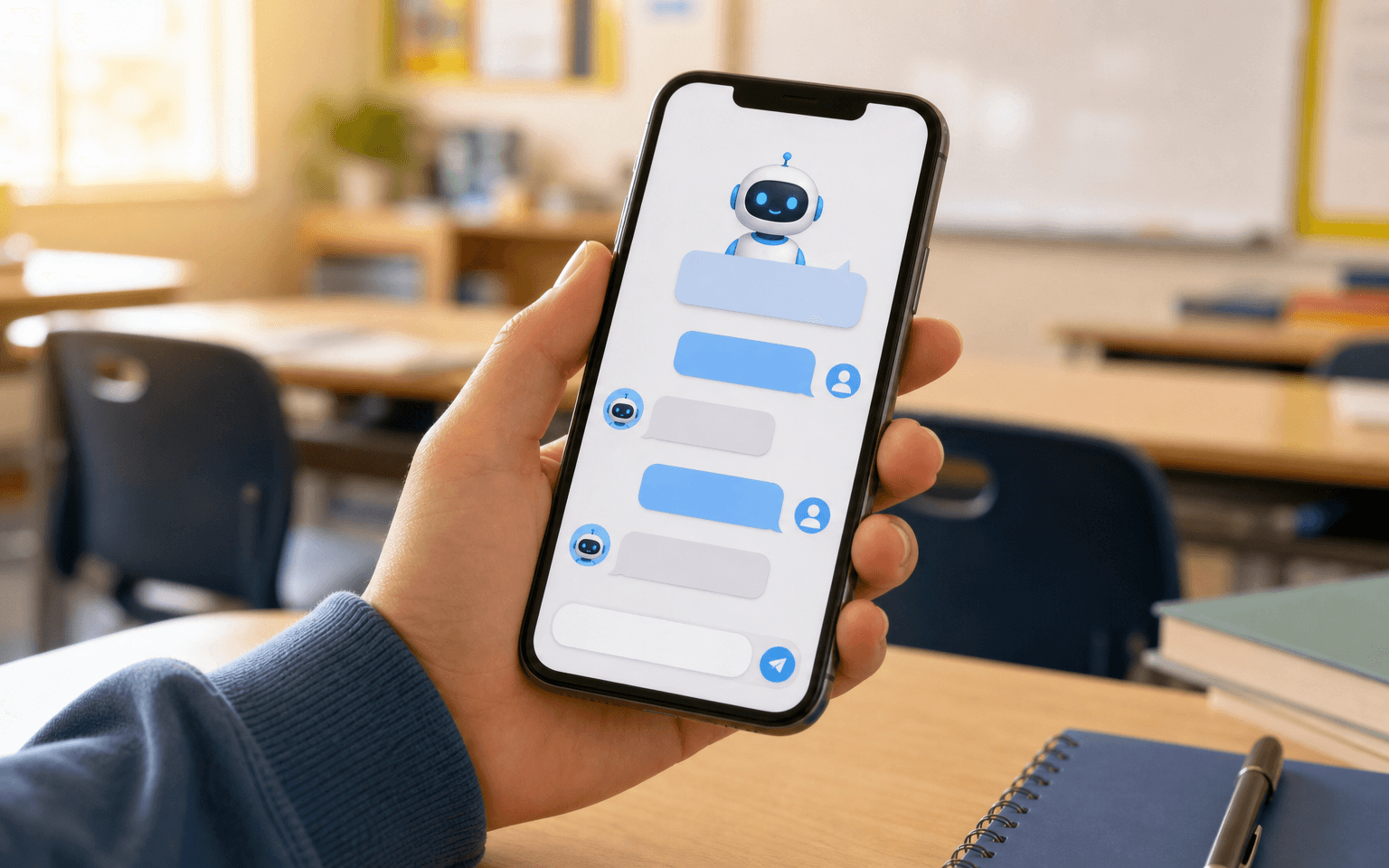
Universities and edtech businesses are experiencing a surge in enquiries from prospective students; however, slow manual replies and generic email forms no longer meet expectations in today's market. Instant, personalised outreach has become the key driver of higher education AI chatbot leads, resulting in stronger conversion rates and a markedly better applicant experience, all at once.
How AI Chatbots Are Reshaping Edtech Lead Generation
Manual qualification in edtech has historically struggled with scale. Teams must answer dozens of students or teachers who lack purchase authority for every decision-maker who reaches out. Through Edtech AI chatbot lead generation, first contact becomes automated: bots immediately ask targeted questions as soon as a prospect engages, sorting casual browsers from district-level buyers with impressive efficiency.
As a result, the high-volume, low-signal problem is solved directly. One online learning platform, for example, used AI voice calls to answer more than 100,000 monthly trial signups instantly. Leads were qualified by learning goals and budget, hot prospects went straight to human teams.
The impact? The platform tripled its trial-to-paid conversion rate and reduced cost per acquisition by 60% compared to manual outreach (read the Edesy case study).
Automated segmentation provides more than simple intent filtering. WhatsApp chatbots deployed by some edtech providers now instantly sort leads into nurture flows or live-agent queues depending on responses. When one provider switched from static forms to conversational flows within messaging apps, they captured three times more leads. Direct course sales multiplied fivefold. Webinar attendance increased fourfold with real-time reminders.
University Admission Chatbot Automation: From FAQ to Enrolment
The university admissions process is complex; most applicants need help outside business hours and across several channels.
With university admission chatbot automation, institutions can answer up to 70% of routine questions, about fees, requirements or deadlines, instantly through chatbots integrated with WhatsApp or their own websites (see the Turehub case study). More complex or sensitive cases?
Those are routed to staff via shared inboxes for personal follow-up.
This shift has dramatically reduced response times, from days to minutes, without any need to hire extra staff during peak periods. Chatbots handle routine inquiries and send reminders about application steps or required document uploads automatically. Human counsellors then focus on higher-value interactions where their expertise makes a tangible difference.
Recent research on hybrid retrieval-augmented chatbots for university admissions revealed these systems can provide accurate answers for real-world queries, with over 90% accuracy, while keeping hallucinated answers below two percent and response times under four seconds (empirical results from a multi-agent RAG deployment). Applicant experience improves at scale as a result.
Prospective Student Conversational Marketing in Action
The journey from first inquiry to enrolment takes longer than ever before; there are many moments where prospects may drop out along the way. Using prospective student conversational marketing powered by AI does much more than simply answer questions.
It builds relationships early in the funnel itself. At the University of South Dakota, conversational tools connected prospective students directly with ambassadors who could offer peer-to-peer insights instantly. The result? Chatbot-led conversations tripled engagement volume (see how Unibuddy transformed their funnel).
This trend is global. Qualitative research confirms that chatbot interactions at the very start of the student journey provide instant answers about logistics while also offering privacy-sensitive options that build trust over time. Younger applicants expect fast replies everywhere; accustomed to instant messaging, they may abandon slow forms before taking even one more step.
AI Counseling Scheduling for Education Providers
Counsellor schedules fill rapidly during admissions seasons, student inboxes also overflow with email chains just trying to fix an appointment time. By using AI counseling scheduling for education, bots immediately propose sessions based on live calendar data whenever someone qualifies or requests help.
This process can be fully automated. On one edtech platform, voice AI ensured every trial user received an instant demo invitation regardless of time zone or signup hour. Attendance rates rose sharply after this change; sales teams now focused only on prospects most likely to convert instead of chasing bookings throughout the day.
The Capabilities, and Limits, of an AI Chatbot for Education
The adoption curve is steep here; according to AI in Education's 2026 report, 73% of tracked education AI tools offer freemium entry points centred on conversational interfaces. Modern chatbots tackle everything: basic campus tour questions, scholarship details, interactive learning support, even automating assessment itself.
A systematic review identifies four main areas where chatbots see use: teaching and learning support (answering content queries); administrative assistance (document reminders); research (conducting surveys); library services (catalogue lookups). The benefits are clear: staff workloads shrink, answers arrive faster for common questions, users enjoy greater satisfaction thanks to personalisation, and when linked with CRMs, all data becomes centralised.
The quality of interaction matters as much as functionality itself. Multiple studies have found that perceived trustworthiness, intelligence of responses, and ease of use all predict whether students return after their first chatbot encounter (see the Frontiers analysis of Saudi higher education). Bot accuracy reduces frustration significantly; ease brings people back throughout their student life cycle.
Toward Measurable Gains in Lead Quality and Experience
The trend is unmistakable: institutions adopting automated qualification frameworks, where bots ask context-aware questions tailored closely to each ideal applicant profile, not only generate more education AI chatbot leads but also attract candidates who better fit programme criteria at each step.
The mix of instant engagement, CRM-linked lead scoring systems, automated event reminders and seamless handoff between bots and humans delivers fewer missed opportunities, and far better personal attention when it matters most.
Building an AI chatbot for education means careful work on conversation flow design, scoring logic calibration, CRM integration and ongoing script updates over time, but this technology now counts as basic infrastructure powering modern edtech growth.
If you want a sense of typical costs, whether launching new ventures or expanding SaaS platforms aimed at educational fields, check our resource on SaaS MVP costs for education startups.
What Institutions Should Watch When Automating Engagement
No tool fixes every problem right away. Studies comparing rule-based chatbots with those powered by large language models found usability improvements, but not always significant test score gains; still, students consistently prefer 24/7 access and report less stress compared with waiting through traditional office hours.
If your admissions process leaks leads because replies are too slow or outreach sounds generic, or your pre-sales team spends longer sorting unqualified enquiries than helping serious prospects, an automated conversational strategy could bring rapid efficiency today plus longer-term recruitment gains down the line.